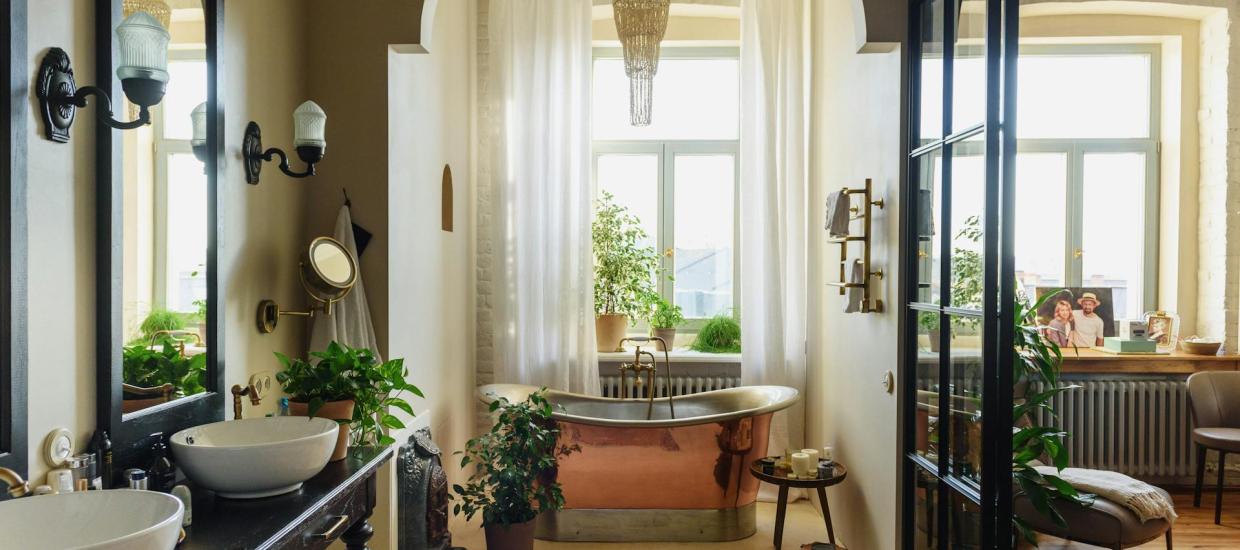
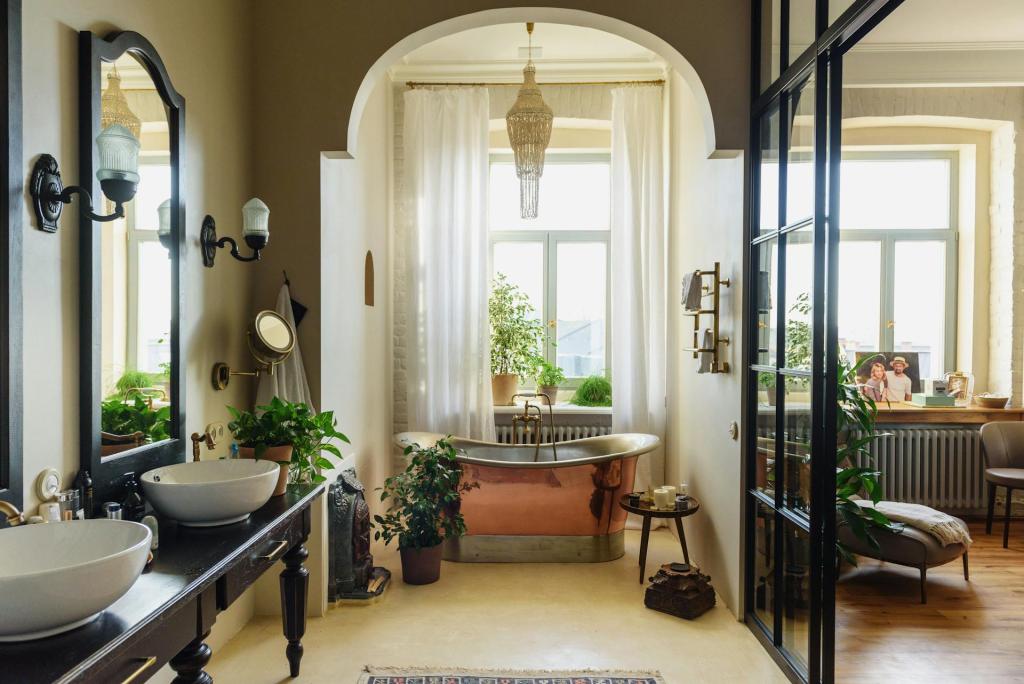
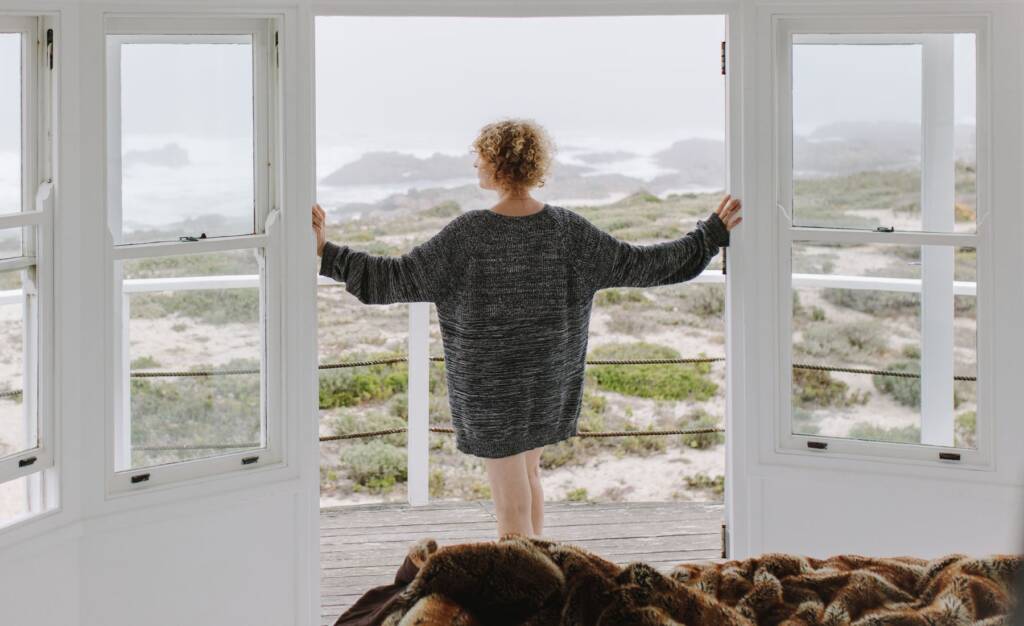
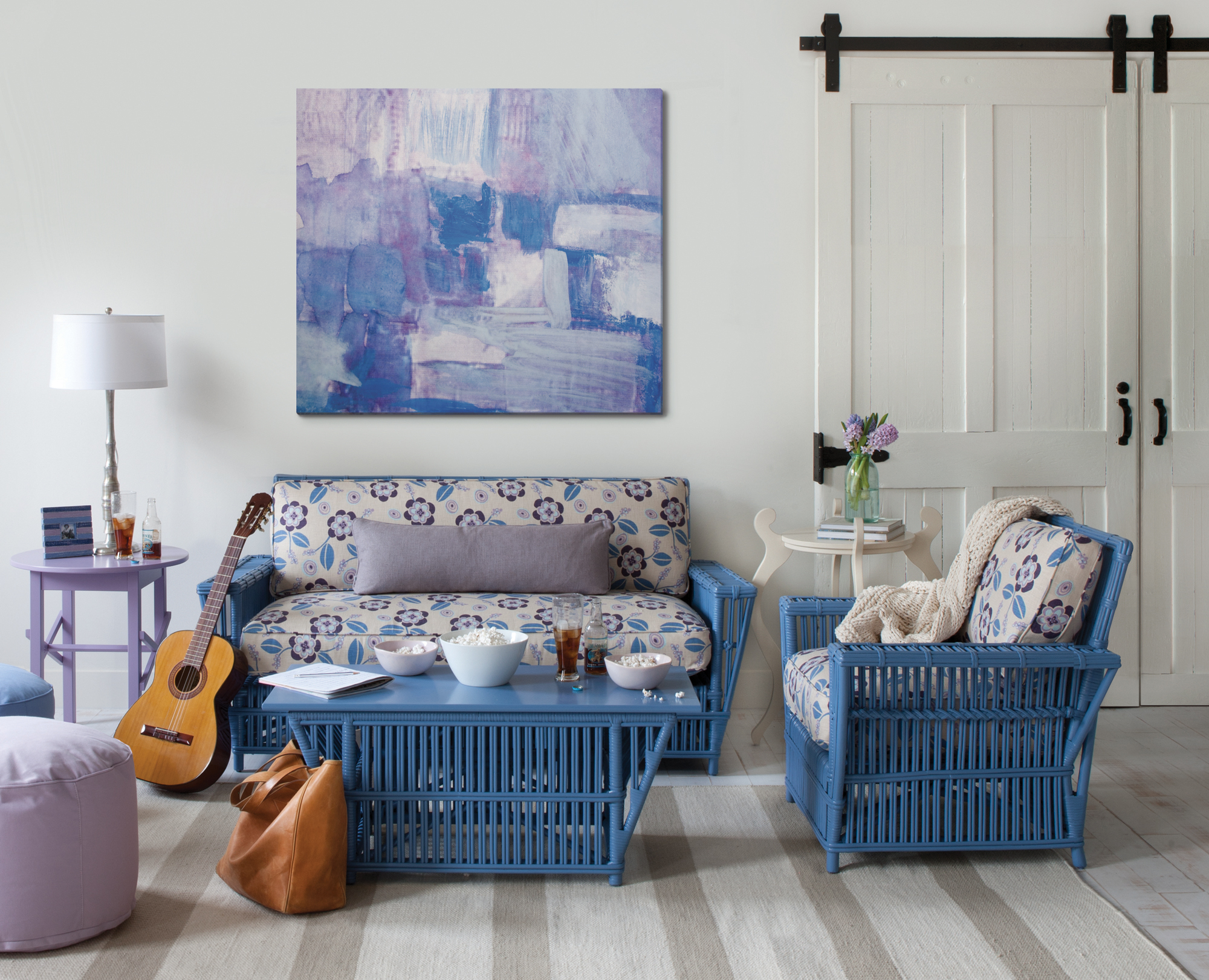
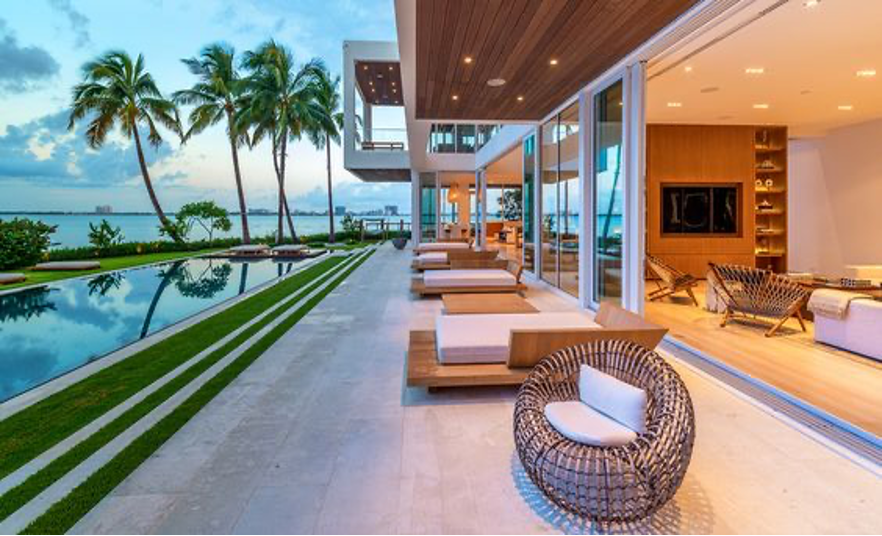
The charm of a beach home often relies on its airy, minimalist aesthetic—driftwood, linen fabrics, and a soft color palette. Without a touch of green, however, that space can feel too stark, especially during the winter months. This year, bring the tropics indoors and create your very own coastal jungle.
Tropical plants, with their glossy leaves and dramatic structures, provide vibrant, organic contrast that makes coastal design truly pop. They are living art that infuses your home with calming, lush energy. Regardless of your green thumb history, this guide covers the essential classics and the show-stopping statement makers, focusing only on the simple care rules needed to transform your seaside escape into a layered oasis.
If you’re worried about committing to constant plant care, start with these resilient classics. They are the essential foundation of any indoor garden, known for their ability to handle moderate light conditions and forgive minor neglect.
The Pothos is the ultimate low-maintenance beauty, providing instant softness and vertical movement with its cascading vines, perfect for shelves or high cabinets.
Care Note: Water only when the soil is completely dry. It’s highly forgiving and will wilt dramatically when thirsty, giving you an obvious signal that it needs a drink.
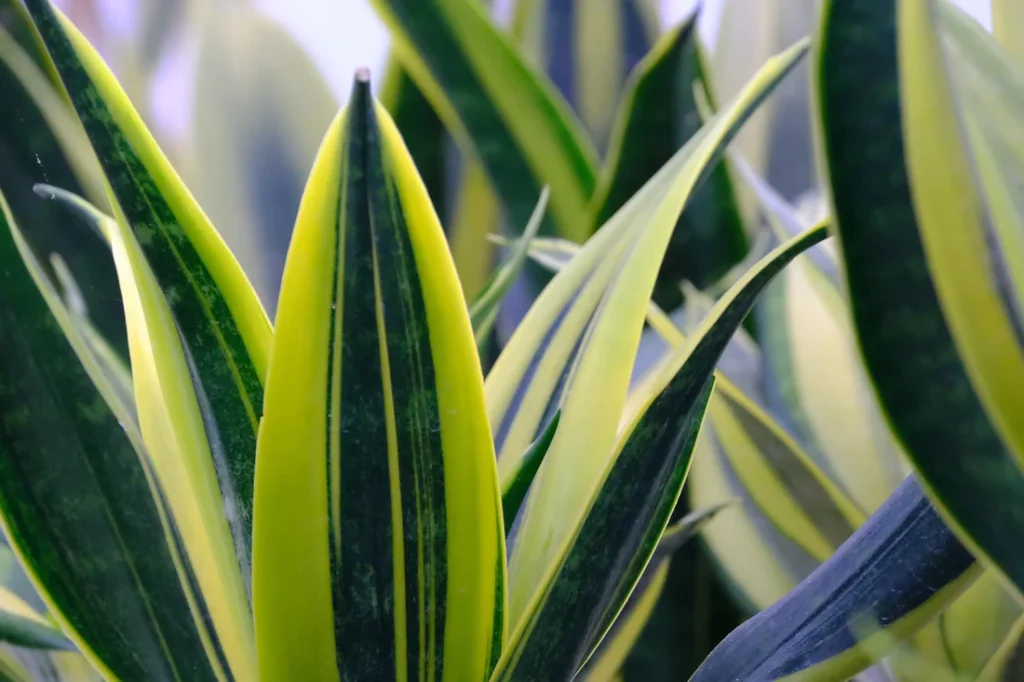
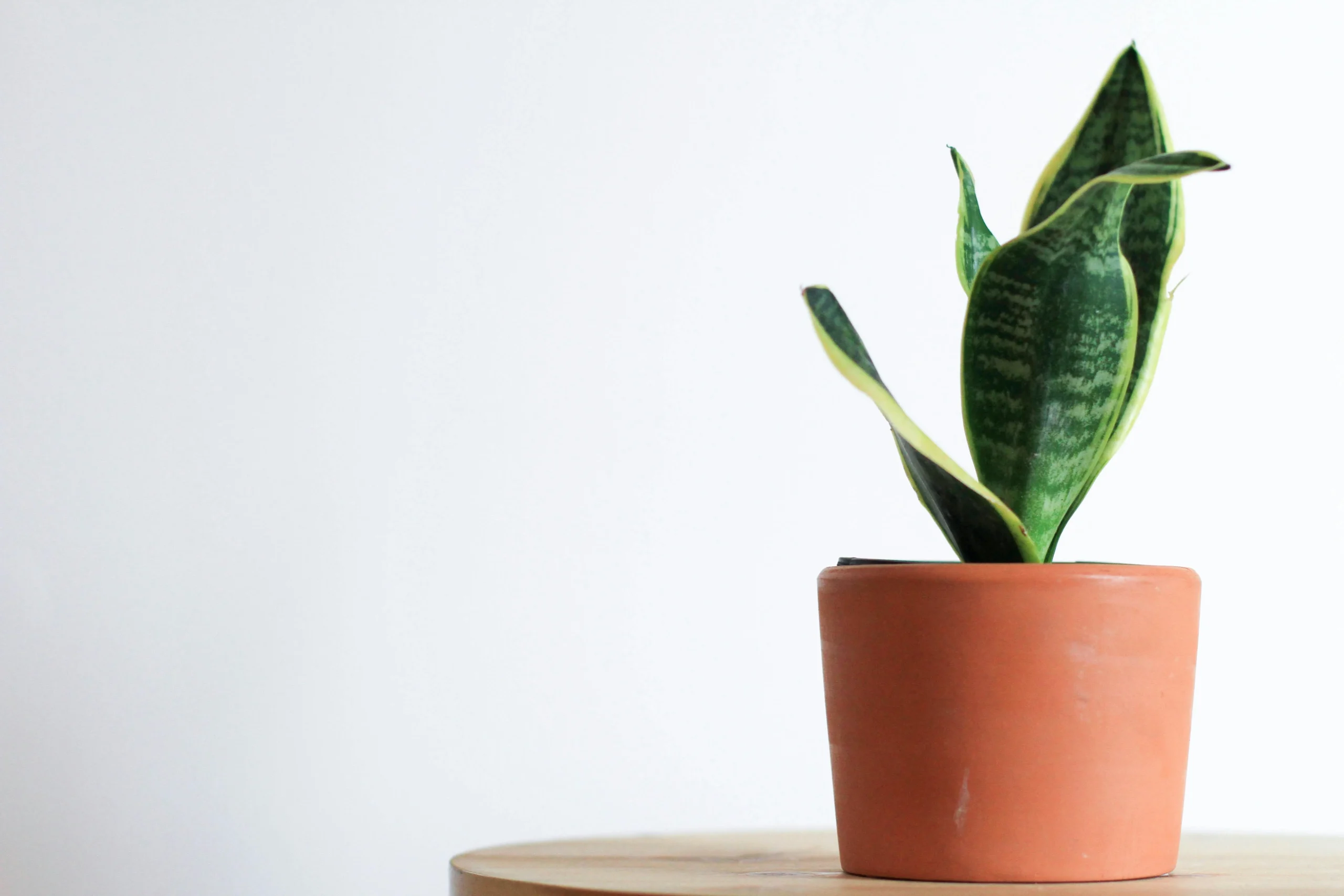
Snake Plant (Sansevieria) (The Architectural Icon)
With its stiff, upright leaves, the Snake Plant provides pure architectural drama and maximum structure for modern styling.
Care Note: This plant thrives on neglect. The number one risk is overwatering; allow the soil to dry out entirely between waterings, especially during the cold season.
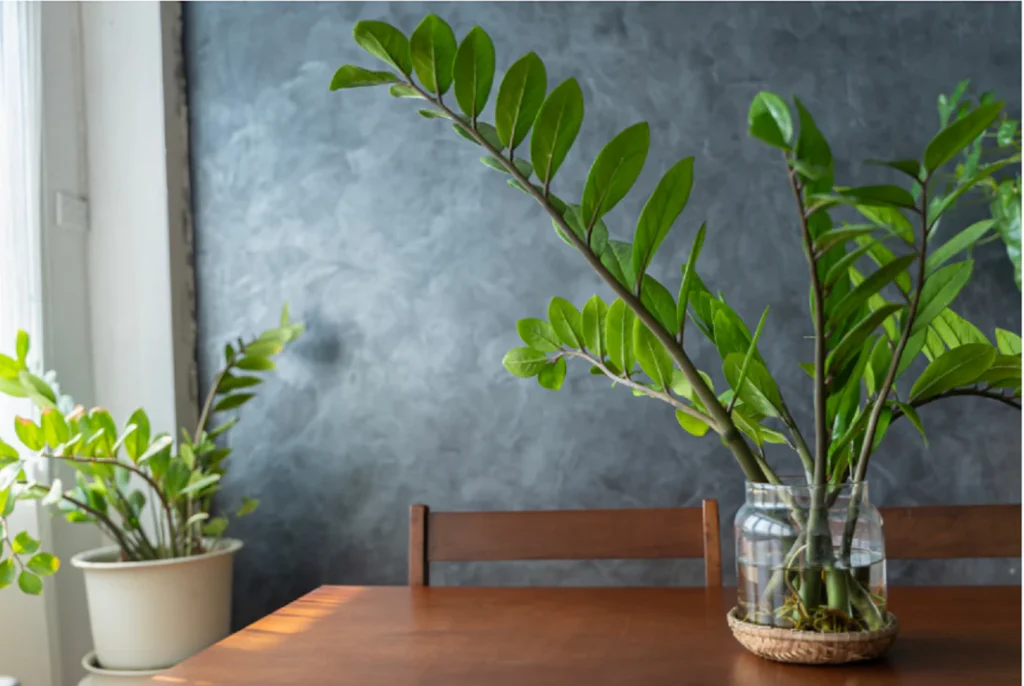
ZZ Plant (Zamioculcas zamiifolia) (The Drought Champion)
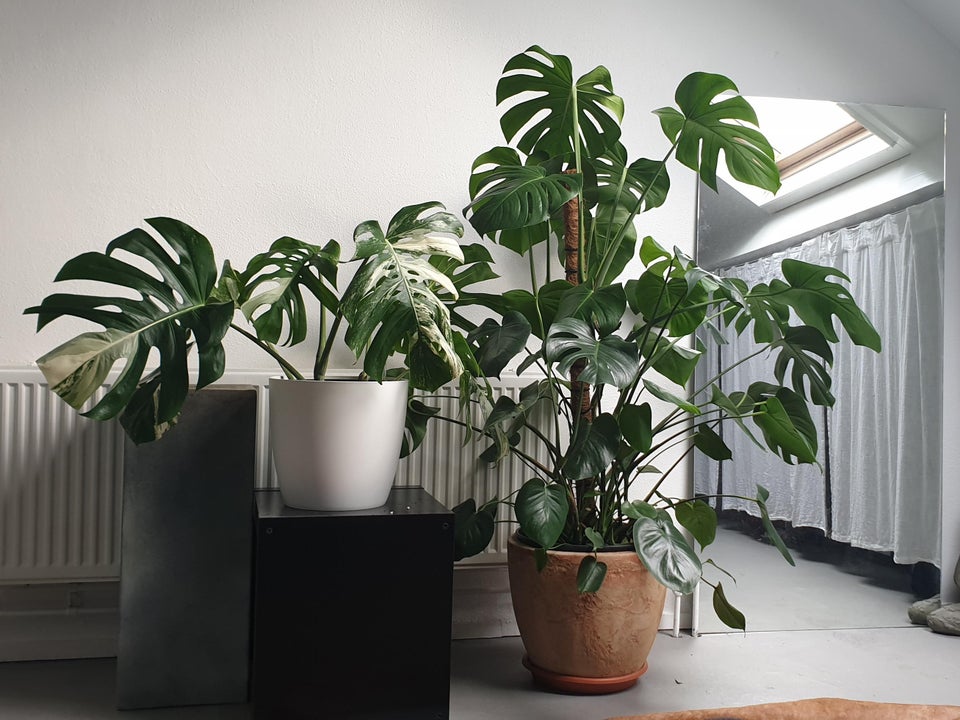
Ready to create a true focal point? These tropical giants demand attention and are worth the effort for the sheer transformation they bring to a living space.
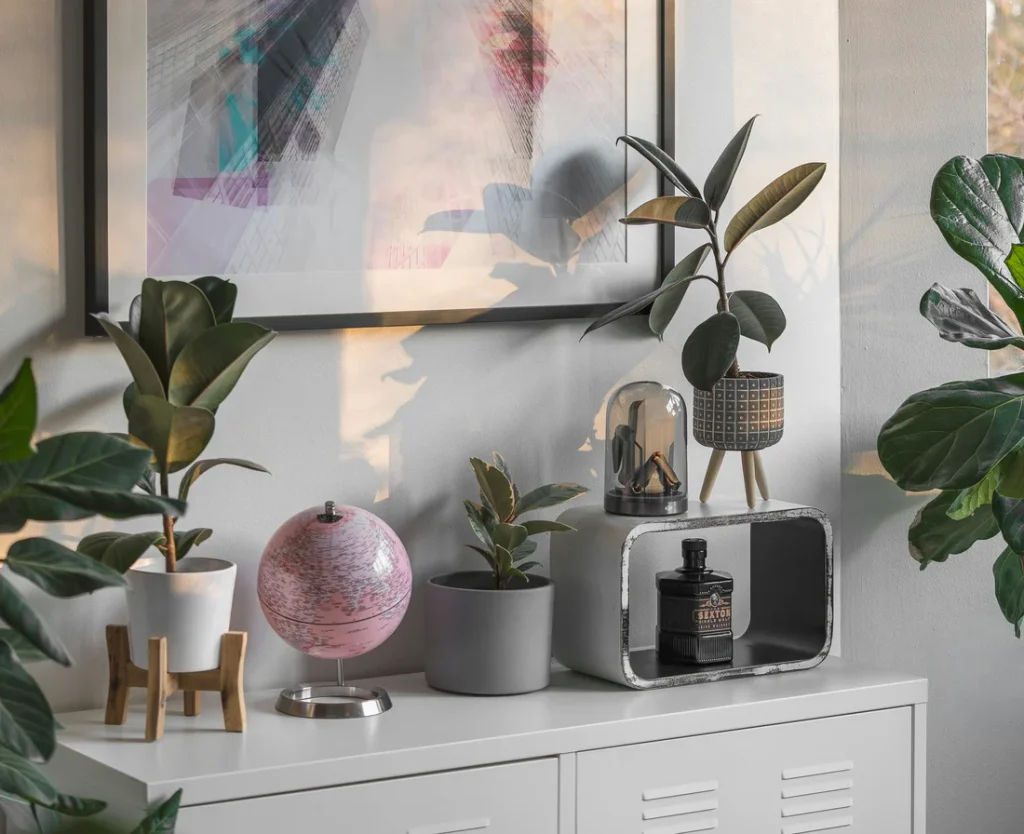
If you are looking for height, the Fiddle Leaf Fig is unmatched, offering huge, violin-shaped leaves for instant vertical drama.
Care Note: It demands a consistent, bright light location. Once you find a sunny spot it likes, avoid moving it to prevent the plant from going into shock and dropping leaves.
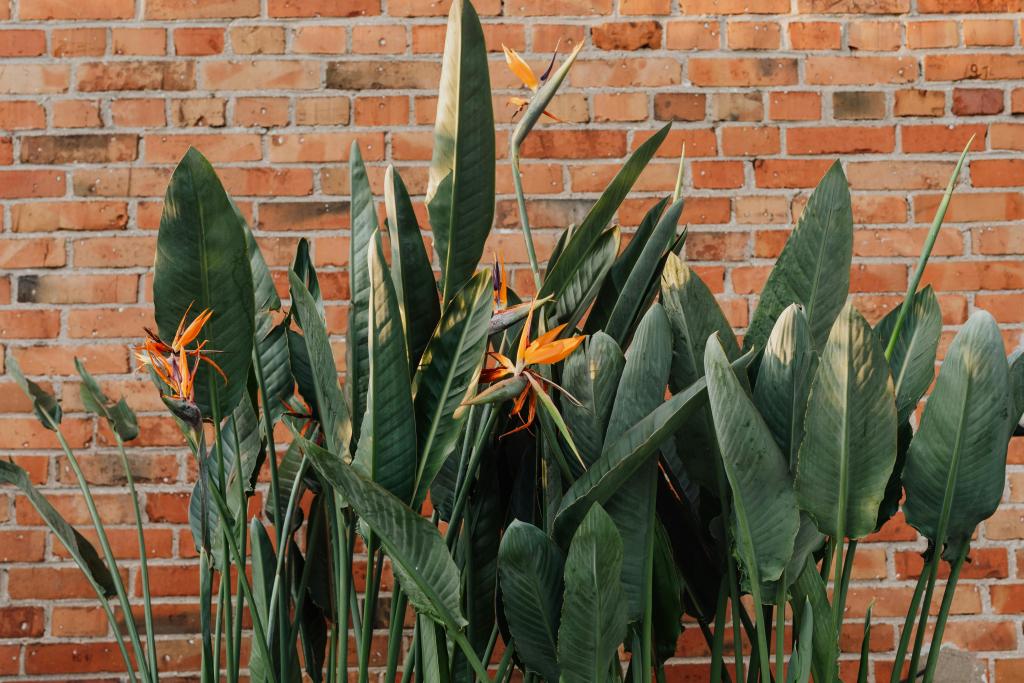
Bird of Paradise (Strelitzia nicolai) (Vertical Texture)
The Bird of Paradise plant brings a genuine, oversized jungle feel to any room with its tall, wide, banana-like leaves that add immense texture and volume.
Care Note: It needs the brightest light possible indoors to thrive. Water consistently when the top two inches of soil feel dry to support its size.
Successful tropical plant care boils down to two things: consistency and drainage. For watering, always use the “finger test”: insert your finger two inches deep and only water when the soil feels completely dry. Never let a tropical plant sit in standing water, as this is the number one cause of root rot.
For light, most of these plants want bright, indirect light; direct, harsh sun can burn their leaves quickly. Find a spot near a window but slightly set back from the direct rays. Finally, remember to only fertilize during the spring and summer growing seasons when the plant is actively developing new foliage.
By curating a mix of resilient classics and bold statement makers, you can turn your beach house into a sophisticated, lush retreat—a sanctuary that feels warm, alive, and eternally green. Enjoy the process of building your own little coastal jungle!
What is it about the allure of coastal living that appeals to most people? For many, it is the quintessential picture of paradise—the pure enchantment of living at the water’s edge, gazing out into the vast blue sea and dreaming of the exotic lands that lie beyond. Undoubtedly, there is something inherently lulling about the sound of the waves, the rhythm of the tides, and the ocean’s profound mystery that draws us to it and stirs our souls from within. Often thought of as some of the world’s most sought-after properties, beachside havens always captivate, inspiring our imaginations to picture what it would be like to have our own little slice of heaven by the shore. So, join us on our journey as we visit a few of the most iconic beach properties across the country, from sea to shining sea.
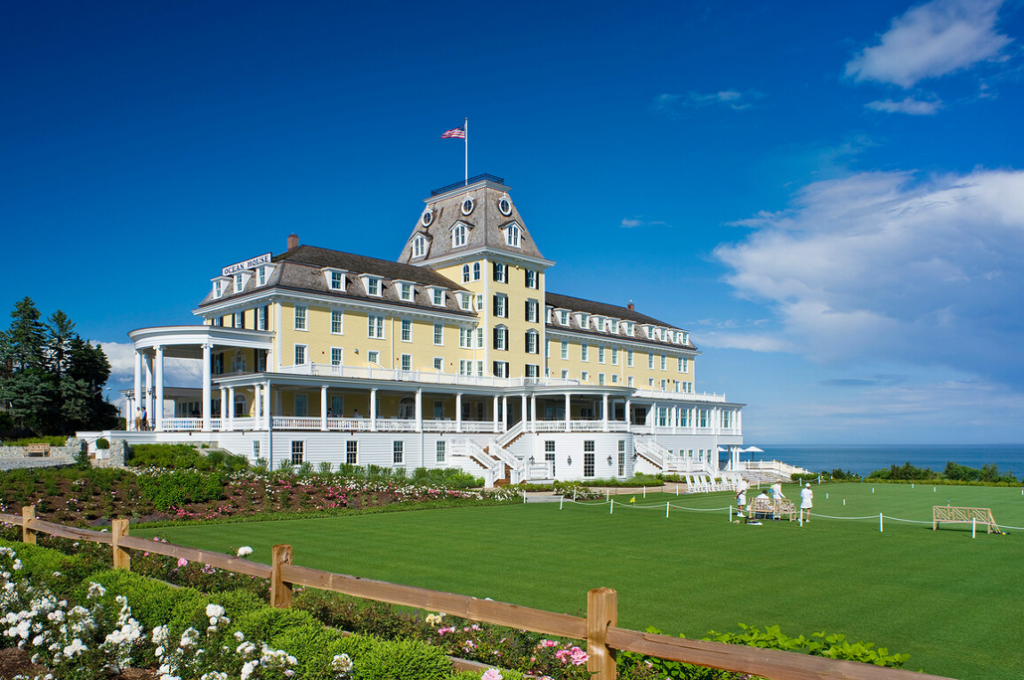
This extraordinary five-star oceanfront hotel, appropriately named The Ocean House, is one of the last of its kind remaining in New England. Poised in stately grandeur on the bluffs of Watch Hill, Rhode Island, this majestic Victorian property built in the late 19th century has been meticulously restored to its former glory, offering its esteemed guests an authentic and luxurious experience. Breezy wraparound porches and magnificent terraces provide breathtaking views of the Atlantic coastline and the estate’s pristine grounds.
Today, guests to the hotel can savor New England’s quaint charm at their own pace, from leisurely walks on the beach to exhilarating sailing adventures. Days are filled with options for any desire, including luxury spa services, tennis, golf, croquet, fishing, and an array of water sports. Next, enjoy a quiet respite with afternoon teatime and sunset cocktails, followed by dinner at one of the hotel’s top-rated dining options that range from innovative modern cuisine to classic bistro fare. In addition, antique shops, art galleries, and delicious seafood eateries await just minutes away in the charming New England setting of Watch Hill.
Considered an architectural treasure on the rocky Carmel shoreline, the iconic Butterfly House was designed and built in 1951 by architect Francis W. Wynkoop. Restored in 2011 by Wynkoop’s sons, the historic home is now being offered for the fourth time since it was built. Often thought of as one of the purest examples of Mid-Century modern architecture, the structure’s unusual wing-shaped roof is responsible for its colorful name. Perched along the California coastline, the splendid dwelling offers a beloved symbol of living art, displaying unbelievable westward-facing views of the Pacific Ocean along with spectacular sunsets and moonsets over the water.
This amazing architectural landmark was built for just $135,000, and Wynkoop lived in the house with his wife and children until 1955. A one-and-a-half-story residence, the Butterfly House features a cantilevered deck extending over the solid granite rocks at the edge of the breakers and a sunken living room with a circular fireplace in the center. Additionally, it also boasts an interior courtyard with a kidney-shaped pool.
For a peek into another iconic home in the same locale, check out this stunning beachfront home designed by legendary architect Frank Lloyd Wright in 1948.
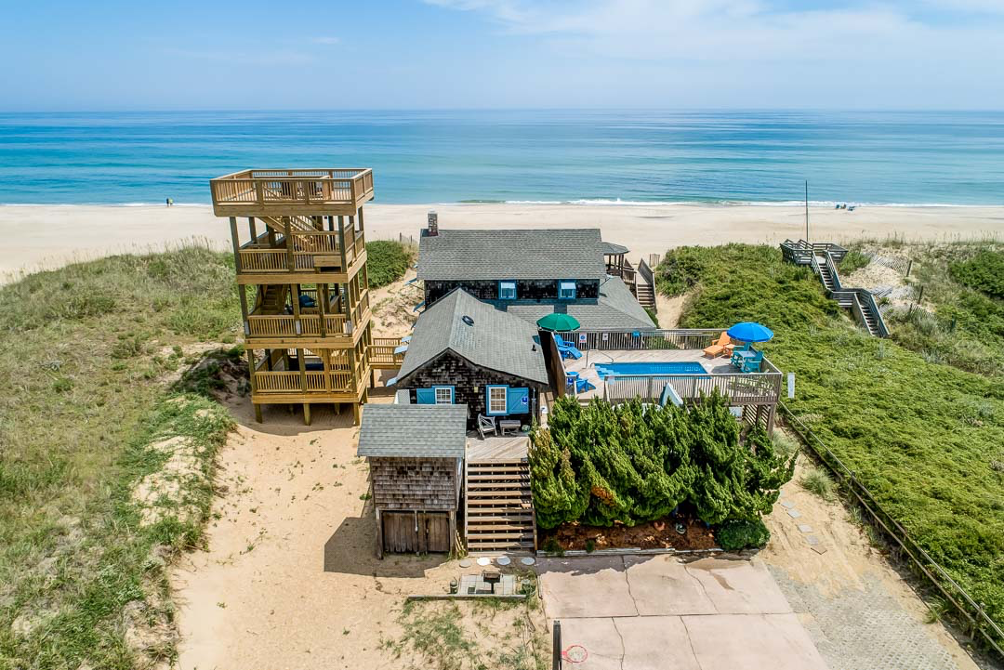
Built more than 100 years ago, The Beach House in Nags Head, North Carolina, emits a taste of days gone by when farmers would relocate their families to the beach each summer to escape the heat and enjoy the refreshing ocean breezes. This historical treasure features the Outer Bank’s tallest oceanfront observation/sunbathing tower, offering guests sweeping 360-degree views of the Atlantic, the Sound, and Jockey’s Ridge. In the evenings, guests can enjoy unparalleled views of the night sky and the light glowing inside the Bodie Island lighthouse in the distance.
The home was passed down for generations to the same family and was eventually purchased by owners who have a passion and deep respect for the property’s history. Today, the house maintains its original tongue-and-groove planking on the floors, walls, and ceilings, which have been lovingly restored through the years. Plus, the property has an added private pool and hot tub, making it ideal for family beach vacations and gatherings. For more information, visit Outer Banks Blue.
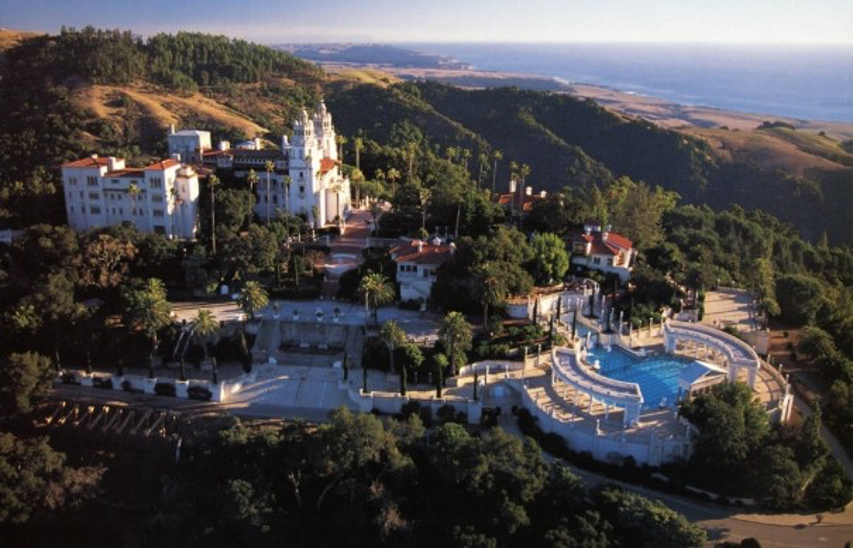
Sitting at an elevation of 1600 feet, San Simeon’s Hearst Castle is a legendary crown jewel that presides over the majestic California coastline. Owner William Randolph Hearst, a wealthy businessman who expanded the family fortune into a newspaper and magazine publishing empire, inherited the 250,000-acre family retreat in 1919 and aspired to develop the “Enchanted Hill” into a sprawling Spanish Revival-style estate. Hearst then commissioned architect Julia Morgan to design the estate and worked closely with her to customize and personalize the plans.
Surprisingly, construction was never completed and continued until 1947, when Hearst fell ill and had to move off-site permanently. Nevertheless, the elegant property includes the main house, Casa Grande, as well as several charming cottages, breezy verandas, captivating pools, enchanted gardens, and even a zoo. Today, the Hearst Castle is a treasured and remarkable museum that offers tours to the public. For more information, visit their website.
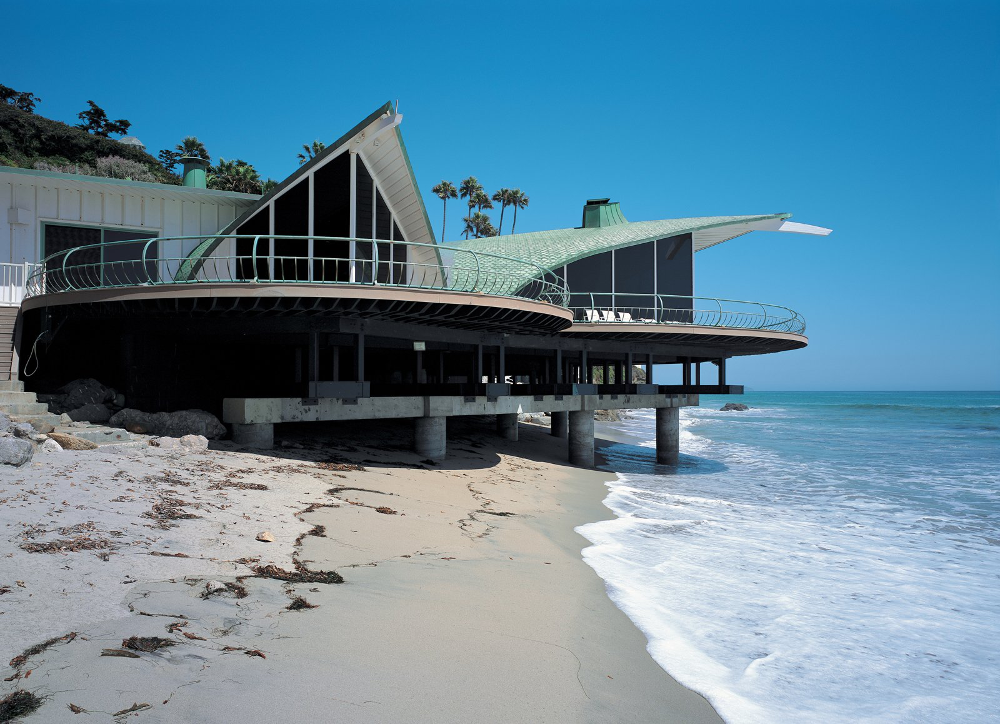
Designed in 1956 by surfer and architect Harry Gesner, the Wave House was intentionally built to extend into the surf at high tide. History has it that Gesner paddled offshore and sketched the design on his surfboard with a grease pencil while studying the site. Emulating the organic shapes found in nature on the coastline, the Wave House takes its structural cues from the ocean. Gesner innovatively implemented glue-laminated beams for the home’s roof structure and applied a shingled surface that resembles fish scales. In addition, the home’s projecting rooflines that cantilever over curvaceous circular balconies mirror the breaking waves. Inside, the dwelling focuses on a conversation pit with a fireplace overlooking the Pacific.
The structure’s similarities to the sail-like forms of Jorn Utzon’s design for Australia’s Sydney Opera House do not go unnoticed. However, neither architect ever claimed the Wave House inspired the design of the Opera House, but both expressed appreciation for each other’s work.
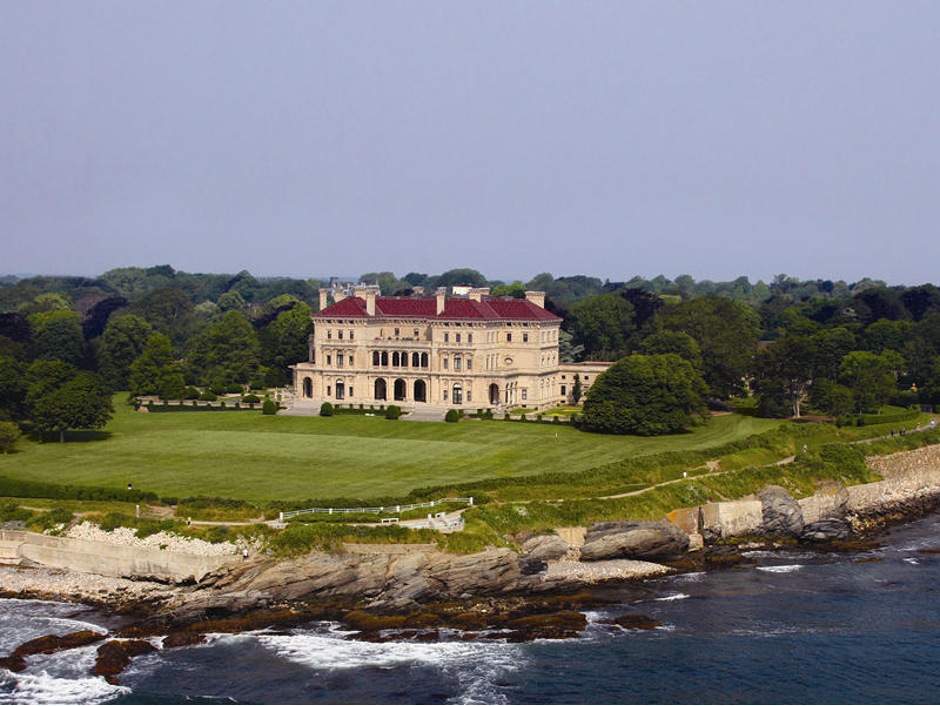
Designed in 1895 by architect Richard Morris Hunt, this magnificent 70-room villa called The Breakers was built for wealthy railroad magnate Cornelius Vanderbilt II. Overlooking Newport, Rhode Island’s rocky coastline, this historic landmark stands as a symbol of the Vanderbilt family’s social and financial prominence during the turn of the century. Inside, opulent interiors include gilded rooms rich with marble, mosaic tile floors and ceilings, a 50-foot-tall Great Hall, and splendid open-air terraces boasting stunning ocean views.
In 1934, the Vanderbilt family’s youngest daughter, Gladys, inherited the house following her mother’s death. In 1948, she opened The Breakers to raise funds for The Preservation Society of Newport County, of which she was an avid benefactor. In 1972, the Preservation Society purchased the estate from her heirs, and today it stands as a National Historic Landmark. For information on tours of The Breakers, visit Newport Mansions.
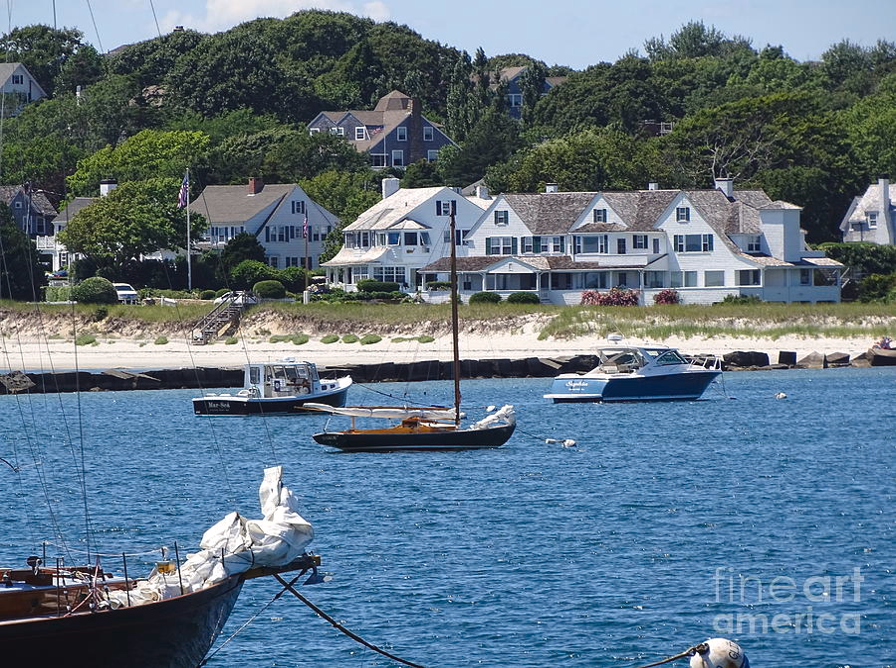
Nestled along Cape Cod’s Nantucket Sound in Hyannis Port, Massachusetts, The Kennedy Compound is a legendary six-acre waterfront property that includes three houses. Boats gliding past can catch an enviable glimpse of this richly storied property that was once home to many esteemed Kennedy family members, including Joseph P. Kennedy, President John F. Kennedy, and U.S. Senators Robert F. Kennedy and Edward M. Kennedy. In 1960, JFK made the compound his base for the presidential campaign and later, after his presidency, used it as a summer white house and presidential retreat. The main house was donated to the Edward M. Kennedy Institute for the United States Senate in 2012, and since 2020, Robert’s widow, Ethel Kennedy, has lived in the adjacent home.
For more inspirational beachfront architecture, check out these Southern styles that embody the beach life—our first article in a series called Regional Beach Living. Here’s to a blissful spring season on the beach!
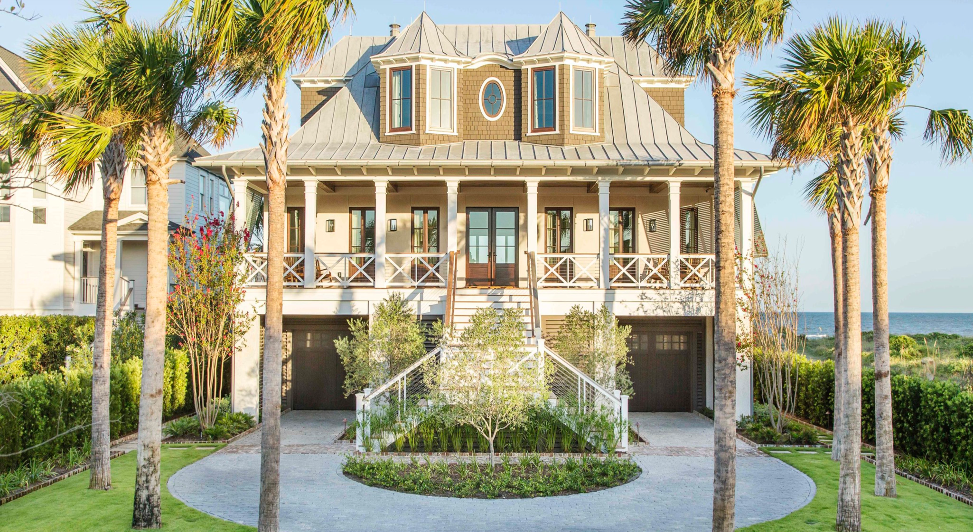
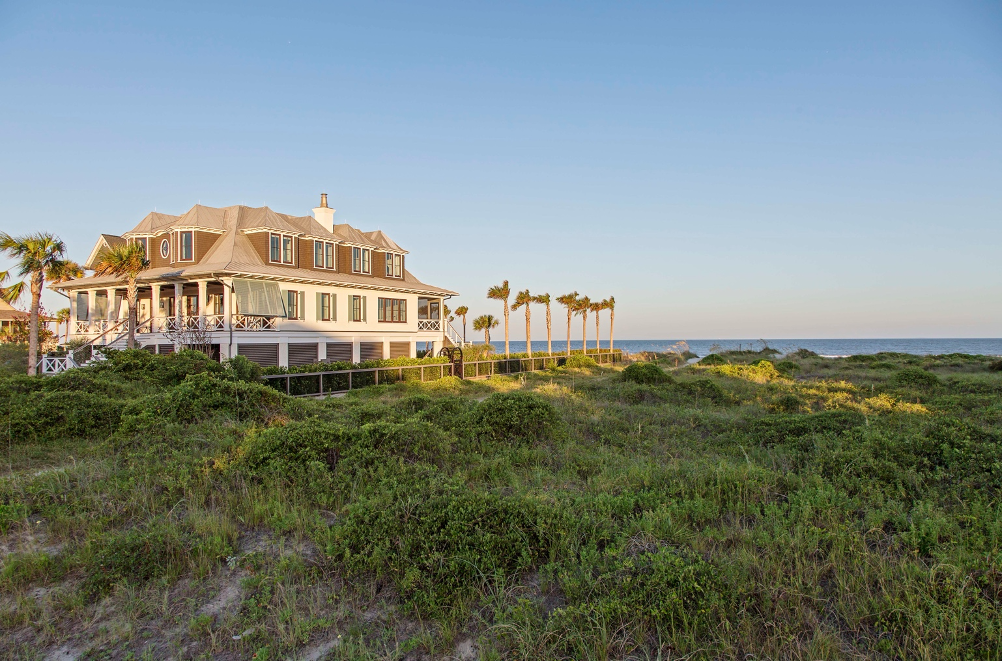
When a couple from Charlotte, North Carolina, aspired to build a retreat where family and friends could gather for generations to come, they couldn’t help but fall in love with the charming Isle of Palms on the South Carolina coast. Embodying the relaxed pace of beach life synonymous with Lowcountry living, this idyllic location offered nothing less than a dreamscape for their next new chapter. Enlisting area architect Steve Herlong, AIA, founder and design principal at Herlong Architecture + Design, was a natural next step. His Charleston-based firm has been celebrated for its breathtaking seaside homes that connect seamlessly to the beauty of the landscape, from the Lowcountry to the beaches of the Caribbean.
“Our clients particularly admired Caribbean architecture but wanted something that felt appropriate for coastal South Carolina,” says Steve. “Their lot allowed for uninterrupted ocean views, a short golf cart ride to the quaint restaurants of Isle of Palms and Sullivan’s Island, as well as a quick commute to downtown Charleston.”
Caribbean Character
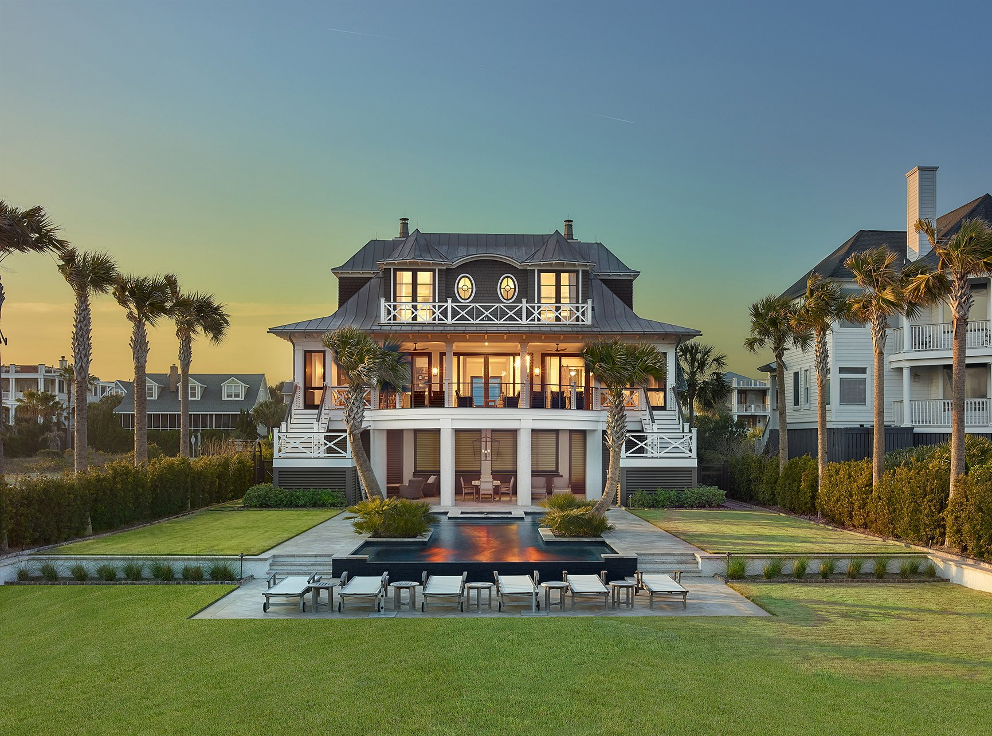
This extraordinary 4,683-square-foot beachfront dwelling includes an airy open floorplan with six bedrooms, 7.5 bathrooms, a pool, and a series of inviting alfresco living areas. The home emanates a sense of order and symmetry typical of British Colonial architecture. These characteristics blend effortlessly with the organic and relaxed feel of traditional local materials on the islands. Natural light and views of the Atlantic dictated the spatial planning of the exterior and interior spaces.
“The clients were inspired by Caribbean architecture,” says Steve, “and having designed many homes there, we have a strong understanding of the architectural elements and lifestyle that attract people to this aesthetic.”
A Welcome Breeze
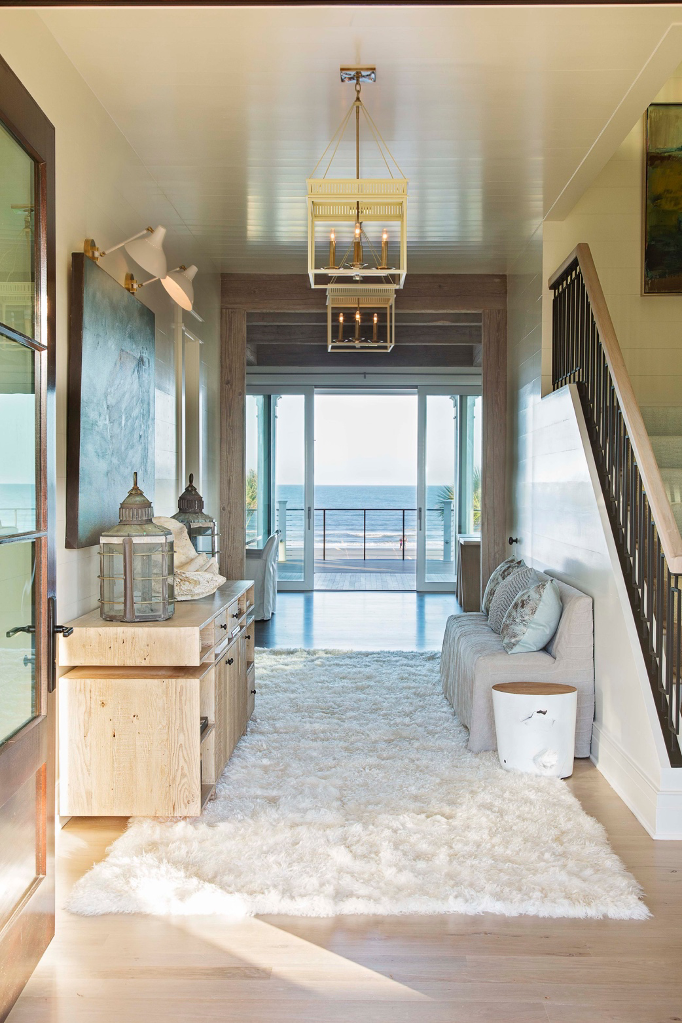
The entryway opens onto a spectacular ocean view, creating a dramatic yet calming effect. The seaside vista draws you in through the generously sized foyer and into the main living, dining, and kitchen spaces. “I strategically designed this home for my clients’ laidback lifestyle,” says interior designer David Smith, owner of Custom Interiors in Cornelius, NC. “They wanted a family-friendly beach house where all felt comfortable living in the spaces. Inspired by the natural surroundings, the color palette brings hues from the exterior landscape to the interiors, making a peaceful transition upon entering the home.”
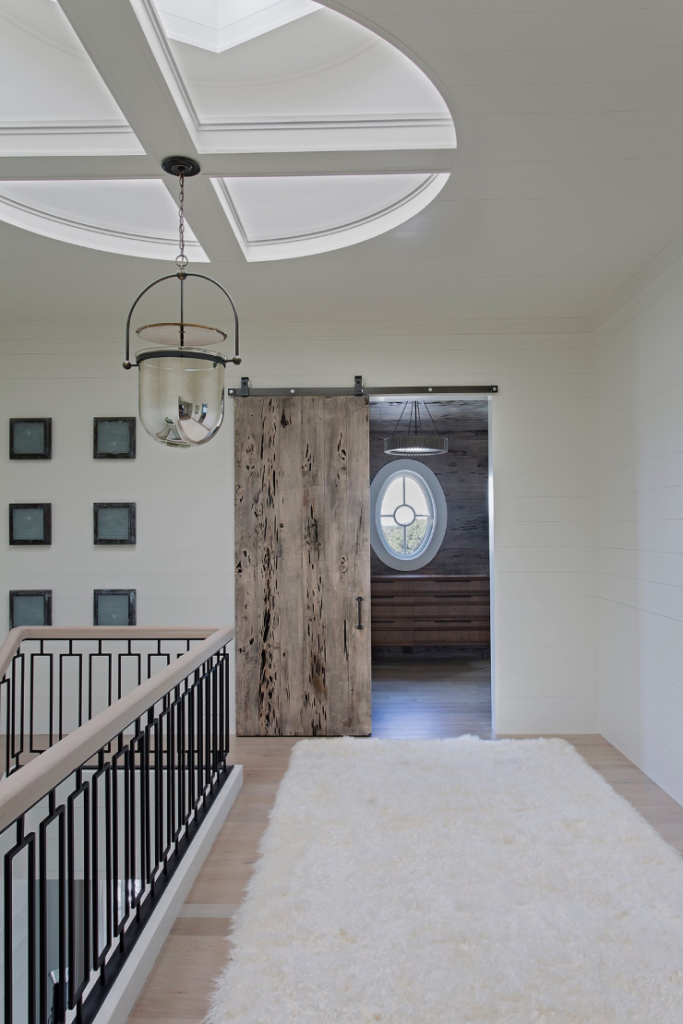
David designed the iron handrails for the stairway, complemented by Urban Electric Company ceiling fixtures, a Verellen bench, and a Noir cabinet. A plush white alpaca rug from Moattar softens and anchors the space.
Greater Horizons
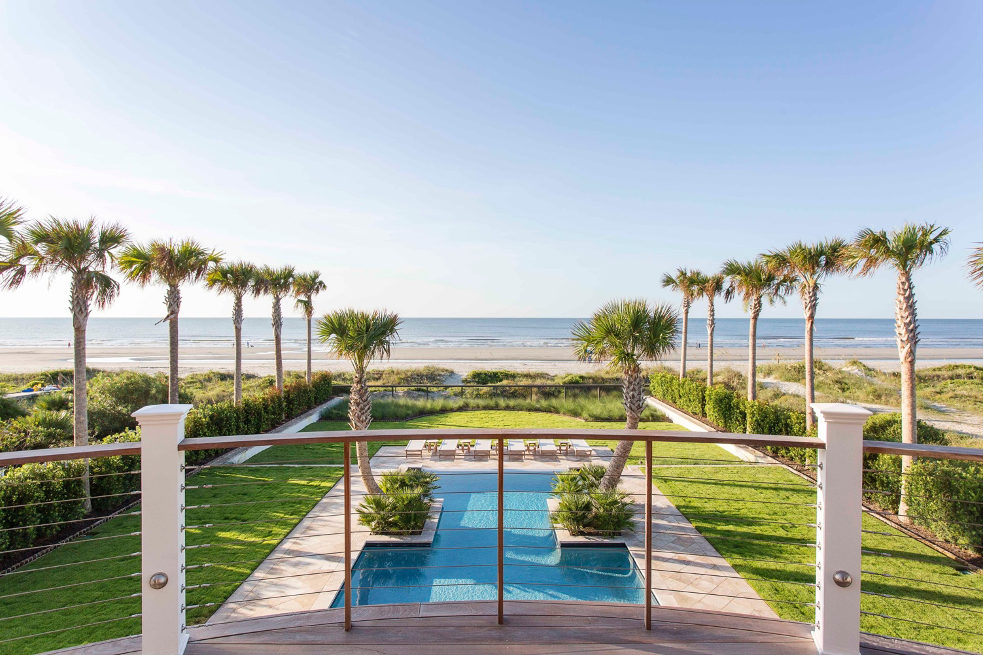
A curved balcony offers a breathtaking view of the tropical landscape, pool terrace, and blue ocean waves beyond. “Isle of Palms is a beautiful area just 15 minutes north of Charleston,” says the designer. It is well known for its stunning homes and luxurious Lowcountry living. There are fantastic restaurants, small downtown beachfront boutiques, and an amazing marina—all of which speak to why my clients chose this ideal location. Plus, it’s only a three-hour commute from their primary home.”
Sea-Worthy Sightlines
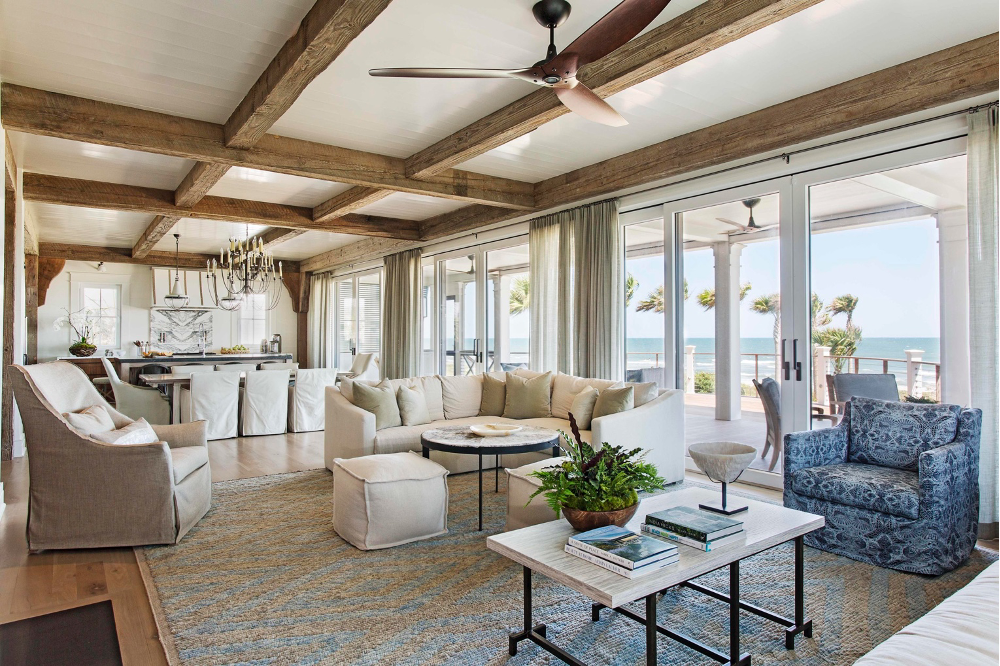
The open kitchen, dining, and living room offer the best of Lowcountry living with a continuous panoramic view. The presence of pecky cypress creates a warm and inviting ambiance that emanates a sense of being surrounded by natural driftwood. Timber beams add dimension and punctuate the spaces against clean white shiplap walls.
“All the living spaces throughout the home reflect the family’s love of the beach, with sun- and sand-friendly furnishings and ample opportunities for year-round outdoor living and entertaining,” says Steve. “It was intentional to design the indoor gathering areas to connect seamlessly to the view by an uninterrupted wall of glass doors. This creates an uninhibited sense of place, allowing the family to constantly see, hear, and feel the beauty of the beach.”
Putting a modern spin on a traditional style, David elevated the details yet maintained a fun beach home aesthetic. “The materials were all based on an organic-inspired design concept—easy, soft, neutrals and wood finishes that could take a little wear and tear,” he says. “Most of the house is clad with shiplap walls and ceilings, and I incorporated pecky cypress wood to bring a weathered character to the spaces. My furniture plan was simple—getting as many seats into a space as possible without looking crowded. That’s really what determined the floorplans.”
Windswept Warmth
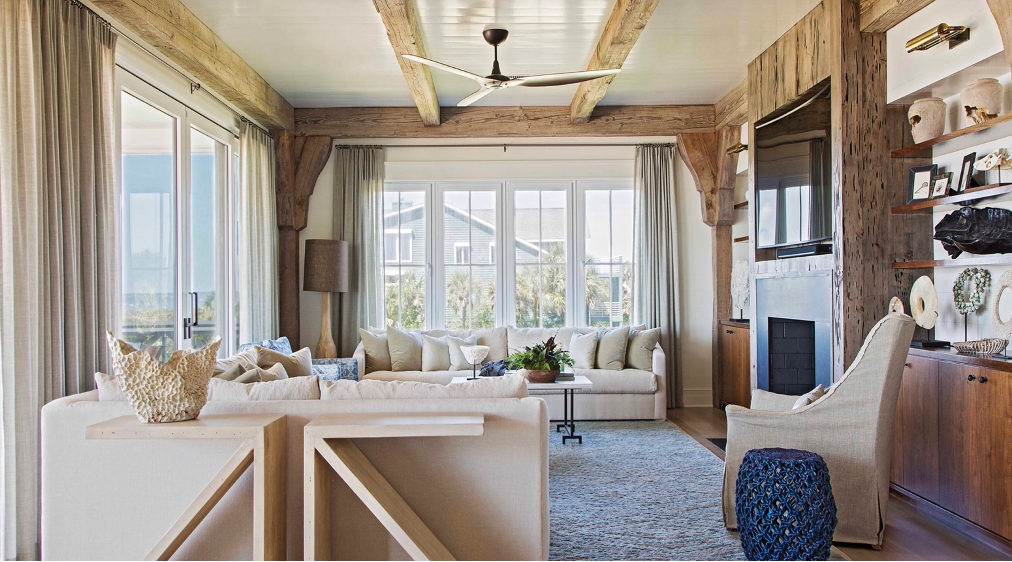
In the living room, custom-designed built-ins surround the pecky cypress fireplace. Verellen seating pieces in neutral linen coverings emit a casual beachy mood, along with a wool Moroccan rug from Moattar and soft blue shear wool draperies made from Rogers & Goffigon fabrics. Vintage ceiling beams in a natural sun-bleached finish lend well-worn texture, and bleached oak Noir console tables behind the sofa create pleasing visual contrast.
Island Oasis
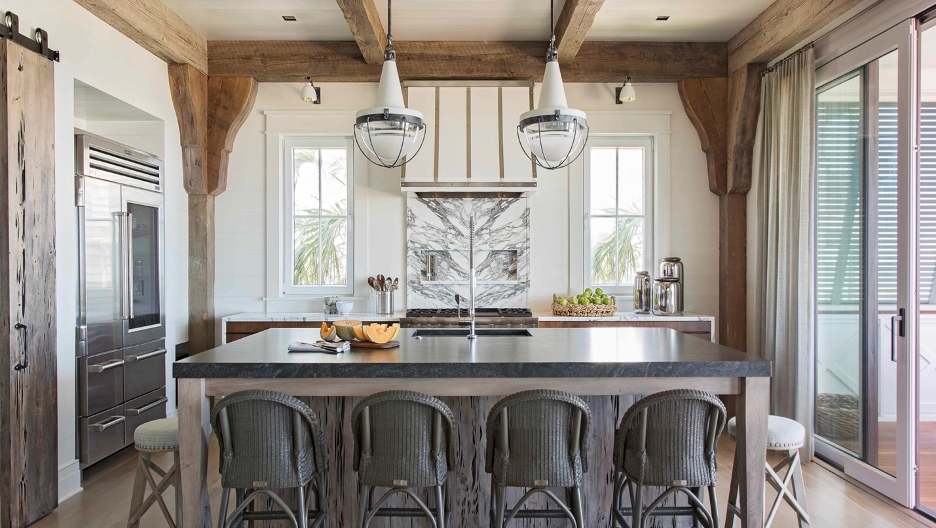
The kitchen features a lustrous soapstone island and a Callacatta marble countertop paired with a book-matched backsplash on the range wall. Pecky cypress adorns the island base as well as the barn-style door leading to the pantry and laundry area. Woven JANUS et Cie counter stools provide a textural counterbalance, and sleek Urban Electric Co. pendants illuminate the island.
Sky Light
As you move upstairs, sunlight pours into the stairwell and second floor through a dramatic oval skylight. Two generously sized upper-level primary suites have their own access to the top balcony as well as symmetrical port-hole style windows. With dual suites, the homeowners can comfortably host multiple families.
Ocean Lull
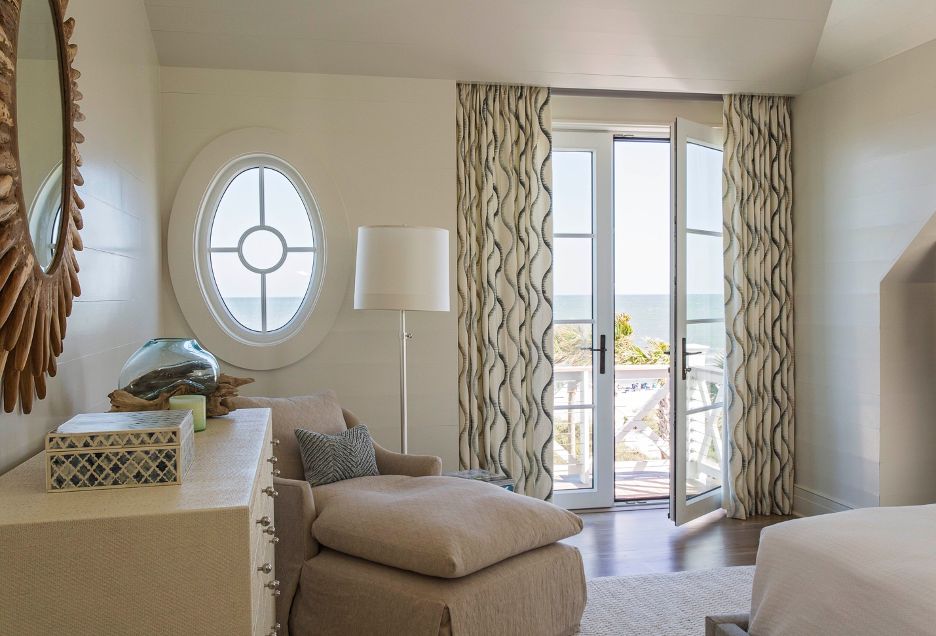
Dressed in luxurious linens and calming neutrals, this bedroom remains delightfully spare so the ocean views can provide the main attraction. Just a dash of pattern at the windows generates a touch of movement echoing the waves beyond.
Bathing Beauty
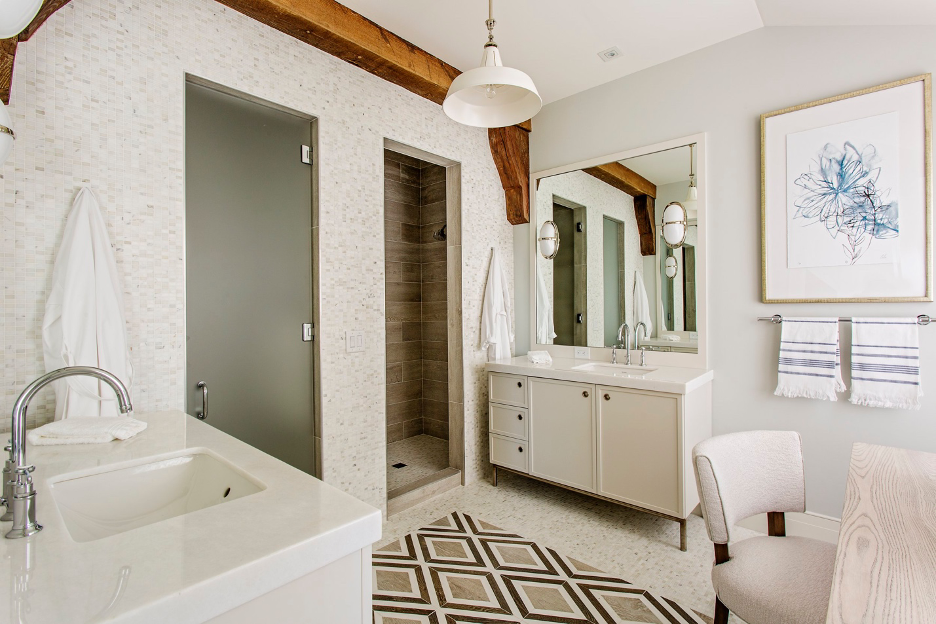
Custom vanities and Bianco Bella marble countertops with light gray veining infuse the primary bathroom with clean and elegant sophistication. Clad in tile walls with a contrasting darker hue, the walk-in shower provides a cozy alcove. Patterned Walker Zanger tiles create graphic visual appeal without disrupting the minimalist aesthetic.
Bunk Bungalow
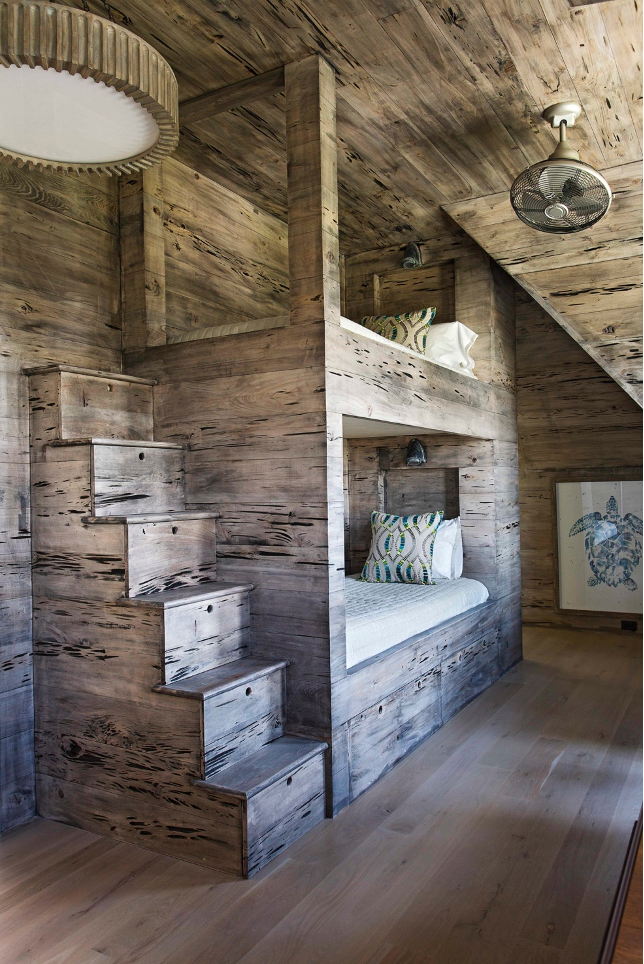
Pecky Cypress continues upstairs, making its most notable representation in the kids’ guest room. Everything, including the custom built-in bunk beds, dressers, and ceiling, is clad with this beautifully weathered wood. A turtle print from Trowbridge Gallery adds a playful accent.
Open-Air Opulence
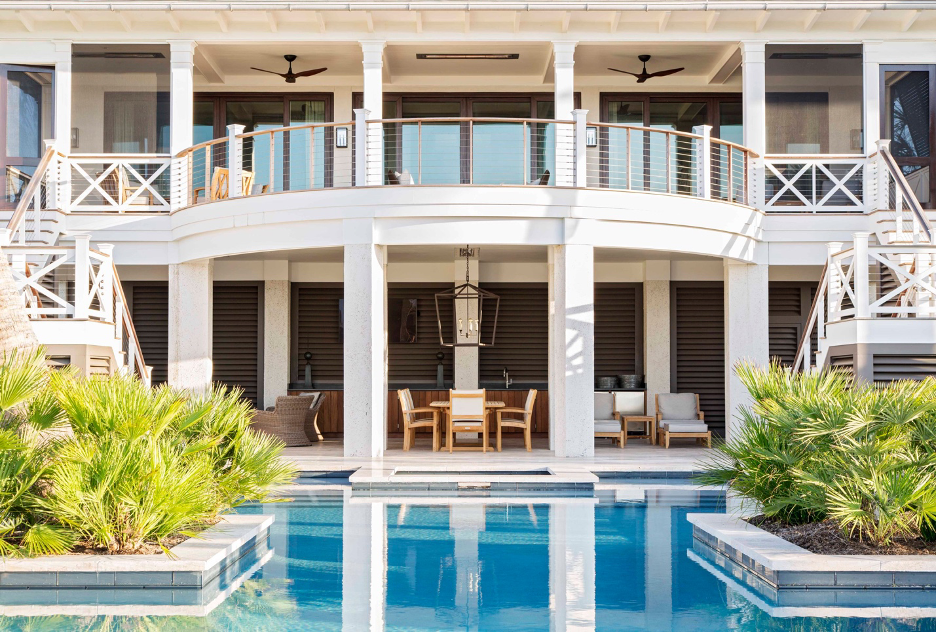
The curvilinear porch features concealed heaters, so indoor/outdoor living and entertaining can be enjoyed year-round. Low-maintenance teak lounge furniture offers durability that can withstand the humid and sometimes harsh beach climate. “We used as few cushions as possible,” says David. “Pillows tend to blow away at the ocean.”
Evening Glow
In the evenings, as the sun sets on the ocean, the home and pool gleam like a jewel, befitting the enchantment that comes with being on the Isles of Palms. “The homeowners love entertaining friends and family year-round,” says Steve. “We have many fond memories from this project and the design process. The owners are repeat clients for us, so we’ve gotten to know them well, and we always appreciate their propensity towards new and creative ideas.”
The kitchen and back porch have become the most popular spaces in the house by far. “There’s nothing better—food, family, comfy chairs, a sea breeze, and an incredible view,” David adds. “It was a truly memorable experience to create a home for these amazing clients, work alongside Steve and the Herlong team, and navigate through such a great home and build—I loved every minute.”
Are you dreaming of finding your own blissful beach getaway? Select a state and check out our listings at Beach-Homes.com.
Interior Design: Melanie Turner, Melanie Turner Interiors, Atlanta, GA Architecture: Darrell Russell and Jonathan Hampel, A Boheme Design, LLC., Inlet Beach, FL Builder: Jared Smartt, Earthbuild, LLC., Inlet Beach, FL Photography: Mali Azima
Inspired by the windswept palette of the Gulf Coast, Atlanta designer Melanie Turner knew exactly what to do to transform a couple’s seaside dream home into a reality. Nestled along Florida’s picturesque 30A—a coastal haven beloved for its crystalline blue-green waters and white sandy beaches—this breezy oceanside home embodies the bliss of beach living. Poised on an exclusive stretch of shoreline in a gated community, the dwelling boasts the best of Florida’s idyllic Emerald Coast.
“The clients loved blue and wanted their guests always to be reminded they were at the beach,” says Melanie. “However, they didn’t want a typical beach theme, but instead, a contemporary spin on a beachy look that does not fall into any cliches.”
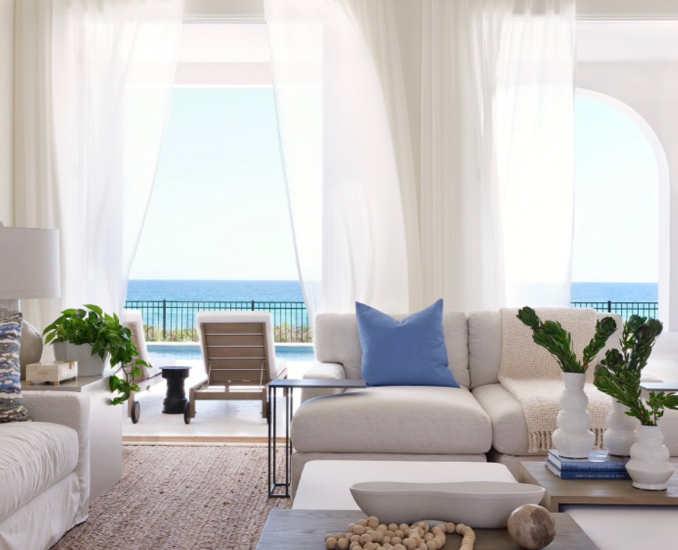
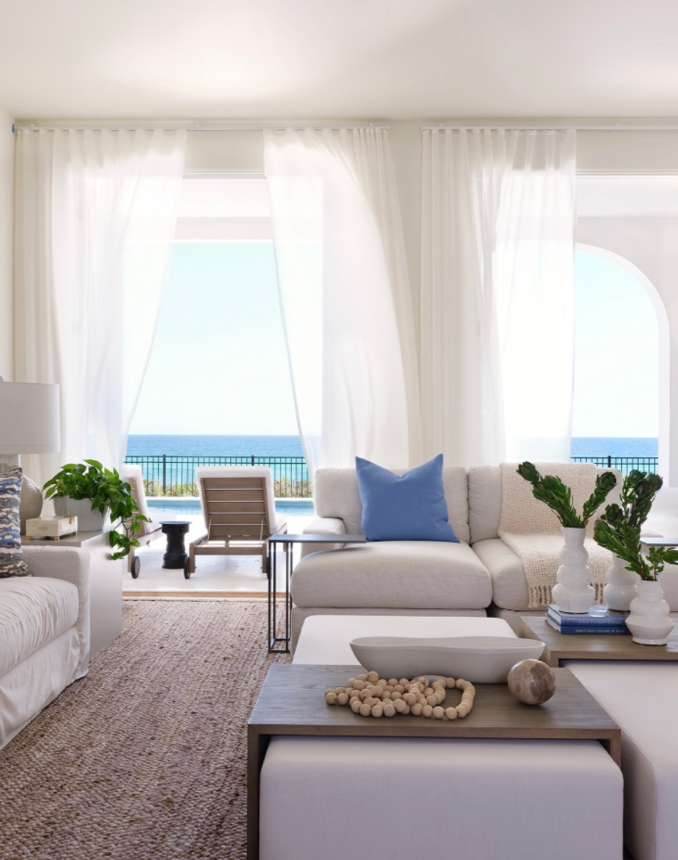
The first-floor den captures the very essence of laid-back beach life with its serene blue-and-white palette and organic textural accents. A natural woven rug from Miami Circle Floor Coverings anchors the luxe oversize seating pieces dressed in beachy white. In addition, blue linen pillows pay homage to the stunning ocean hues on display.
70s Verve
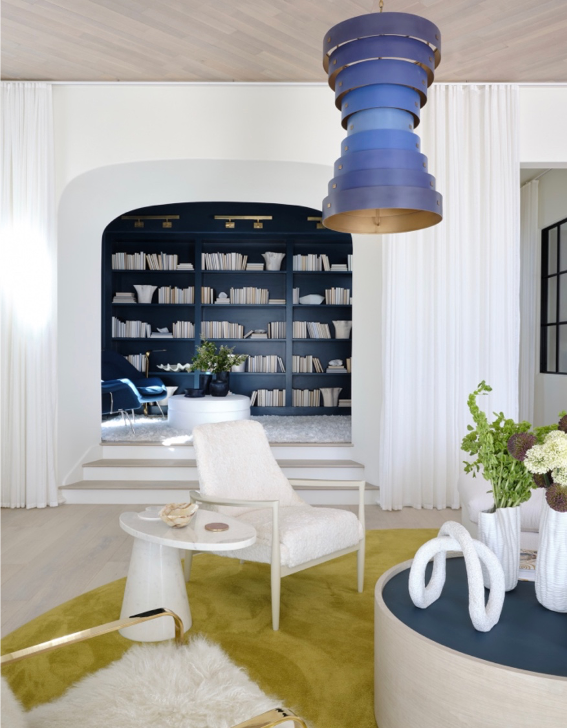
Funky forms and whimsical lighting set the tone for the living room, emanating a groovy 70s vibe. An unexpected citrine rug sets off the bright white furnishings, as well as the conversation-worthy blue ombré lighting fixture from Currey & Company. “The homeowners are in their sixties, so we wanted to channel a 1970s verve to liven things up and reflect the beloved era they grew up in,” notes Melanie. “Even though this was a beach house, we were conscious of using the color blue sparingly, yet in each instance, with quite a punch.”
Blue Cocoon
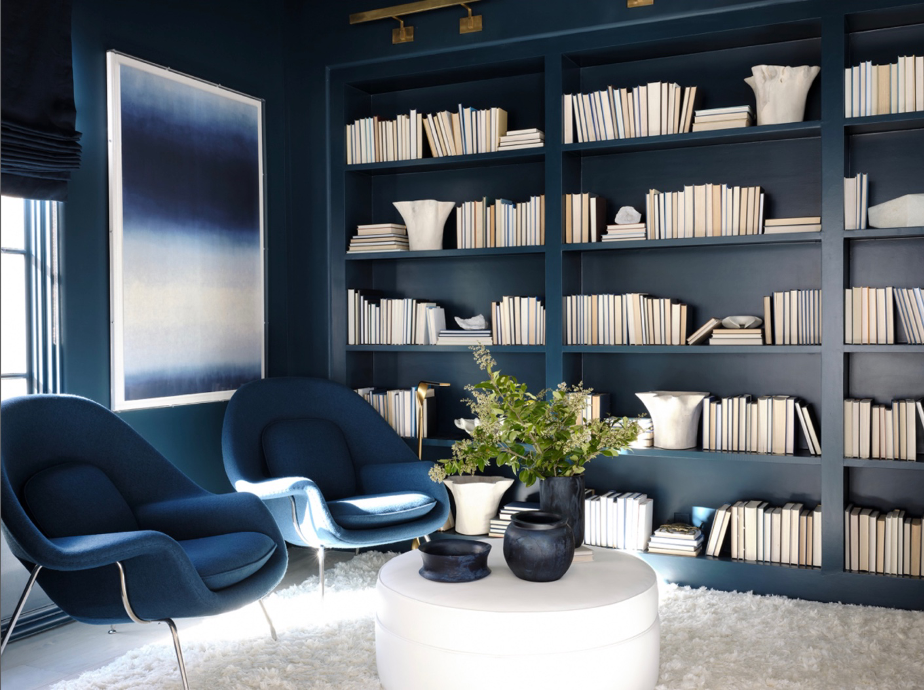
Awash in a deep blue palette and tucked into a cozy cove just off the living room, the library offers a delightfully inviting spot to immerse yourself in a good book. One of the many intimate moments strategically designed throughout the home, this comforting yet captivating space is the perfect escape for daydreaming or a quiet read. The area also doubles as a TV viewing room ideal for movie nights.
A nubby white Surya rug and a crisp white ottoman from Lee Industries strikingly contrast the inky blue hues. A pair of snug chairs from Rove Concepts brings an element of cocooning comfort.
Dynamic Dining
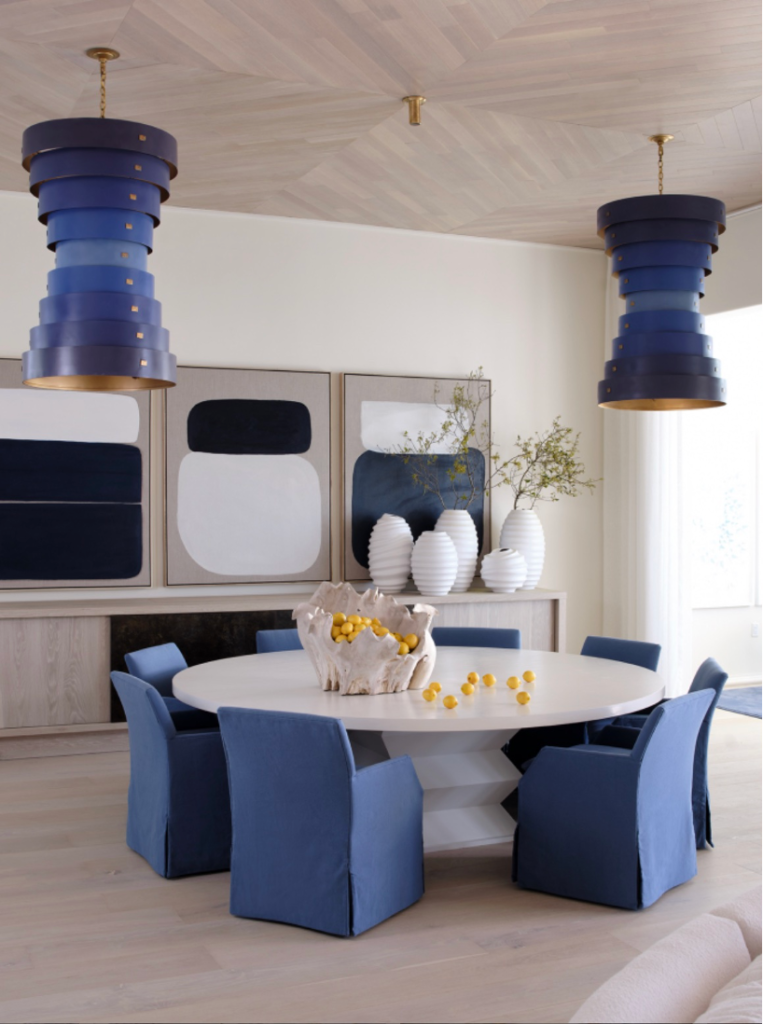
Funky shapes and modern accents continue in the dining area just off the kitchen. Blue slipcovered chairs from Lee Industries surround a brilliant white table with a sculptural accordion-shaped base, and a pair of Currey & Company lighting fixtures echo those in the living room. A dynamic graphic artwork by George Williams takes the spotlight over the custom buffet cabinet. The console conceals a TV that can emerge when desired.
“There wasn’t anything we didn’t touch architecturally,” says the designer. “We placed wood flooring on the ceiling to create warmth and intimacy and used Venetian plaster throughout for a clean beachy vibe.”
Sleek Functionality
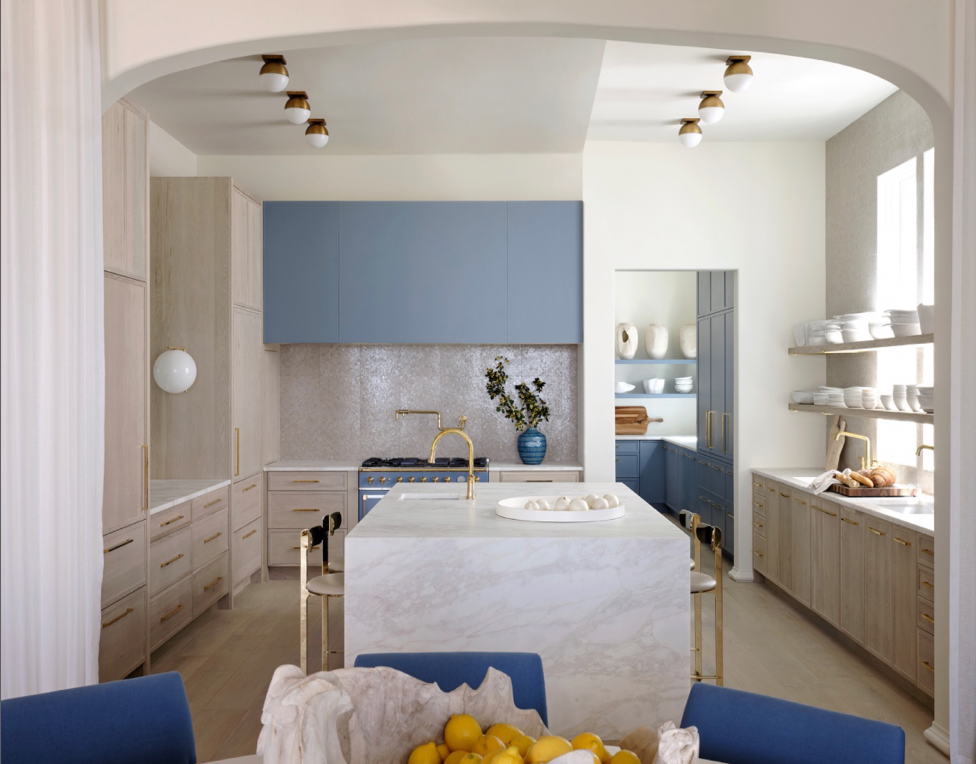
A lustrous white marble waterfall island gives the kitchen a sleek, contemporary edge. Orbed ceiling fixtures from Circa Lighting mirror a white orbed sconce from Design Within Reach. A blue La Cornue range connects visually to a custom blue glass Hood from Karpaty. “We created warmth by using a driftwood stain on the kitchen floors and cabinets along with billowing sheers to create texture and curved doorway arches that soften the edges,” notes Melanie. “We used color in totally unexpected ways—the range, glass hood, and custom cabinetry—yet the application feels comforting and familiar as ever.”
Misty Blue Oasis
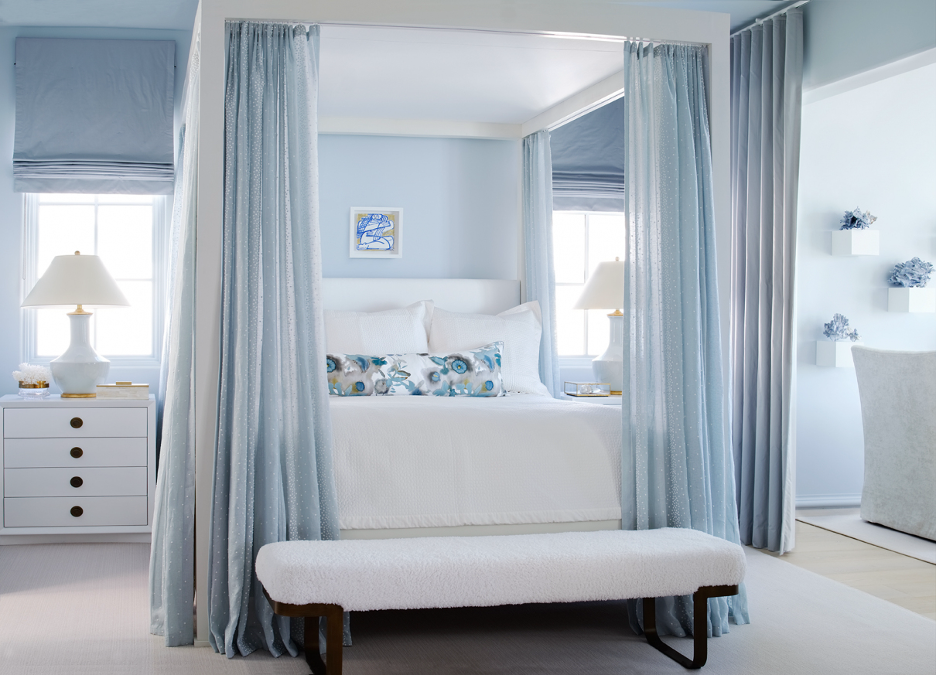
In the primary bedroom, Melanie draped a custom canopy bed in Kravet’s diaphanous “Gaffey Mist” fabric. Luxurious white bedding from Peacock Alley gets a whisper of color from Thibaut’s patterned beige and teal Summer House pillow fabric and a minuscule artwork by America Martin from TEW Galleries. Matching table lamps from circa lighting befit the Mod bedside chests from Modern History.
Serene Seating
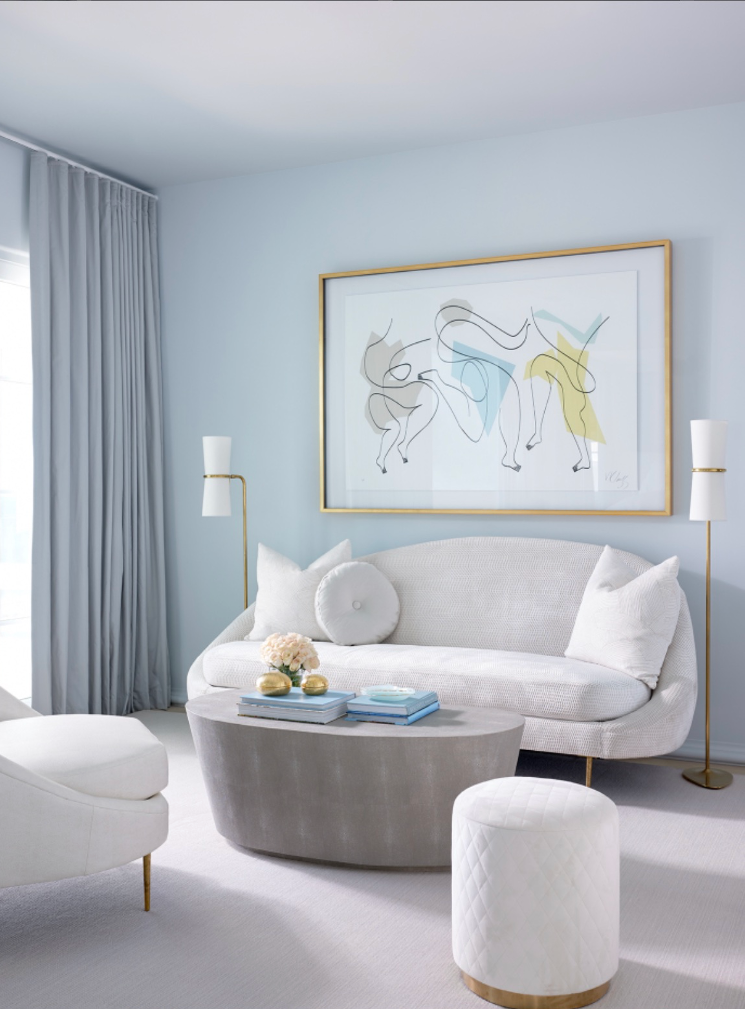
The spacious bedroom’s sitting area offers a quiet comfort zone with rounded furniture pieces from the owners’ personal collection surrounding an organically inspired cocktail table from Made Goods. A pair of sleek floor lamps from Visual Comfort flank a color-tinged figure drawing from Art and Frame Source.
Spa-Inspired Simplicity
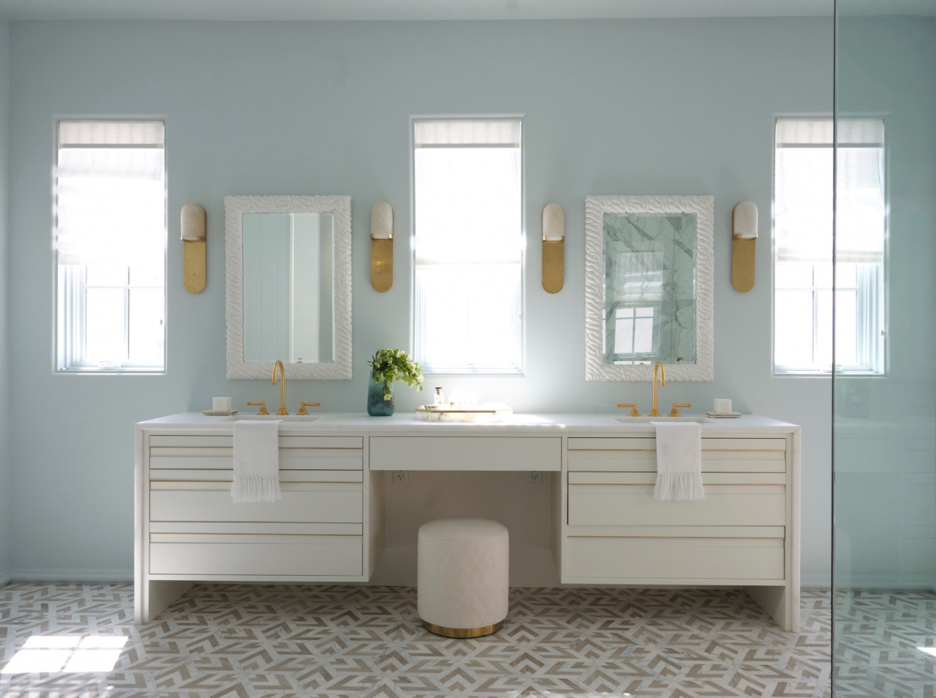
Bathed in a muted seafoam hue, the primary bathroom emits quiet luxury with a custom Karpaty vanity, twin mirrors from Made Goods, and a quartet of sconces from Circa Lighting. Patterned tile floors from SOURCE provide a visual punch without disrupting the tranquil vibe of the space.
The Jewel Box
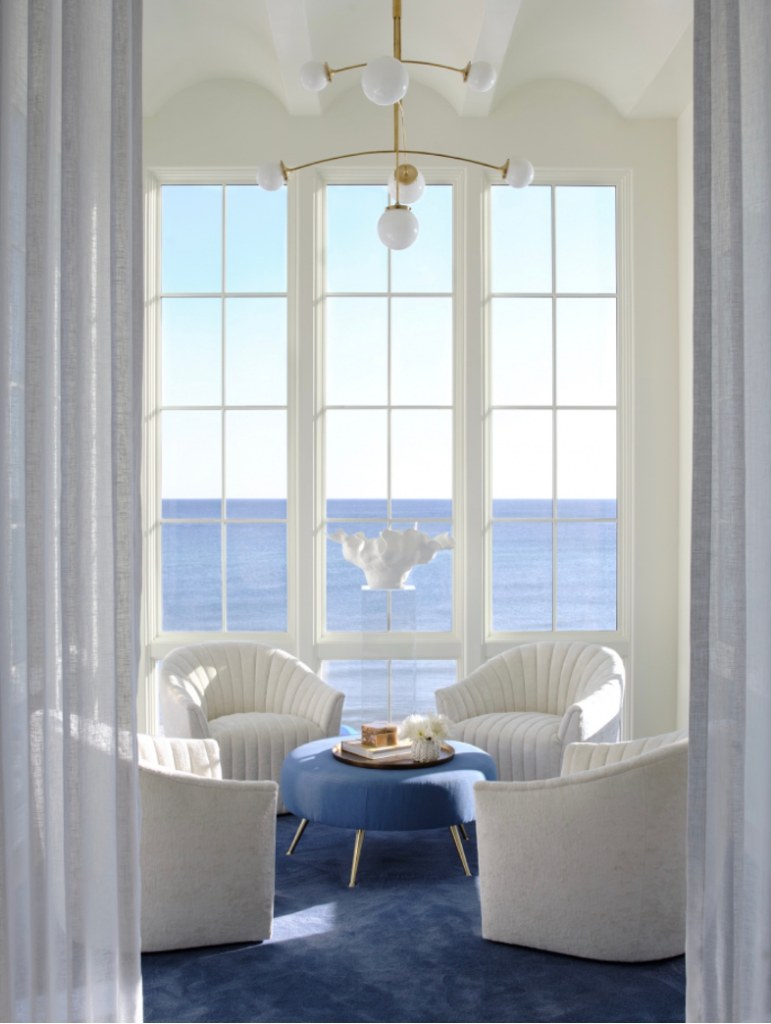
An intimate seating area adjacent to the dining room, this supreme space is referred to by the homeowners as “the jewel box.” Featuring windows on all sides, this dreamy spot creates a sense of floating on the water. Here, the blue ocean envelops you from every angle and provides a breathtaking backdrop for early morning coffee, cocktails at sunset, and star gazing after dark.
Anchored by a plush blue rug, cozy white swivel chairs from Interlude surround a blue cocktail ottoman from Lee Industries. An orbed chandelier from Circa Lighting provides the crowning jewel. “Using the client’s favorite color—blue—we implemented an ombré effect throughout the dwelling’s four stories,” says Melanie. “We used bright and bold blue shades on the first floor and gradually went softer as we went higher up in the house. The entire home encompasses 11,900 square feet over three floors and a rooftop deck. So, it was essential to make the most of the oceanfront view from every room as well as create intimacy in such a grand home.”
Dreaming of finding your perfect beach getaway? Select a state and check out our listings at Beach-Homes.com.
Whether you prefer a quaint beach cottage or a sleek, modern oasis that captures panoramic ocean views, beach home styles across the country are as distinctive as the inhabitants within. But no matter where you live, a beach dwelling offers one thing in common—a meditative sanctuary in which to unwind, connect with the ocean, and gather with family and friends. If you’ve ever traveled from coast to coast, you can’t help but notice the array of architectural styles that reflect the area’s overall aesthetic, culture, and climate conditions. Like local cuisine, beach homes exemplify the charming characteristics of their location and reveal their true sense of place. So, join us as we embrace the beach life and discover some of the most iconic architectural beach home styles of the South/Southeastern region and how they came to be.
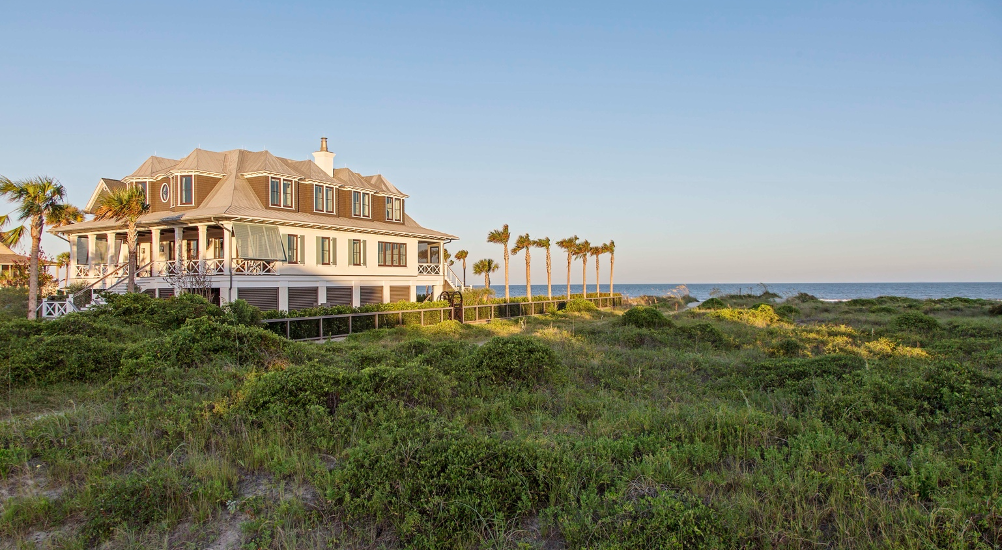
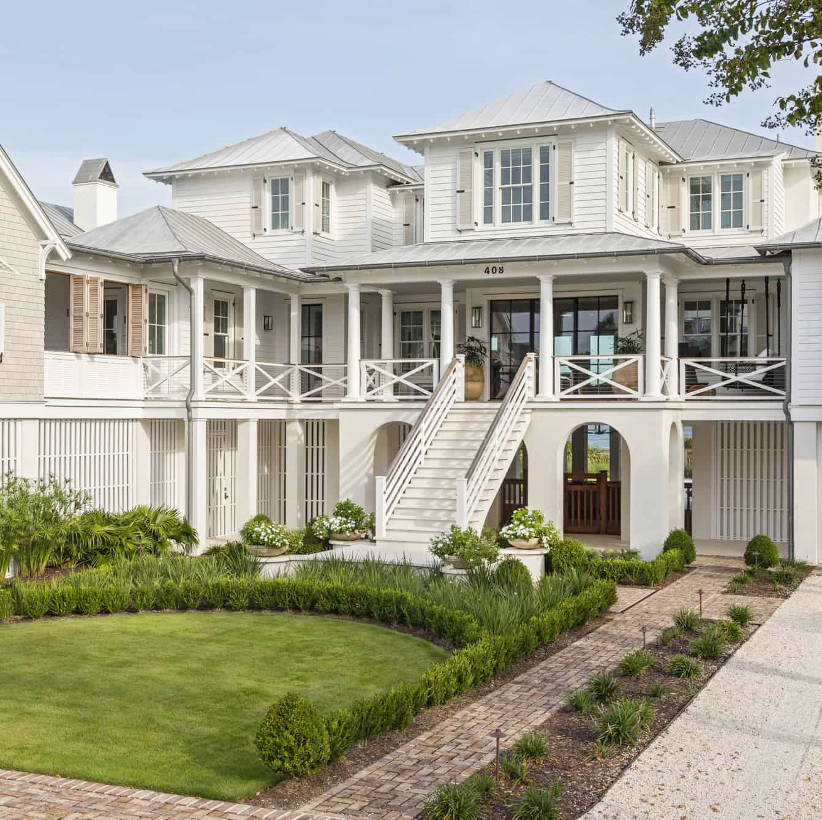
Echoing the comfort and pace of the Deep South, Lowcountry-style beach homes are gracefully designed with simplicity and practicality in mind. Originating along the coast of South Carolina—a region known as the Lowcountry—this classic Southern style emanates an air of effortless elegance synonymous with beach life. Developed in the 1700s, Lowcountry-style architecture was strategically designed to invite ventilation and natural airflow for this subtropical climate. Deeply rooted in tradition and Southern hospitality, this regional favorite conveys comfort and practicality with its shady verandas, breezy screened porches, and spacious open-concept rooms.
Other features quintessential to Lowcountry design—and well-suited for warmer beach climates—include high ceilings, shutters, and double-hung windows with top openings to allow hot air out and bottom openings to let in cool evening breezes. In addition, transom windows help create more ventilation and natural light, and durable metal roofing deflects the hot sun and protects against tropical rain and dangerous hurricane winds.
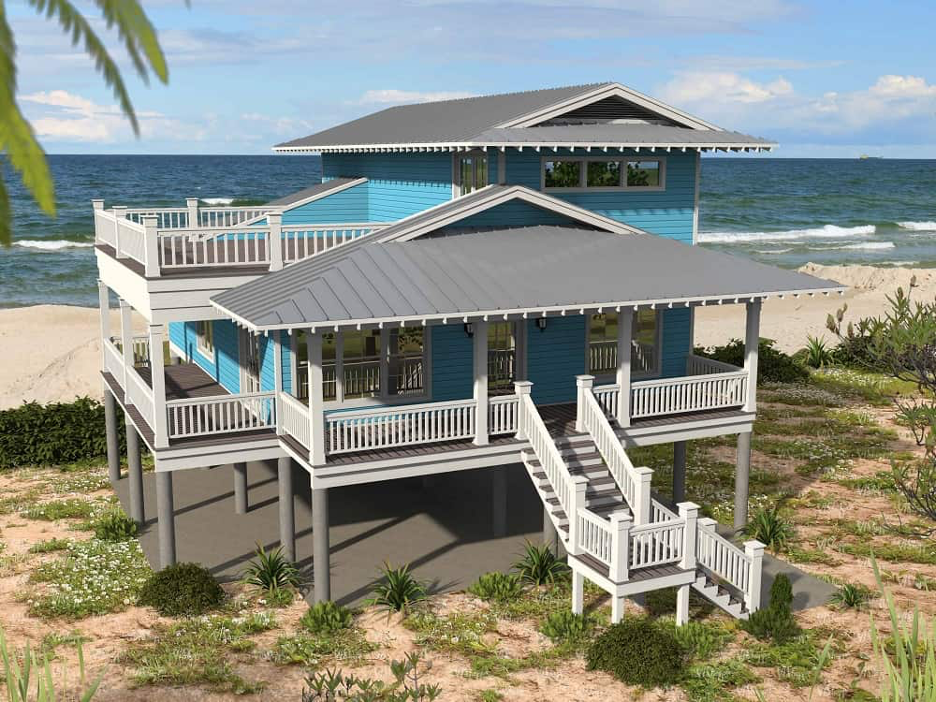
Who wouldn’t want to embrace the historic charms of Key West and its laid-back beachy attitude? An area famous for its sunset celebrations and local hangouts frequented by Ernest Hemingway, this region embodies the purest essence of carefree beach living. Displaying a colorful mix of British Colonial and Bahamian flavors, the classic Key West beach home style emanates a free-spirited aesthetic with its candy-hued exteriors, vibrantly painted shutters, spacious front porches, and hurricane-durable metal roofs. White picket fences and white trims stand out against the lush tropical foliage. In addition, bright primary hues and citrus shades take inspiration from the region’s parrots and tropical plantings.
Many beachfront homes incorporate stilt bases to protect from high tides and storm surges, and wraparound porches on every level invite salty sea breezes and open-air living. To capture the Caribbean-inspired feel of the area, the interiors often include eclectic, reclaimed furnishings with a well-worn vibe. Key elements include Bahamian-style shutters and woven ceiling fans, natural fibers, low-maintenance fabrics, and whimsical seaside accents like conch shells, painted furniture, and brightly colored artwork. In addition, the vibrant aesthetic is often counterbalanced with neutral shades that take their cues from the region’s weathered natural elements like driftwood, sand, shells, sand dollars, and seagrasses.
Mediterranean Style
Rooted in the architectural styles of Greece, Spain, Italy, and other countries that border the Mediterranean Sea, this timeless aesthetic is a beautiful interpretation of coastal design. Mediterranean style emphasizes indoor-outdoor living and lends itself to both classic and contemporary looks. Well-suited for warm, sunny climates, this fluid style includes terracotta tile roofs, wrought-iron embellishments, and graceful arched doors, windows, and other interior elements. Designed for optimal airflow, the interior spaces capture a breezy feel complemented by rustic finishes, including natural stone, exposed wood beams, and hardwood or tile floors.
In addition, Mediterranean-style beach homes focus on splendid outdoor views and lots of natural light. The interior palettes exemplify neutral hues, natural finishes, and white plaster walls. Materials exude an earthy, organic aesthetic, including natural woods, tile, terracotta, rattan, wicker, jute, wrought iron, and breathable textiles like linen and cotton. Accent colors honor the natural environment and lean toward cool ocean hues and sunny golden tones. Also, green foliage such as cypress trees and potted lemon and olive trees will bring a Mediterranean feel to any landscape where the climate permits. The airy interiors and spacious outdoor terraces, balconies, and patios lend themselves to hospitality, large-scale alfresco entertaining, and lavish indoor dining. In its purest form, this pared-down aesthetic embodies simplicity and a less-is-more approach that emulates seaside living.
Coastal Cottage Style
A timeless favorite, coastal cottage style has a blissfully relaxed and inviting appeal, making it ideal for beach home retreats. Cozy and comfortable, the look is often characterized by airy porches that connect visually to the beach. Worn, weathered finishes, charming beadboard walls, a delightful texture mix of wicker and natural-fiber rugs, and a soothing color palette inspired by water, driftwood, seagrass, shells, and sand create an unmistakable sense of casual comfort that speaks to beach living.
Plus, rustic surfaces show their rich patinas and the imperfections of age while combining effortlessly with the luster of stone countertops and modern appliances. This no-fuss look emulates the easy-living mindset of those who embrace the beach life. Bare feet, wet bathing suits, kids, and dogs are always welcome here.
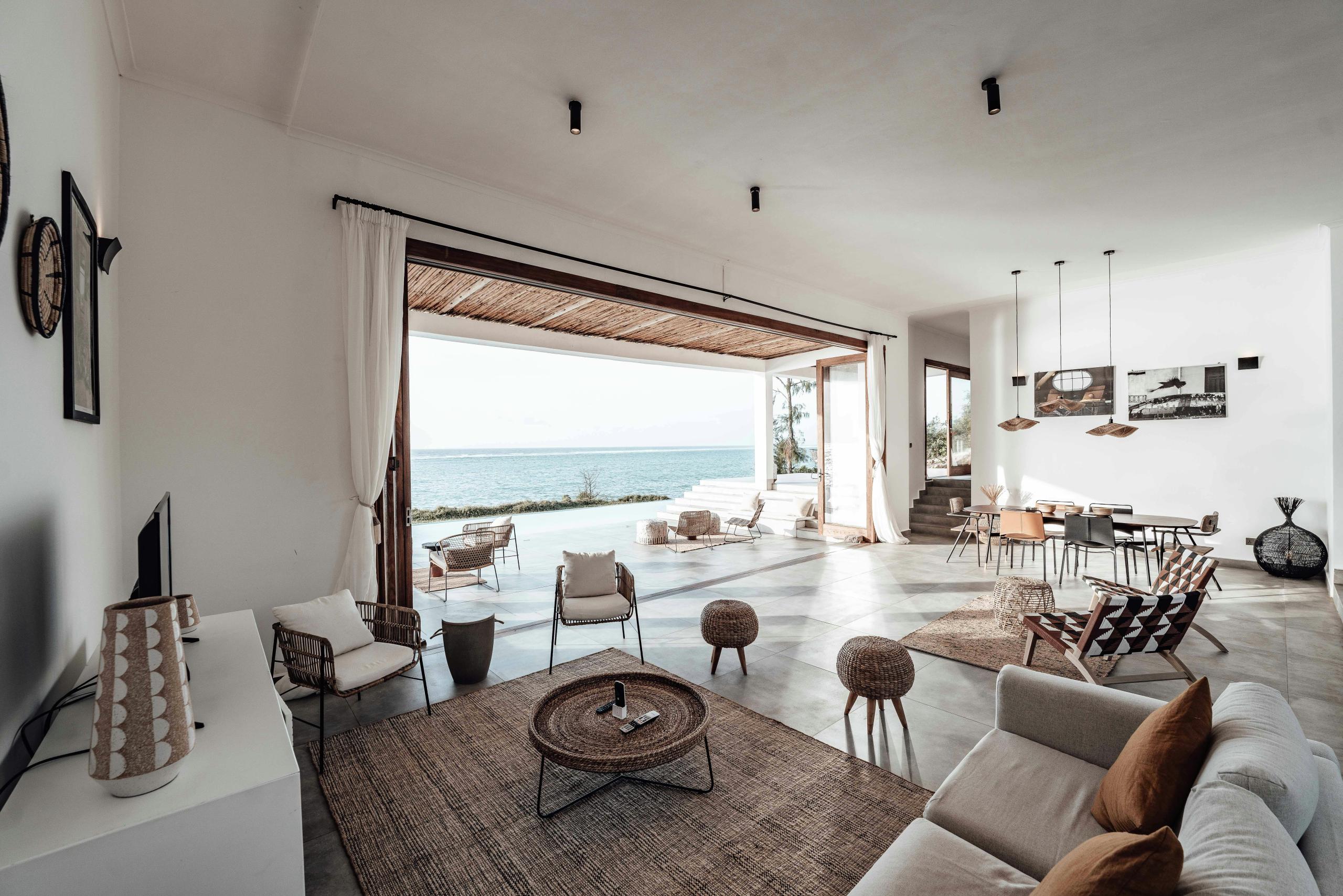
The antithesis of coastal cottage style, modern coastal style offers a fresh, pared-down take on beach living. Forgoing the kitschy accents, beachy décor, and vibrant colors, this aesthetic embodies sleek minimalism, clean lines, subtle palettes, and bold shapes. Against a soft, nature-inspired color scheme, modern coastal interiors use textural elements to bring them to life and create tactile, visual interest. Woven sisal or seagrass rugs, weathered driftwood accents, and seashell embellishments harmonize with the windswept beach environment, bringing a satisfying sense of balance. Organic materials and shapes, sleek contemporary furniture, and abstract artwork that evoke tranquility all contribute to this minimalist style. Soft cottons and crisp linens are the fabrics of choice and pair well with textural pillows, blankets, and throws.
If you’re eager to explore beach living options in the Southern region—or anywhere else across the country, for that matter—visit Beach-Homes.com, select your desired state, and discover the beauty of beach life.