

Watching a sea turtle haul her heavy shell onto a moonlit beach is like witnessing a prehistoric ritual. It is a moment of profound vulnerability and strength. However, because most sea turtle species are currently threatened or endangered, our role as observers is critical.
Here is everything you need to know to navigate turtle nesting season responsibly.
Understanding the Timeline

Nesting season isn’t a single date on the calendar. Instead, it is a seasonal migration that follows the warmth of the earth.
Peak Season: In the Northern Hemisphere—spanning regions like Florida, Mexico, and Hawaii—the season typically runs from March through October.
The Midnight Ritual: Sea turtles are masters of the night. Moreover, they almost exclusively nest under the cover of darkness to avoid the dehydrating heat of the sun and the watchful eyes of daytime predators.
The Waiting Game: Once the eggs are deposited, they remain in the sand for an incubation period of 45 to 70 days. Notably, the timing of the “boil” (when hatchlings emerge all at once) depends largely on the local sand temperature.
The Nesting Process: Step-by-Step

The journey from the surf to the dunes is an exhausting physical feat for a creature designed for the water.
- The Approach: The female swims to the shoreline and pauses. She is scanning for movement and shadows, ensuring the coast is clear before she commits to the land.
- The “Body Pit”: Once she finds a suitable spot above the high-tide line, she uses her powerful front flippers to clear away the dry, loose surface sand.
- Excavation: Using her rear flippers with surprising dexterity, she digs a flask-shaped hole. This “egg chamber” is deep enough to protect the clutch from fluctuating temperatures.
- The Lay: During the actual laying of 80 to 120 eggs, the mother enters a “trance-like” state. In this state, her breathing becomes heavy, and she becomes less aware of her immediate surroundings. However, she is still easily spooked if interrupted.
- Camouflage: Before returning to the sea, she spends significant energy “throwing” sand with her flippers to disguise the nest’s location. This makes it harder for predators to find.
Best Practices for Human Observers
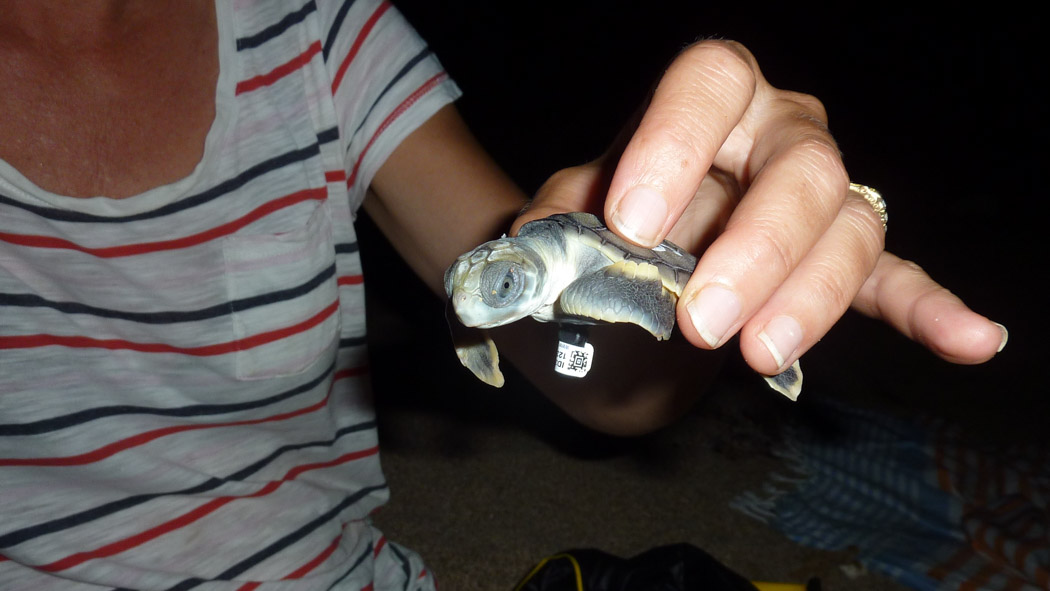
If you find yourself on a nesting beach, your goal is to be a “ghost.” To ensure the survival of the species, follow these golden rules:
Keep it Dark: Hatchlings and mothers use the bright horizon over the ocean to find their way. Artificial lights (phones, flashlights, or porch lights) can cause them to wander toward roads or pools.
- Pro Tip: If you must use a light, use a red-filtered lens. Turtles are less sensitive to long-wavelength red light.
Maintain Distance: Stay at least 30 feet away. If a turtle hasn’t started laying yet, any noise can cause a “false crawl,” where she gets spooked and retreats to the ocean without depositing her eggs.
Flatten the Landscape: To a two-inch hatchling, a sandcastle is a mountain and a footprint is a canyon. Fill in holes and knock down sand structures before you leave the beach for the day.
No Flash Photography: This is often illegal and highly disruptive. High-intensity flashes can temporarily blind a turtle, leaving her disoriented and vulnerable.
Threats to the Nest

The survival of a sea turtle nest is a delicate balancing act against both nature and human activity. While a single nest may contain over 100 eggs, the journey from the sand to the sea is fraught with obstacles.
Here is a closer look at the primary threats facing these nests:
1. Natural Predators
From the moment they are laid, eggs are a high-protein target for local wildlife.
- Land Mammals: Raccoons are among the most persistent predators, often digging up entire nests shortly after they are laid.
- Crustaceans: Ghost crabs can burrow into the egg chamber from beneath the sand.
- Avian Threats: Once hatchlings emerge, birds like gulls and herons watch from above. They pick off the small turtles before they can reach the surf.
2. Environmental Factors
The physical environment plays a silent but powerful role in the health of the clutch.
- Storm Surges: High tides or hurricane-driven surges can “wash out” a nest, eroding the sand and exposing eggs. Alternatively, surges can “drown” eggs by cutting off the oxygen supply through the porous shells.
- Hot Chick & Cool Dudes: Unlike mammals, the sex of a sea turtle is determined during incubation by the temperature of the surrounding sand.
- Warmer Sand: Typically leads to a higher percentage of female hatchlings.
- Cooler Sand: Typically leads to a higher percentage of male hatchlings.
- Extreme Heat: Due to rising global temperatures, many nests are producing dangerously high ratios of females. This threatens the long-term genetic diversity of the species.
3. Human Interference
Human activity is often the most preventable threat to nesting success.
- Coastal Development: Bright lights from hotels and homes disorient hatchlings, who are evolved to follow the brightest horizon (the moon over the ocean). Due to this, they may wander toward roads or get trapped in swimming pools.
- Plastic Pollution: Emerging research suggests that microplastics embedded in the sand can change the thermal properties of the nest. In addition, larger debris acts as physical barriers that trap hatchlings on their way to the water.
- Poaching: In certain regions, eggs are still illegally harvested for food or traditional medicine. This significantly impacts the recovery of local populations.
How to Get Involved

You don’t have to be a marine biologist to help. You can actively participate in conservation efforts:
- Guided Turtle Walks: Book a tour with a sanctioned conservation group. They use specialized equipment and expert knowledge to let you view nesting safely.
- Adopt a Nest: Many hatcheries allow you to “adopt” a clutch, providing the funds needed for protective cages and monitoring.
- Report Sightings: If you spot an unmarked nest or an injured turtle, contact your local wildlife or fish and game commission immediately.

Protecting these ancient travelers requires a collective commitment to sharing the shore with respect and mindfulness. By darkening our beaches and keeping our distance, we give the next generation of sea turtles their best chance at reaching the horizon. Every nest successfully hatched is a small but vital victory for the biodiversity of our oceans.
To learn more about the ocean and its inhabitants, check out Beach Homes Lifestyles trivia.