

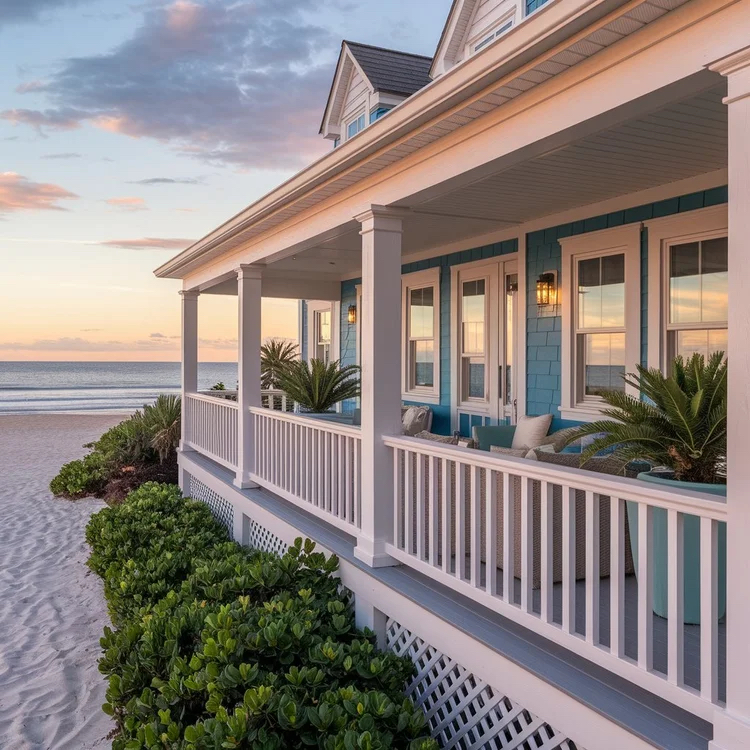
Transforming a coastal patio or porch for spring is less about seasonal décor and more about recalibration. Winter along the water—whether it’s a nor’easter in the Upper East, salt-heavy winds in the Southeast, or relentless rain in the Pacific Northwest—leaves residue on every surface. Spring 2026 design thinking leans into durability, adaptability, and restraint. Coastal homeowners are increasingly treating outdoor spaces as true secondary living rooms, with the same attention to layout, materials, and atmosphere as interiors. The difference lies in climate response: teak that silvers gracefully in New England, powder-coated aluminum that withstands the Texas Gulf humidity, performance fabrics that resist the Pacific Northwest moisture, and shade structures that temper the California sun.
Across regions, the through-line is intention. Instead of adding more, designers are refining what’s already there—editing furniture groupings, upgrading lighting, incorporating native plantings, and investing in a single statement feature that elevates the entire setting. The goal for 2026 is a patio that feels composed yet relaxed, resilient yet inviting. Below are six trends shaping coastal outdoor spaces this spring, each adaptable to beach homes from Maine to Malibu.
Spring Reset: Deep Clean and Strategic Prep
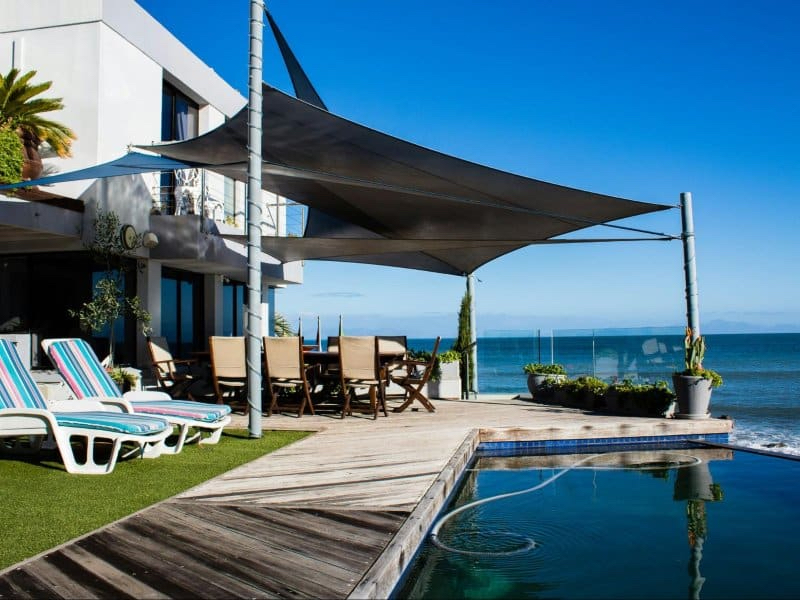
Before introducing anything new, reset the space. Sweep and power-wash hardscaping to remove salt residue—especially critical in the Mid-Atlantic and Upper East, where freeze-thaw cycles trap debris in stone joints. Clean outdoor rugs with a mild solution and allow them to fully dry before replacing.
Slipcovered cushions should be laundered according to fabric guidelines; most performance fabrics now tolerate gentle cycles. For upholstered frames without removable covers, use a soft-bristle brush, diluted soap, and low-pressure rinse. In humid climates like the Southeast and Texas Gulf, follow with a fabric-safe mildew inhibitor. Touch up chipped powder-coated frames and lightly sand and oil teak or ipe if you prefer a warm tone over weathered gray.
This reset is trending because homeowners are extending furniture lifespans rather than replacing entire sets—a sustainability-minded shift that aligns with 2026’s focus on quality over quantity.
Purpose-Driven Seating and Dining Layouts
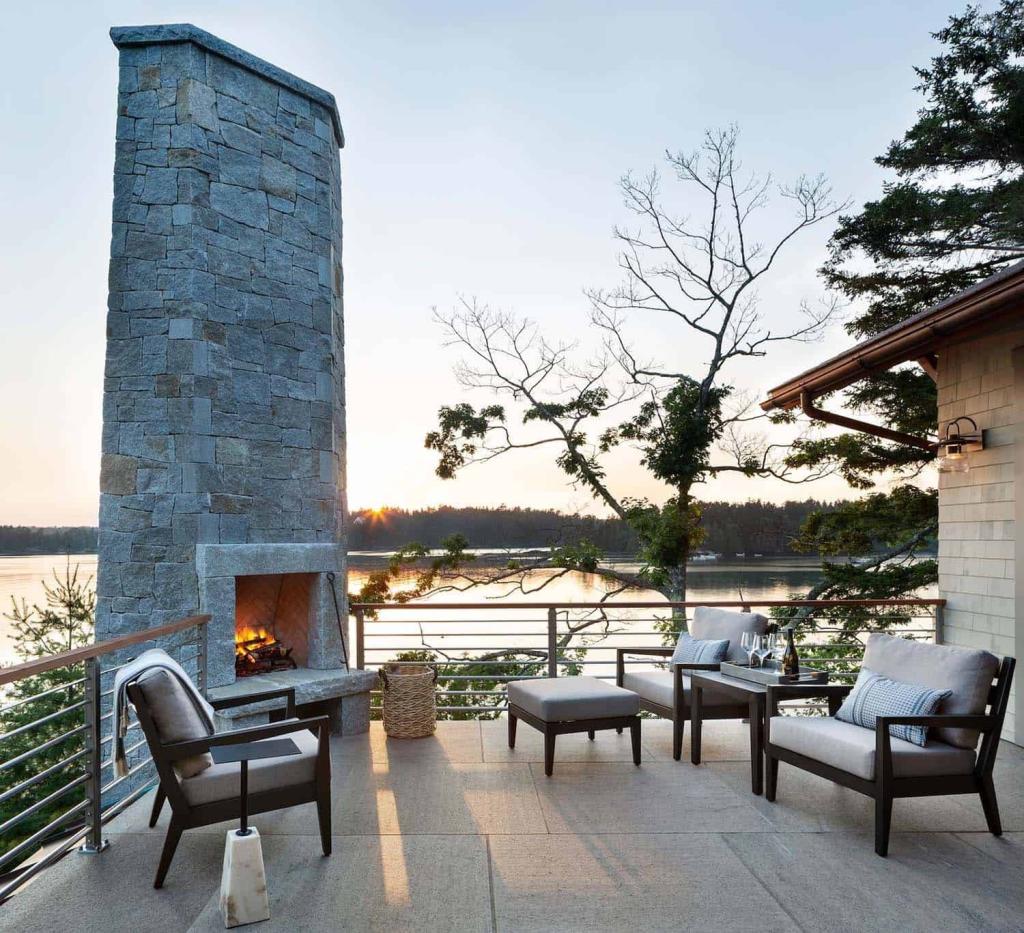
Seating is essential, but configuration depends on use. Are you hosting seafood dinners at sunset in California? Casual cocktail hours on a Carolina barrier island? Or weekend brunch overlooking a rocky Maine shoreline?
For lounging, anchor the space with a low-profile sectional in performance linen or textured neutrals. Add two swivel chairs to encourage conversation and maintain sightlines to the water. In narrower Pacific Northwest decks, consider modular pieces that can be reconfigured around a dining table.
Dining spaces are trending larger in 2026, even in compact footprints. A rectangular teak table works well for Upper East and Mid-Atlantic homes, while aluminum or marine-grade polymer performs better in humid Texas Gulf conditions. Position dining areas perpendicular to prevailing winds, and allow at least 36 inches of clearance for circulation.
The modern approach favors mixed seating—bench on one side, chairs on the other—softening the formality and maximizing flexibility.
Layered Lighting for Evening Depth
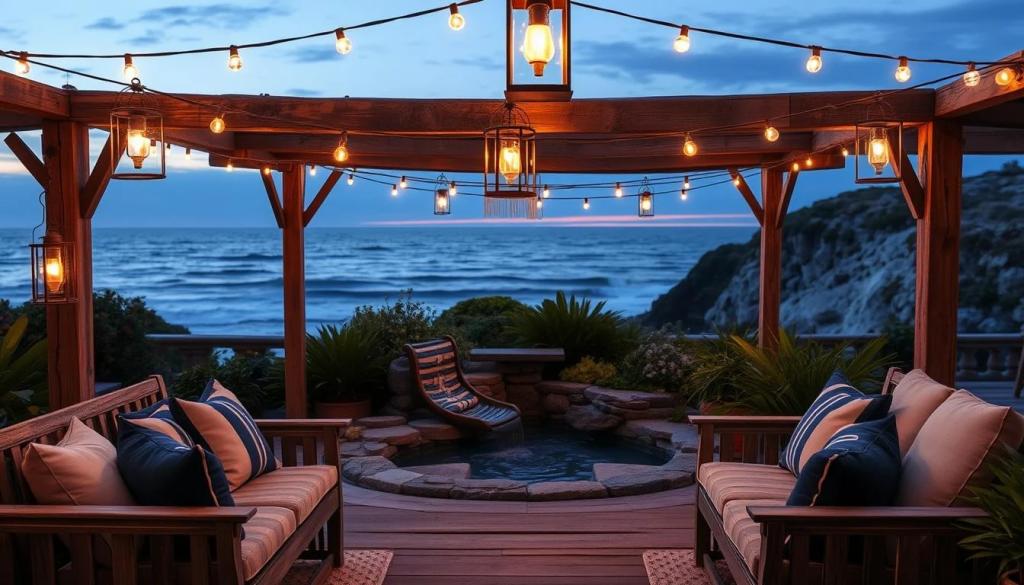
Lighting now defines the patio as much as furniture. String lights remain relevant, but the 2026 iteration is warmer in tone and strategically installed rather than casually draped. Secure them to pergolas or tension cables to withstand coastal winds.
Supplement overhead glow with portable lanterns—battery or solar-powered—for layered illumination. In the Pacific Northwest, where spring evenings stay cool and misty, opt for enclosed glass lanterns. In California and the Southeast, open-frame designs feel lighter.
Path lighting and subtle uplighting around native grasses add dimension without glare. Candles—hurricane-shielded for wind—complete the atmosphere. The goal is not brightness but gradation: pools of light that make outdoor dinners feel intentional rather than improvised.
Create Fluid Indoor / Outdoor Transitions
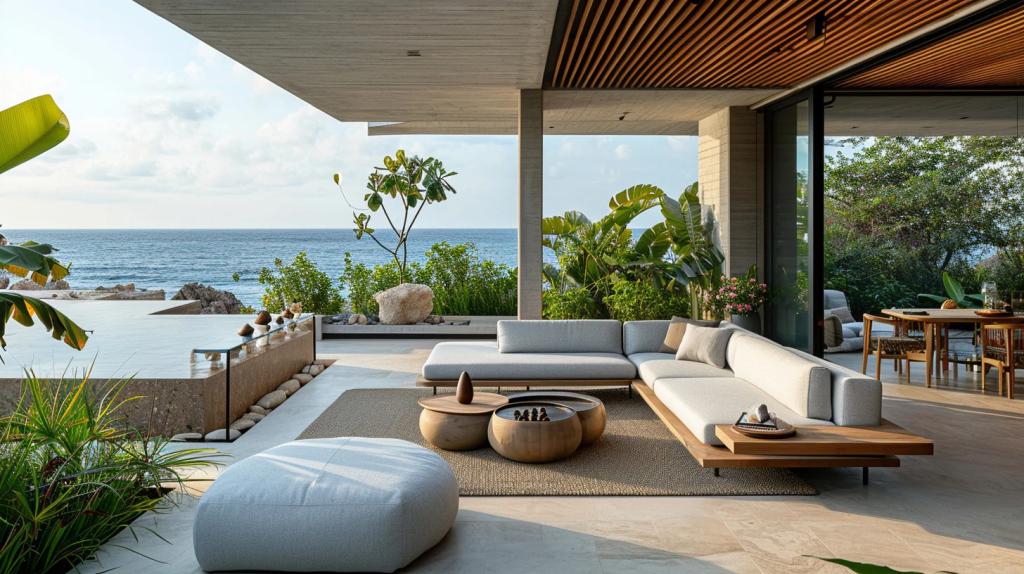
A defining 2026 shift is treating patios as fully realized rooms. Start with an outdoor rug sized large enough that all front furniture legs rest on it. This anchors the arrangement visually and physically.
Add performance drapery panels to pergolas or covered porches for softness and privacy—particularly useful in dense California coastal neighborhoods or Southeast beachfront communities. Use pillows in tonal layers rather than high-contrast nautical motifs; textured solids feel more current.
In the Upper East and Mid-Atlantic, where architecture may lean traditional, echo interior trim colors outdoors. In contemporary West Coast homes, continue minimalist palettes but introduce tactile contrast through boucle-style outdoor fabrics.
The takeaway: cohesion between interior and exterior spaces increases perceived square footage and property value.
Native Greenery and Living Installations
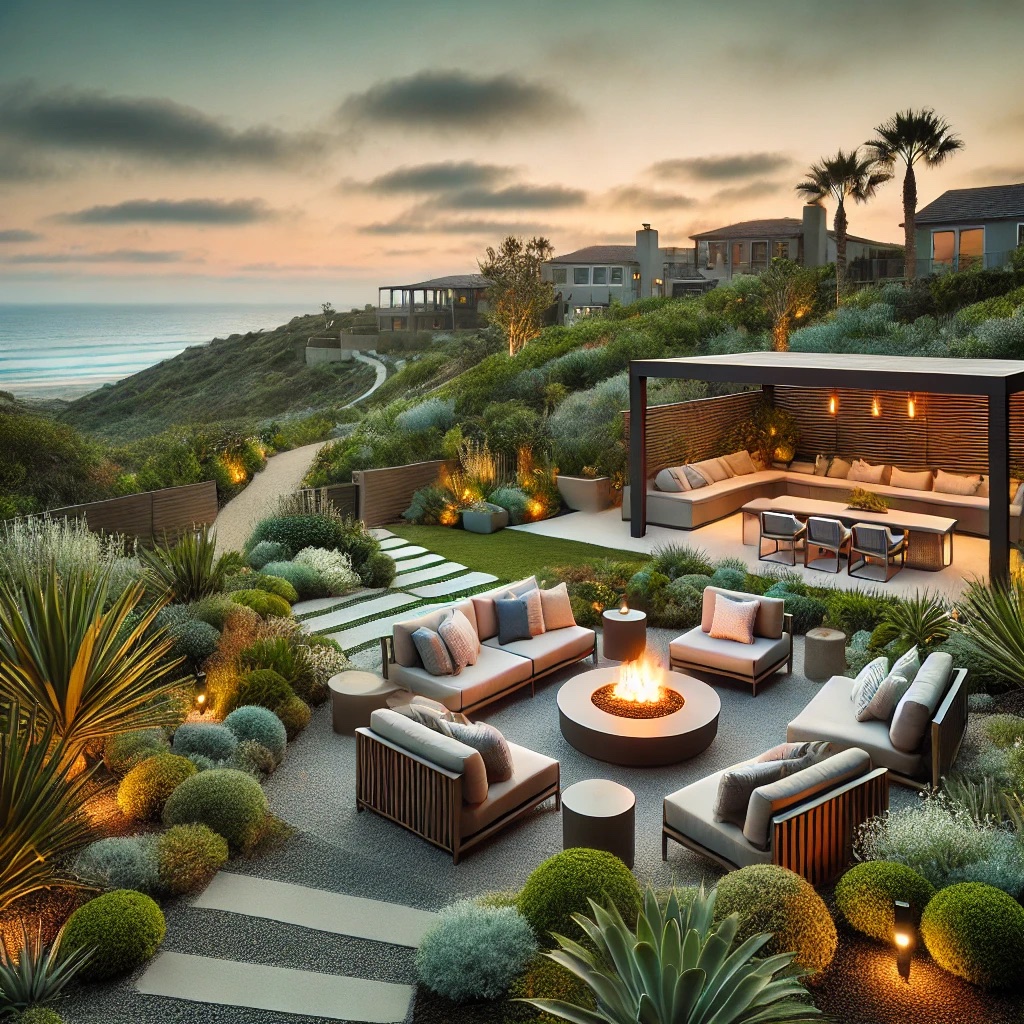
Greenery is no longer an afterthought. In 2026, coastal homeowners are prioritizing native and climate-adapted plants. For the Upper East, consider beach grasses and hydrangeas in oversized planters. Mid-Atlantic patios benefit from bayberry or dwarf inkberry shrubs. The Southeast and Texas Gulf support lush palms and heat-tolerant herbs.
In the Pacific Northwest, layer ferns and evergreen shrubs in matte ceramic pots. California homeowners are gravitating toward drought-tolerant succulents and olive trees.
Living walls—particularly compact modular systems—are gaining traction in smaller beach properties where ground planting is limited. Even a simple herb trough near an outdoor kitchen adds fragrance and function. Greenery softens hardscape lines and visually connects patios to surrounding dunes, cliffs, or wetlands.
Statement Features
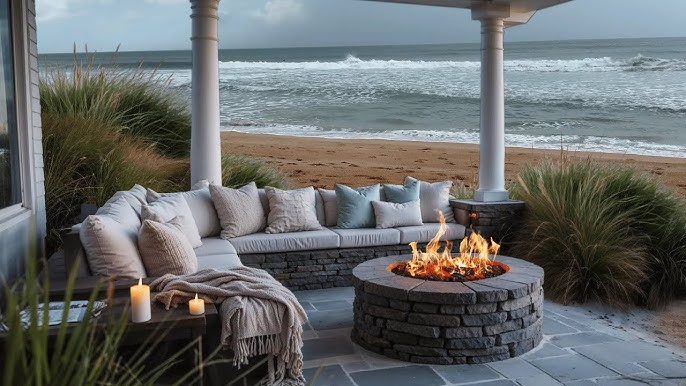
A single statement feature elevates an otherwise restrained patio. Fire pits remain the most-requested addition—particularly in the Upper East and the Pacific Northwest, where cool spring evenings persist. Gas and propane models offer ease and safety for families, while wood-burning designs appeal in rural Mid-Atlantic settings. Choose low-profile concrete or stone forms that echo the coastal landscape. Maintain proper clearance and follow local codes, especially in California’s wildfire-prone regions.
Water features are emerging as a parallel luxury. Slim water walls suit contemporary West Coast homes; traditional fountains integrate well in Southeast courtyards. In humid Texas Gulf climates, ensure proper circulation to prevent stagnation. Both fire and water add sensory depth—sound, warmth, movement—without overwhelming the space.
Spring 2026 outdoor design for coastal homes is defined by refinement rather than reinvention. A thoughtful cleaning, purposeful furniture layout, layered lighting, interior-level styling, climate-aware plantings, and one signature feature can transform even the simplest patio into a composed extension of the home. When each decision responds to regional climate and architectural context, the result is a space that feels enduring—ready for long weekends, quiet mornings, and the steady rhythm of life by the water. For more design inspiration, visit Beach Homes Lifestyles.