

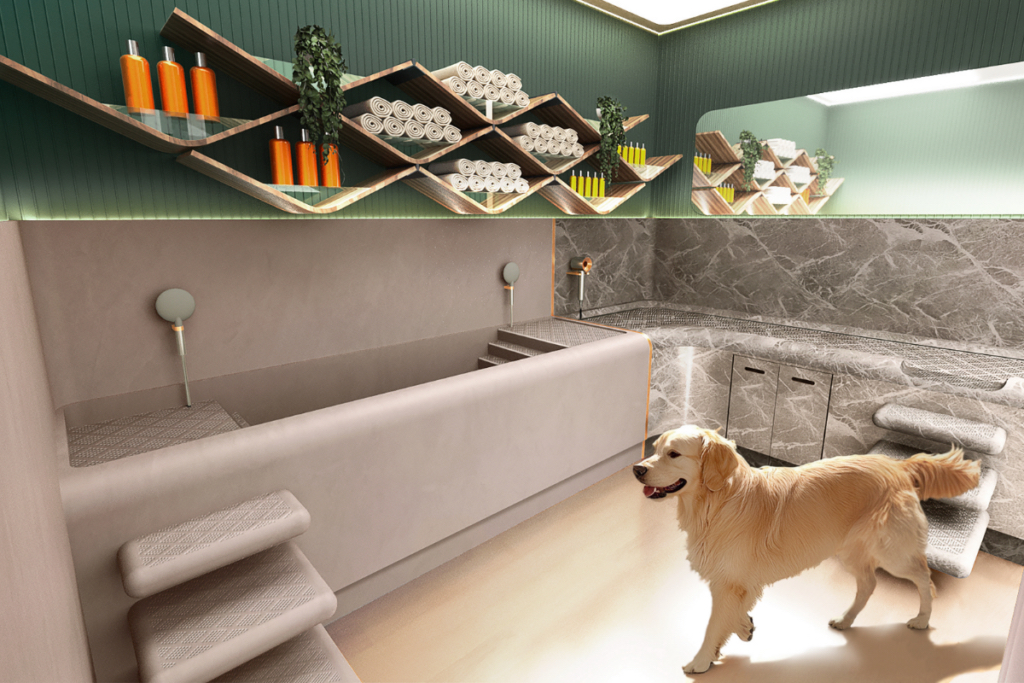
For coastal homeowners, pets are woven into the daily rhythm of beach walks, dockside mornings, and sandy returns at sunset. As residential design continues to evolve toward lifestyle-driven planning, the at-home pet spa has become less of a novelty. It is now more of a practical extension of thoughtful living. These spaces acknowledge the realities of coastal life—salt air, moisture, mud, and shedding. At the same time, they preserve the calm, uncluttered aesthetic that defines well-designed beach and coastal homes.
What distinguishes today’s pet spa from a basic wash station is intentionality. Designers are no longer hiding pet zones behind closed doors. Instead, they are integrating them into mudrooms, laundry areas, spare baths, and even custom-designed spa rooms. These spaces reflect the home’s broader architectural language. Material choices lean toward durability and ease of maintenance. They also emphasize texture and tone. Storage is concealed yet accessible. Furthermore, personality is expressed through subtle patterns, coastal color stories, and carefully selected artwork rather than novelty décor.
For savvy coastal homeowners, an at-home pet spa is about control—containing mess, streamlining routines, and creating a space that feels cohesive with the rest of the home. When executed well, it supports daily life without calling attention to itself. It quietly elevates both function and design.
The Elevated Mudroom Wash
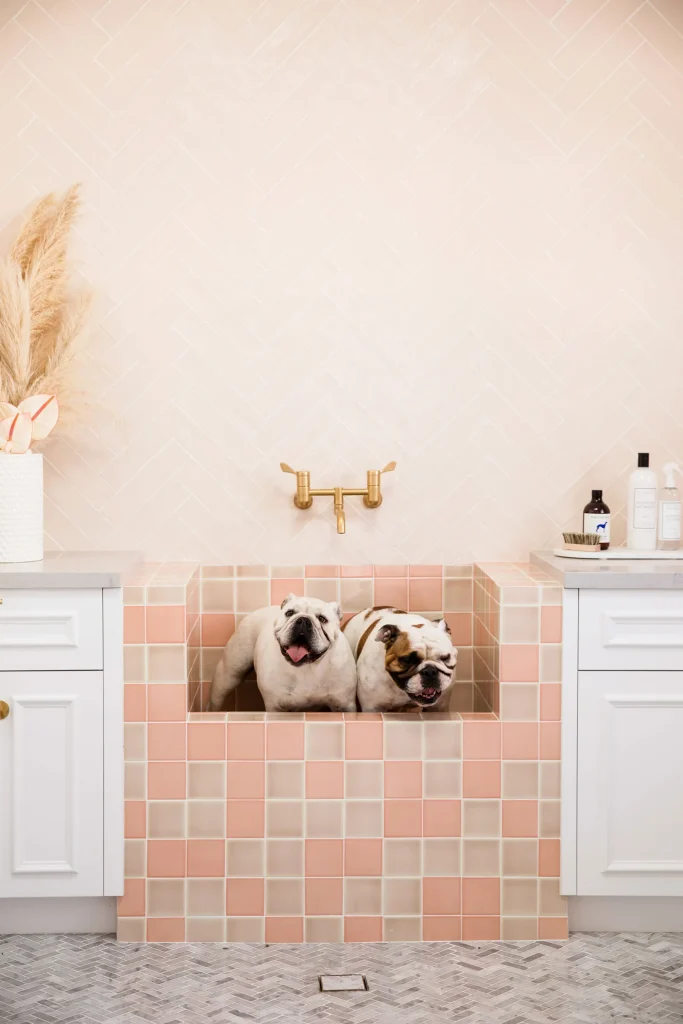
Designed for homes where beach walks and backyard play are part of everyday life, the mudroom pet spa has become a modern coastal staple, particularly in Upper East, Mid-Atlantic, and Pacific Northwest regions. In these regions, transitional spaces already work hard. A built-in wash station, finished in durable porcelain tile that mimics limestone or honed slate, allows pets to be rinsed off immediately upon entry. At the same time, decorative mosaic accents or subtle herringbone patterns introduce visual interest. This aligns with the home’s interior palette.
Open shelving keeps towels, leashes, and grooming essentials within reach, while closed cabinetry below maintains a clean, uncluttered look and discreetly houses food, bins, and cleaning supplies. Integrated feeding stations can be tucked into lower drawers, preserving circulation while reinforcing thoughtful planning. Additionally, the look suits shingle-style, coastal traditional, and updated Craftsman homes. Coastal artwork, sculptural hooks, or framed photography add personality without tipping into whimsy.
Spin Cycle Chic: The Laundry Room Grooming Zone
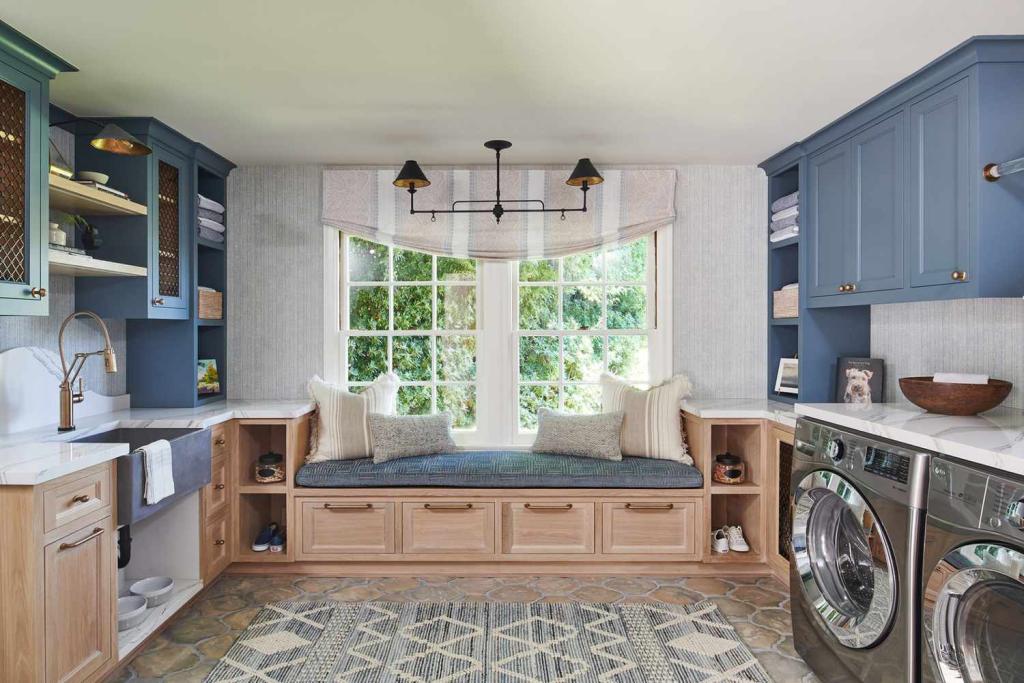
Blending pet care into the laundry room reflects the broader design shift toward efficiency-driven spaces that multitask without sacrificing style. This is especially relevant in Mid-Atlantic and Southeast beach homes. Here, a compact pet shower or grooming basin is seamlessly tucked beside cabinetry or beneath a folding counter. It is then finished with patterned tile or soft, striped stone, which brings movement and texture to an otherwise utilitarian room. Open shelving keeps frequently used items visible and accessible, while tall closed cabinets conceal bulkier supplies for a streamlined aesthetic. Color plays an important role, with coastal neutrals layered with pale blues or sandy tones. These choices keep the space light and breathable in humid climates. Additionally, subtle wallpaper, framed coastal prints, or playful but restrained artwork keep the room from feeling purely functional. As a result, it becomes an inviting extension of the home’s overall design language.
Rinse and Repeat: The Walk-In Shower
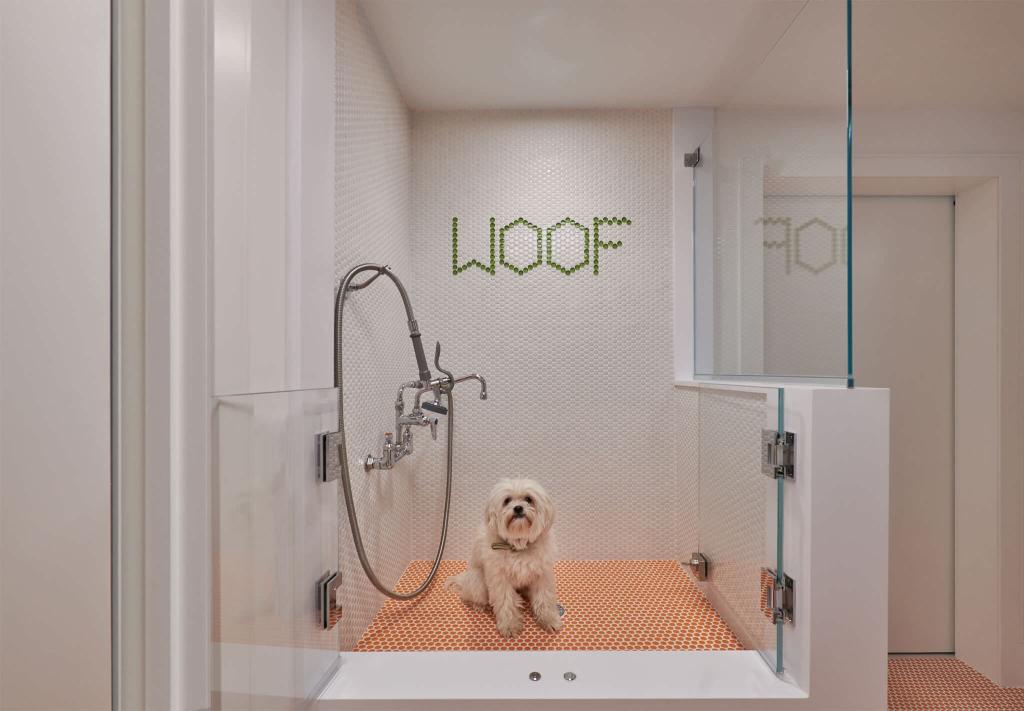
In contemporary coastal homes, especially in California and the Texas Gulf Coast, walk-in showers are increasingly used as convenient bathing spaces for pets. This approach aligns with modern renovation trends that prioritize flexibility and smart reuse of square footage. Large-format, slip-resistant tile in sea-glass hues, soft concrete tones, or lightly veined stone sets a calm, spa-like foundation. Built-in niches and ledges provide storage for grooming products without cluttering the space. Adjacent closed cabinetry keeps towels and tools out of sight. Meanwhile, a small run of open shelving can neatly display folded linens or ceramic vessels. Minimalist artwork or tonal wall finishes maintain visual calm, making this solution particularly well-suited to modern, contemporary, and indoor-outdoor architectural styles common along warm coastal regions.
Playful Small-Space Conversion
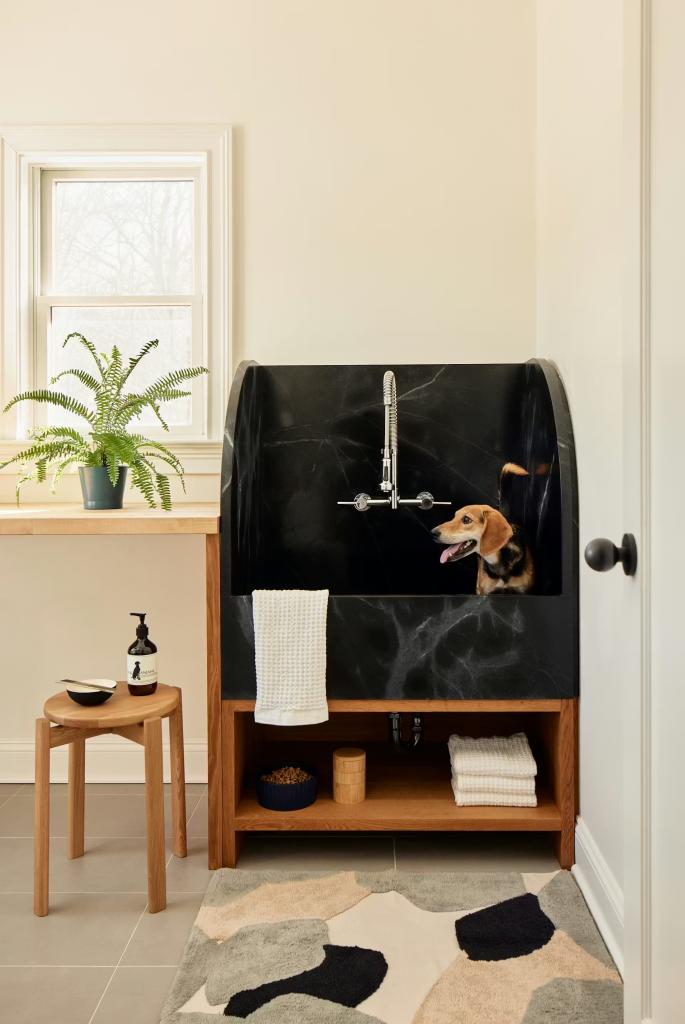
For homeowners open to personality-driven design, converting a powder room or small utility space into a whimsical pet spa reflects the growing acceptance of bold patterns and expressive color in secondary spaces, especially in Gulf Coast and California coastal homes. Graphic wallpaper, thematic prints, or soft coastal motifs immediately set the tone, while a compact wash basin clad in decorative tile grounds the room with durability. Storage is carefully balanced, with floating shelves for everyday essentials and closed cabinetry to conceal supplies, preserving a polished look. Color choices may lean brighter here—salty greens, sun-washed blues, or warm corals—without overwhelming the space. Framed art, playful illustrations, or subtle pet-themed photography complete the room. Thus, it creates a space that feels intentional, personal, and confidently designed rather than novelty-driven.
The Ultimate Fetch: A Standalone Pet Spa Suite

At the high end of the trend spectrum, dedicated pet spa rooms reflect the rise of fully customized lifestyle spaces in coastal homes, particularly on larger properties in California, the Upper East Side, and the Pacific Northwest. These rooms are designed with the same rigor as a primary bathroom. They feature raised wash stations finished in natural stone or artisanal tile, integrated feeding zones, built-in kennels, and generous closed cabinetry that maintains visual order. Open shelving allows for curated storage using baskets or ceramic containers that echo the home’s material palette. Color schemes remain restrained and regionally informed—cool grays and slate tones in the PNW, warmer stone in California, classic neutrals in the Northeast. Meanwhile, art and lighting are chosen to elevate the room without distracting from its function. The result is a space that feels fully integrated, quietly luxurious, and deeply practical.
An at-home pet spa, when thoughtfully designed, becomes far more than a convenience—it is a reflection of how coastal homeowners live, move, and care for their spaces. By integrating durable materials, smart storage, and regionally inspired design choices, these rooms support daily routines while preserving visual calm. Whether folded into an existing utility space or created as a destination of its own, the most successful pet spas feel intentional, cohesive, and attuned to both pets and people. For more inspired ideas to live your best beach life, visit Beach Homes Lifestyles.