

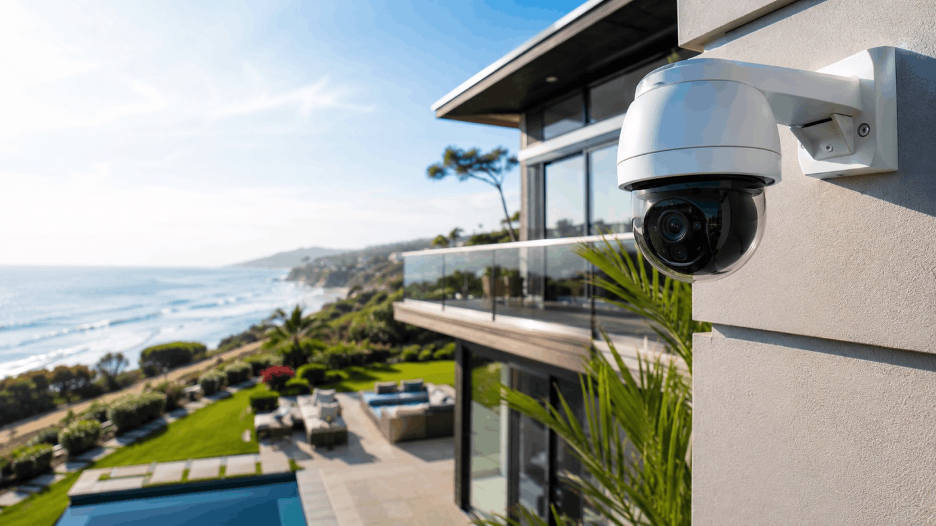
For many beach homeowners, security is no longer simply about deterring theft. Today’s coastal residences often sit vacant for weeks or months, withstand powerful storms, and rely on smart technology to manage everything from lighting to climate control remotely. At the same time, increasingly sophisticated criminals have become more adept at identifying seasonal properties, making security a growing concern from the rocky shores of New England to Southern California’s oceanfront communities.
Fortunately, residential security technology has evolved just as quickly. Connected-home security remains one of the fastest-growing categories in smart-home design. Modern systems are far more discreet than the bulky cameras and alarm panels of decades past, while advances in artificial intelligence allow cameras to distinguish between wildlife, delivery drivers, family members, and genuine threats. Today, AI-powered facial recognition and intelligent motion detection—once reserved for commercial facilities—have become increasingly accessible for private residences. For architects, builders, and homeowners alike, security has become another layer of thoughtful design. Whether you’re protecting a modest beach cottage or a multimillion-dollar waterfront estate, today’s options can be scaled to virtually any property, budget, or level of risk. Below are some of the most innovative home security options, from basic sensors to premium protection.
Basic Sensors: The Foundation of Every Security System
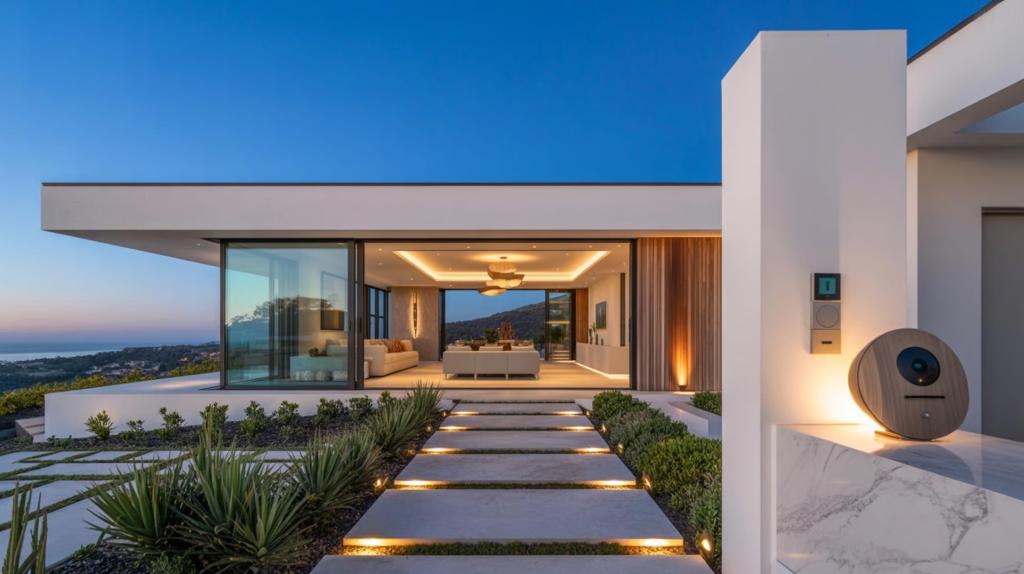
Every effective security strategy begins with the basics. Door and window contact sensors, glass-break detectors, motion sensors, and water-leak sensors provide affordable protection while quietly monitoring the home’s most vulnerable entry points.
For coastal homes, environmental sensors are equally valuable. Water intrusion sensors placed near mechanical rooms, crawl spaces, and first-floor utility areas can alert owners before minor flooding becomes catastrophic. Smart smoke and carbon monoxide detectors add another critical layer of protection for vacation properties that may sit empty.
These systems are ideal for:
- Upper East Coast: Maine, New Hampshire, Massachusetts, Rhode Island
- Mid-Atlantic: New Jersey, Delaware, Maryland
- Pacific Northwest: Washington and Oregon
Security Cameras, Video Doorbells, and Smart Locks
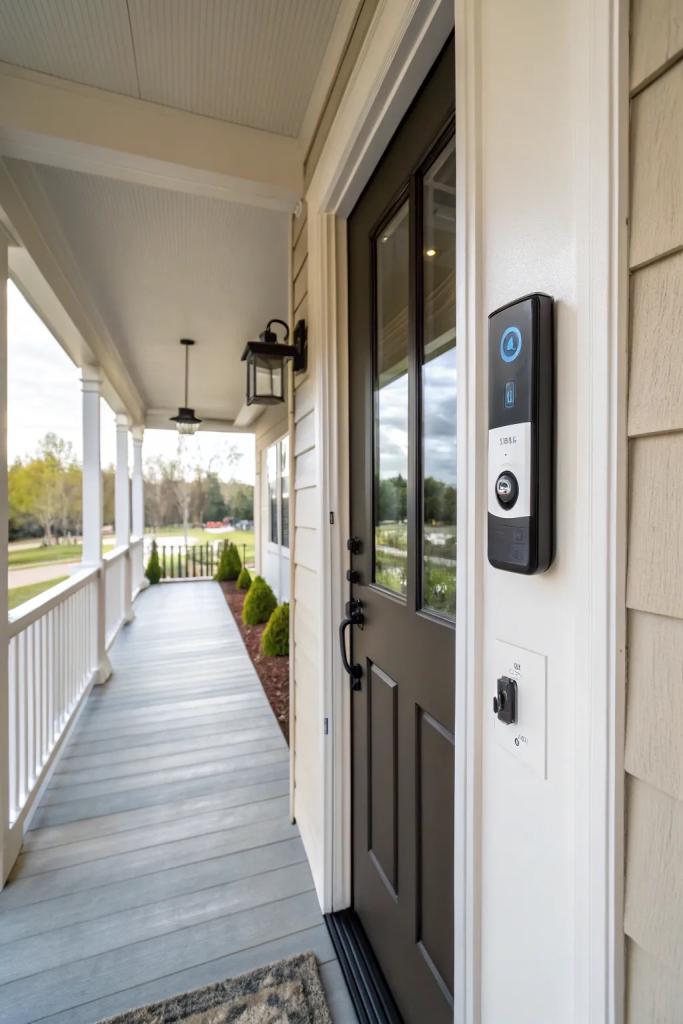
Today’s AI-enabled cameras do far more than record video. They recognize familiar faces, ignore blowing palm fronds, identify package deliveries, and immediately notify homeowners of suspicious activity.
Video doorbells offer another advantage for vacation homes by allowing owners to communicate with contractors, cleaners, or guests from anywhere in the world. Smart locks eliminate the need for hidden spare keys while allowing temporary digital access codes for rental guests or maintenance professionals. Battery-backed cloud storage ensures footage remains available even if power is interrupted during storms.
Best suited for:
- Southeastern Coast: North Carolina, South Carolina, Georgia, Florida
- Southern California: Orange County, San Diego, Malibu
- Northern California: Monterey, Carmel, Mendocino
Fully Integrated Smart Home Security Systems
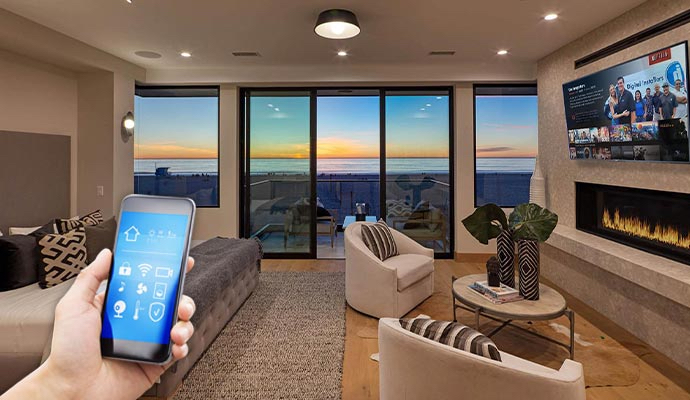
Integrated systems combine security, lighting, shades, HVAC, gates, irrigation, and surveillance into one seamless platform. Rather than responding after an intrusion, the home actively creates the appearance of occupancy.
Lights turn on automatically, shades adjust throughout the day, televisions activate on schedules, and exterior lighting responds intelligently to movement. For second homes, integrated systems also monitor humidity, HVAC performance, backup generators, and even boat docks—a feature that is particularly valuable in humid coastal climates.
Ideal for:
- Luxury homes throughout the Southeast
- Southern California
- Northern California
- High-end New England vacation properties
Professionally Monitored Security Systems
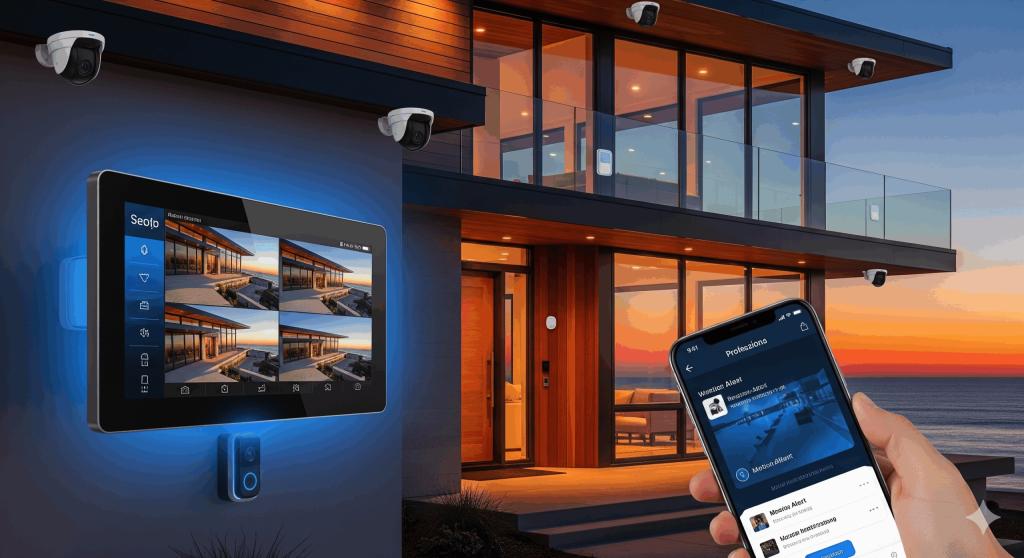
While self-monitoring has become increasingly common, professionally monitored systems provide around-the-clock oversight by trained security specialists. If an alarm activates while you’re hundreds—or thousands—of miles away, monitoring centers immediately verify the event and coordinate with local emergency responders.
Many premium services now include video verification, allowing operators to determine whether an alarm was triggered by a genuine intrusion or simply an unexpected visitor.
This added layer is particularly valuable for homeowners who:
- Live seasonally at the beach
- Own investment or rental properties
- Frequently travel
Especially recommended for:
- Mid-Atlantic
- Gulf Coast
- Northern California
- Barrier island communities
Perimeter and Environmental Defense
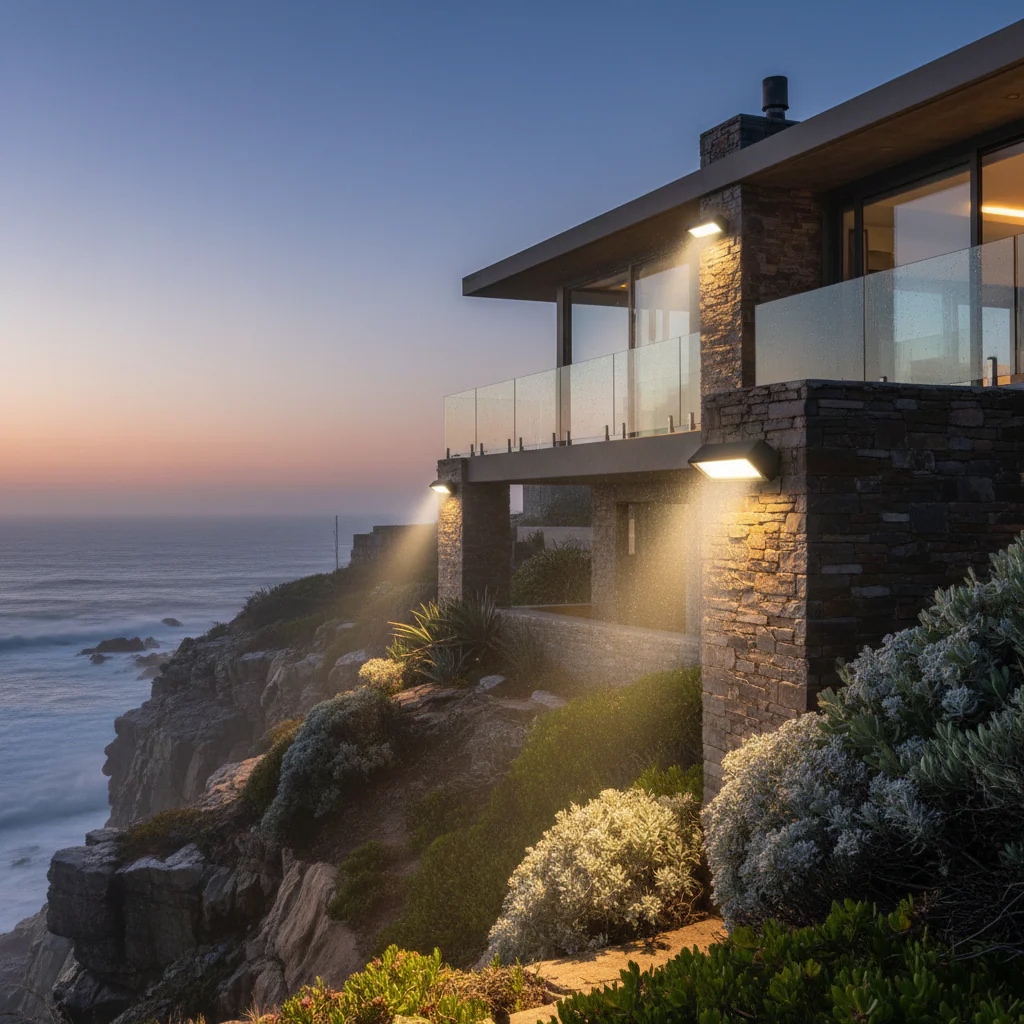
Good security begins well before anyone reaches the front door. Perimeter protection includes motion-activated landscape lighting, automated gates, smart fencing, driveway sensors, infrared beams, and strategically designed landscaping that preserves views while discouraging unauthorized access.
Environmental monitoring is equally important in coastal regions. Wind sensors, flood detection, hurricane shutter automation, backup generators, sump pumps, and leak detection help protect against natural disasters as much as criminal activity. This layered approach works especially well for larger waterfront lots where early detection provides valuable response time.
Best applications include:
- Gulf Coast: Texas, Louisiana, Mississippi, Alabama, Florida Panhandle
- Pacific Northwest
- Oceanfront estates throughout the East Coast
Safe Rooms and Human Security Guards
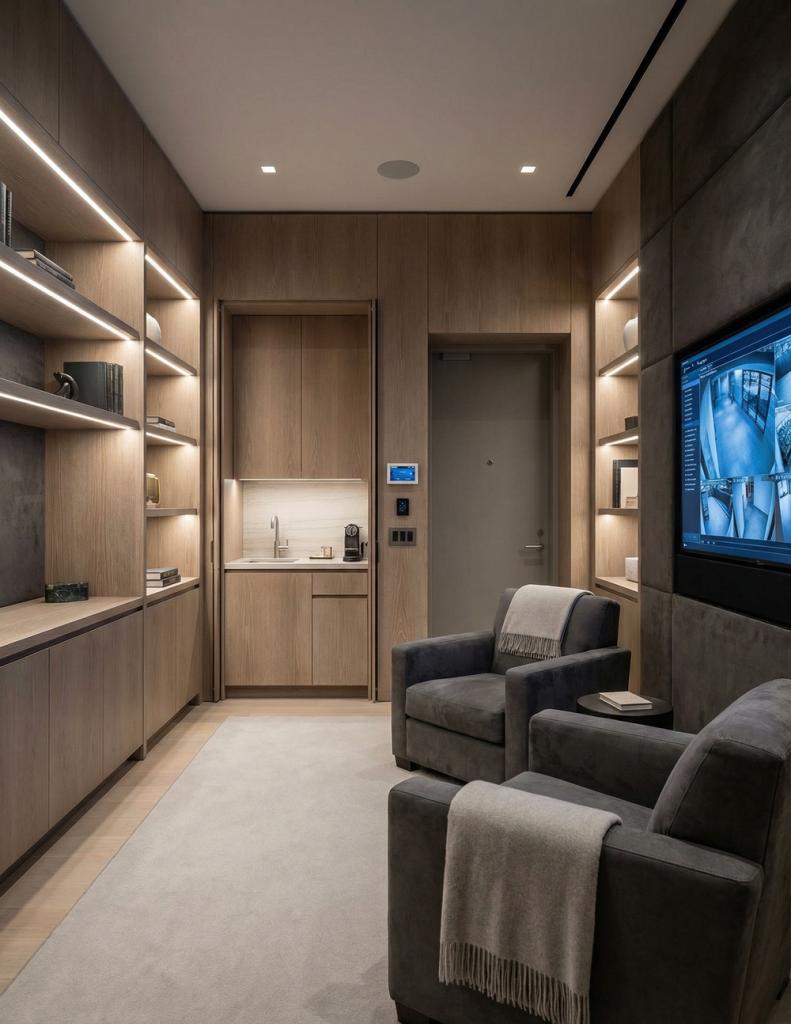
At the highest level of residential security are dedicated safe rooms and personal security personnel. Modern safe rooms have evolved well beyond reinforced closets. They often include independent ventilation, satellite communications, emergency power, medical supplies, secure internet access, and reinforced concrete or steel construction—all concealed within beautifully designed interiors.
Ultra-high-net-worth homeowners may also employ residential security teams who combine traditional guarding with cybersecurity monitoring, drone surveillance, and property patrols. While these solutions aren’t necessary for most homeowners, they are increasingly common in prestigious waterfront communities where privacy and asset protection are paramount.
Most appropriate for:
- Southern California
- Palm Beach and South Florida
- The Hamptons
- Exclusive enclaves along Northern California’s coastline
The most effective home security systems aren’t defined by the number of cameras or the sophistication of their technology—they’re defined by how thoughtfully each layer works together. A modest beach cottage may only require smart sensors, cameras, and remote monitoring, while a luxury oceanfront estate may benefit from integrated automation, perimeter detection, and dedicated security personnel. The key is matching protection to the property’s location, occupancy patterns, and environmental challenges. Along America’s diverse coastlines—from Maine’s rocky harbors and the Carolinas’ barrier islands to the Gulf Coast and California’s dramatic shores—the best security strategy is both intelligent and unobtrusive, preserving the relaxed character of coastal living while quietly safeguarding the people, homes, and memories that make waterfront ownership so rewarding. For more about living your best beach life, visit Beach Homes Lifestyles.