

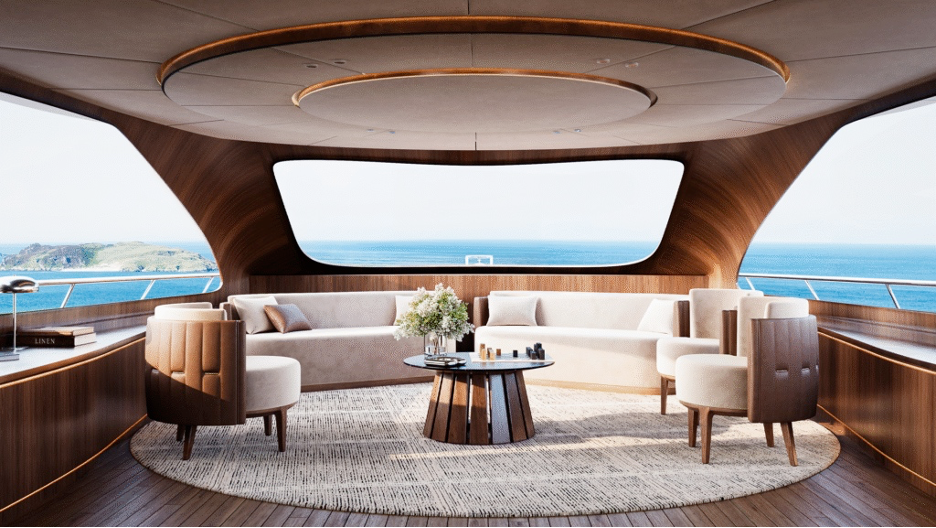
Luxury yacht interiors have become an influential source of inspiration well beyond the marina. As architects and designers continue to blur the distinction between waterfront residences and superyachts, many of today’s most compelling ideas are migrating directly into beach homes from Maine to Malibu. The appeal isn’t simply aesthetic. Yacht interiors demand thoughtful space planning, durable materials, exceptional craftsmanship, and an effortless relationship between indoors and the surrounding landscape. These qualities are equally desirable in contemporary coastal homes.
The newest generation of yacht owners is also redefining luxury. Instead of highly polished, formal interiors, they are requesting relaxed sophistication, tactile natural materials, integrated technology, and spaces that promote wellness and connection to the sea. Every square foot must perform beautifully while remaining calm, highly functional, and personalized. Therefore, designers are responding with interiors that feel less like floating hotels. These interiors feel more like finely tailored private residences.
For coastal homeowners considering a renovation or simply looking for fresh inspiration, these evolving yacht interiors offer valuable lessons. Many of the principles translate seamlessly to waterfront living. This includes flexible entertaining spaces and sculptural lighting. It also covers performance fabrics and artisanal finishes. Here are six yacht interior design trends navigating the future. Each one complements America’s diverse coastal regions.
Quiet Organic Luxury Replaces High Gloss
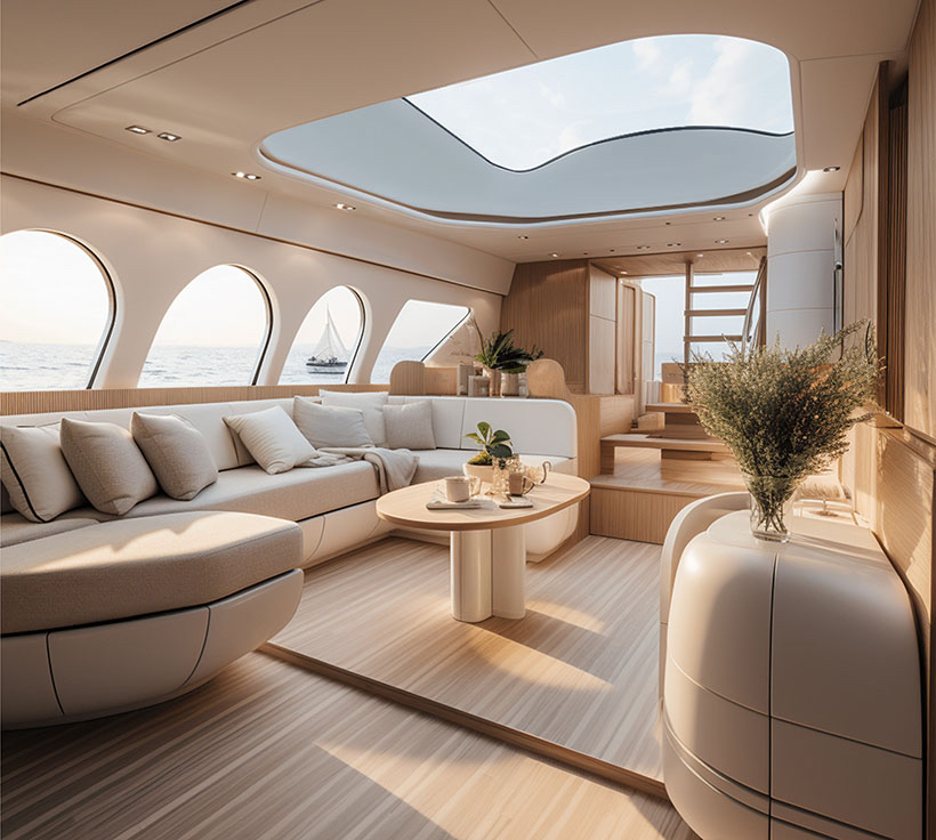
Mirror-like lacquer and ornate detailing are giving way to richly textured materials that feel understated yet exceptionally refined. Designers are favoring European oak, smoked walnut, hand-finished limestone, fluted wood paneling, brushed bronze, woven leather, parchment, and tactile textiles. The result is warmth rather than spectacle.
Beyond aesthetics, these finishes conceal everyday wear more effectively than glossy surfaces while creating interiors that age gracefully. Softly layered neutrals also maximize natural light reflecting off the water.
Best suited for: The Upper East Coast, where classic New England architecture pairs beautifully with restrained craftsmanship. The Pacific Northwest, where cedar forests and rugged shorelines naturally complement organic materials. Additionally, sophisticated California beachfront homes are seeking a quieter contemporary aesthetic.
Wellness Spaces Become Essential Amenities
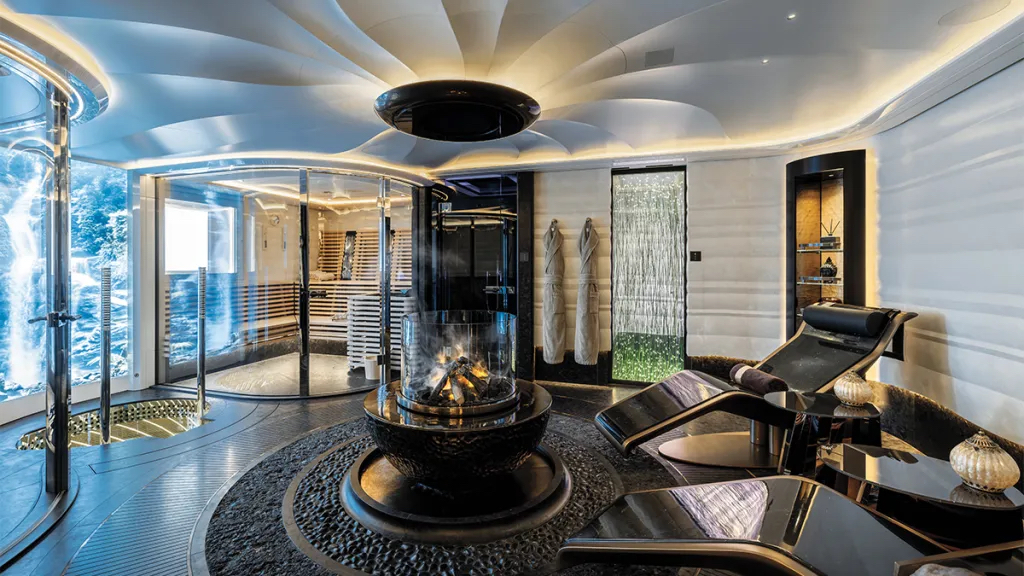
Today’s luxury yachts increasingly dedicate valuable interior square footage to wellness rather than excess entertaining. Meditation lounges, infrared saunas, massage suites, cold-plunge facilities, circadian lighting systems, aromatherapy, and advanced air purification are becoming expected features aboard larger vessels.
The philosophy mirrors broader residential trends emphasizing health, sleep quality, and stress reduction. Rather than creating separate spa rooms, many designers integrate wellness throughout the yacht. They do this using acoustic insulation, natural daylight, and biophilic materials.
Best suited for: The Southeast, where year-round boating encourages active lifestyles. In addition, California boasts a wellness culture that remains deeply rooted. The Mid-Atlantic, where second-home owners increasingly prioritize restorative weekend retreats, also benefits.
Curves, Sculptural Furniture, and Soft Geometry
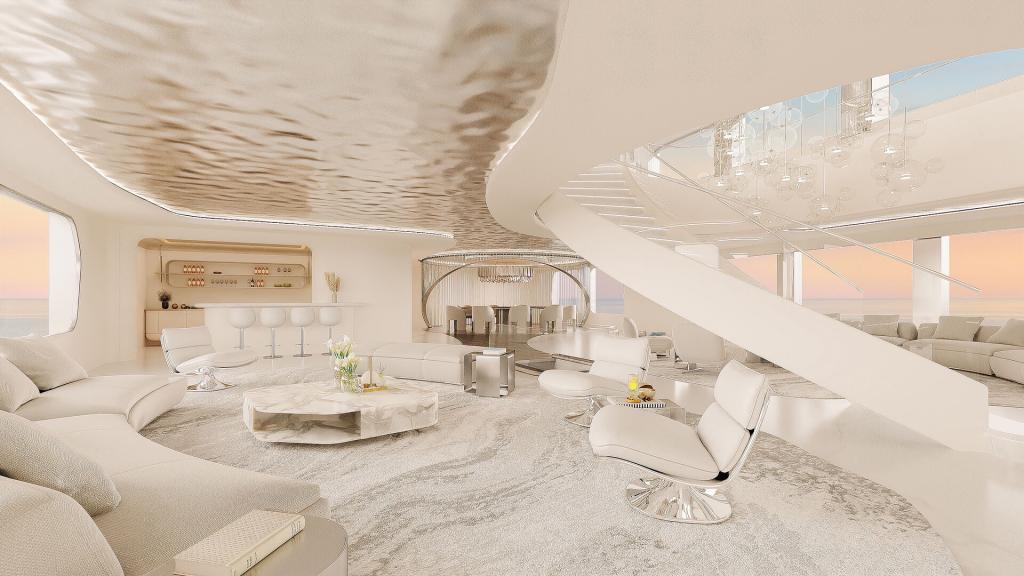
Sharp corners are disappearing in favor of rounded seating, curved millwork, elliptical dining tables, sculptural lighting, and organically shaped cabinetry. While visually calming, curved forms also improve circulation aboard moving vessels by minimizing hard edges.
The trend draws inspiration from both mid-century modernism and contemporary Italian furniture, introducing movement without visual clutter. Rounded forms soften compact interiors while encouraging conversation in shared gathering spaces. For homeowners, these shapes create interiors that feel welcoming rather than rigid and echo the fluidity of the surrounding coastline.
Best suited for: California’s contemporary coastal architecture. Also, the Southeast’s modern waterfront residences benefit. Upscale Texas Gulf Coast homes embrace relaxed contemporary design.
Seamless Indoor-Outdoor Living
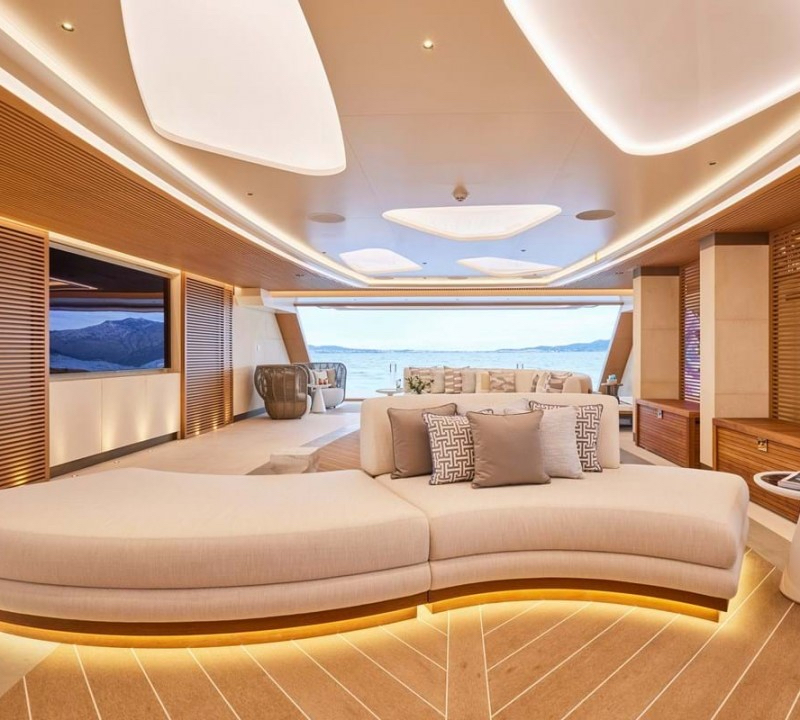
Perhaps the defining luxury trend of 2026 is eliminating boundaries between interior living spaces and the surrounding water. Expansive sliding glass walls, disappearing doors, flush flooring transitions, convertible lounges, and multifunctional aft decks create uninterrupted visual connections.
This design philosophy makes interiors feel considerably larger while maximizing natural ventilation and panoramic views. Even compact yachts benefit from furniture layouts that orient every primary seat toward the horizon. Coastal homeowners increasingly employ the same approach. They use retractable walls, covered outdoor living rooms, and kitchens that extend naturally onto terraces overlooking the water.
Best suited for: Every U.S. coastal region, though especially the Southeast, California, and the milder Mid-Atlantic. In these areas, outdoor entertaining remains central to waterfront living.
Elevated Performance Materials That Feel Residential
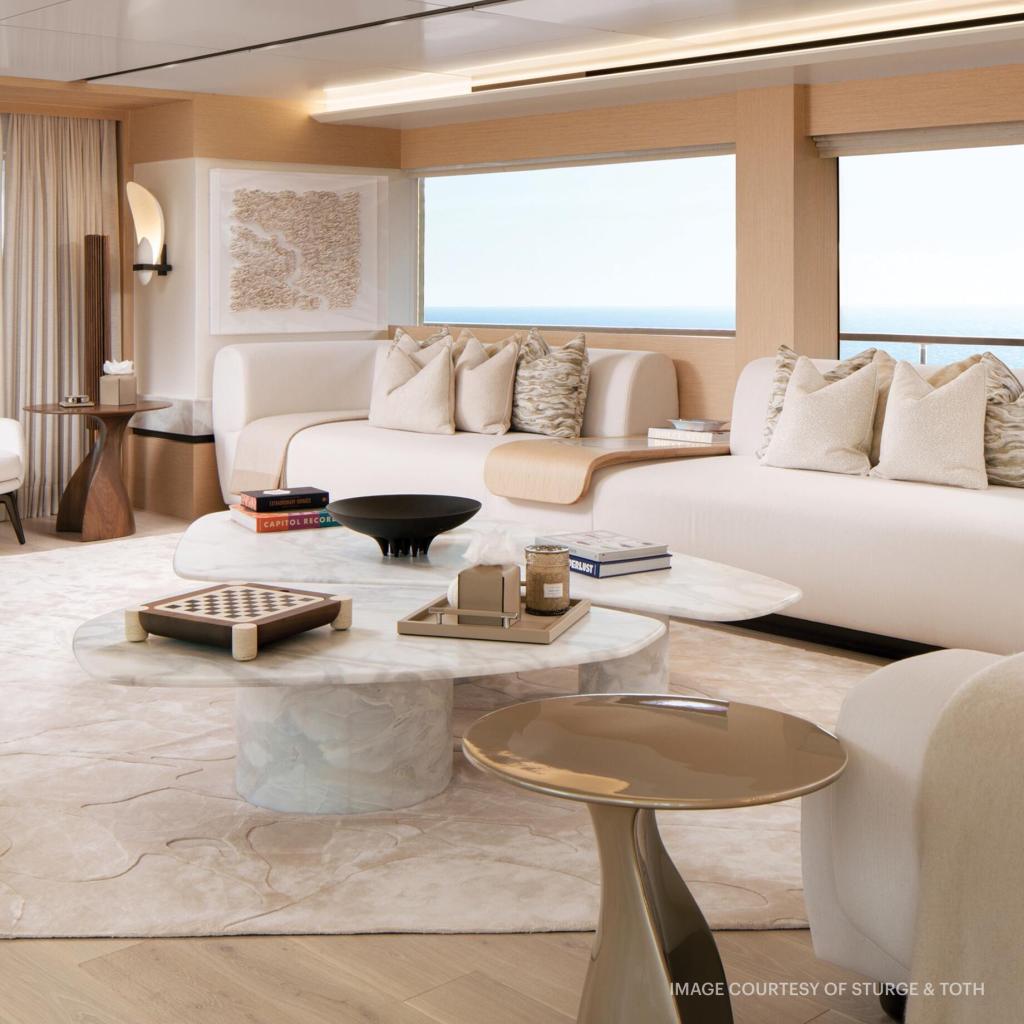
Marine-grade materials have become nearly indistinguishable from luxury residential finishes. Designers now specify stain-resistant linens, advanced woven performance fabrics, engineered stone, porcelain slabs, recycled composites, antimicrobial textiles, and sophisticated matte finishes. These finishes tolerate salt air, humidity, and constant sunlight.
Rather than sacrificing elegance for durability, these materials allow owners to relax without worrying about maintenance after sandy feet, wet swimsuits, or frequent entertaining. This evolution makes yacht-inspired interiors especially practical for vacation homes that experience heavy seasonal use.
Best suited for: The humid Southeast, salt-exposed Texas Gulf Coast, rugged Pacific Northwest, and every beachfront residence where durability is as important as appearance.
Bespoke Personalization Through Art, Lighting, and Technology
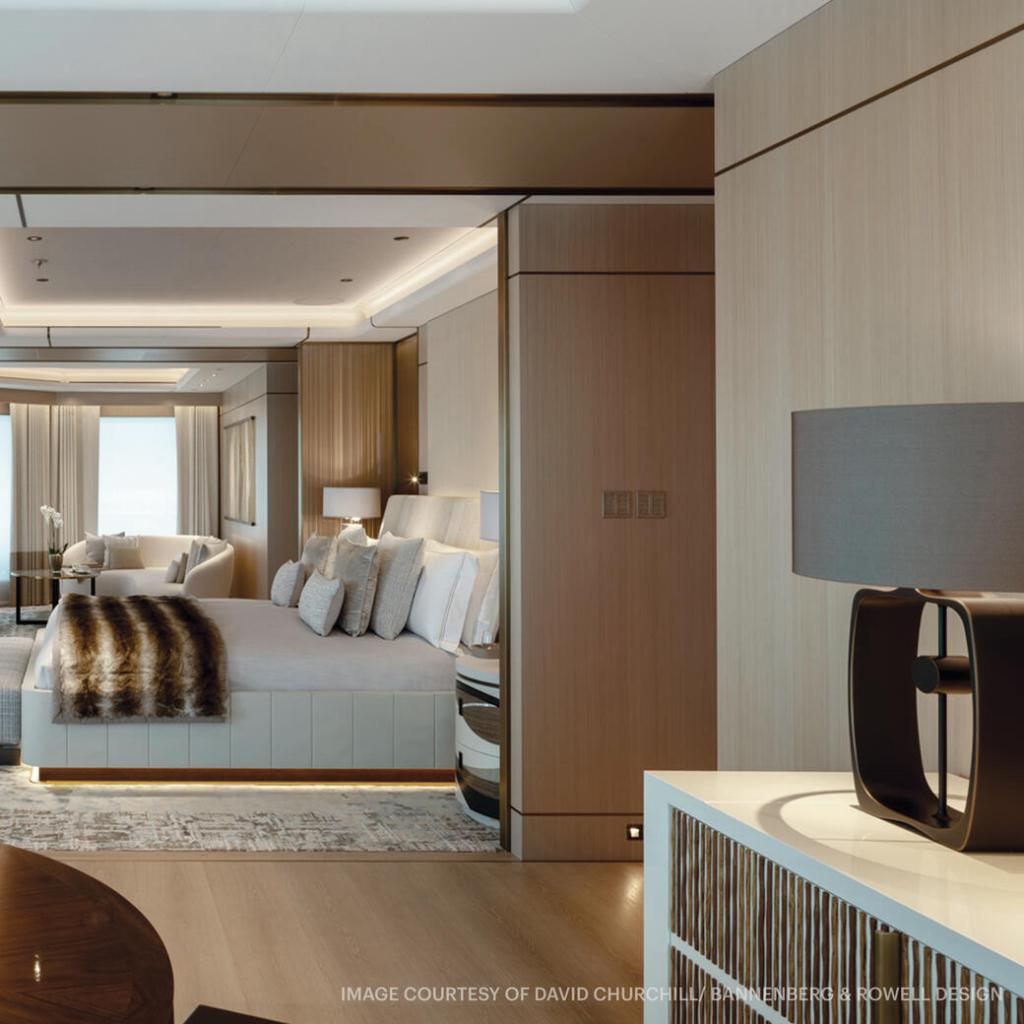
The newest yachts emphasize individual expression rather than standardized luxury. Owners are commissioning custom cabinetry, integrated art displays, collectible lighting, handcrafted furnishings, and programmable lighting scenes that adapt throughout the day.
Invisible technology further enhances the experience. Hidden speakers, motorized television lifts, wireless charging, automated shades, and app-controlled environmental systems disappear into beautifully crafted interiors. These systems no longer dominate the space. The objective is customization without visual complexity—a home or yacht that reflects its owner while maintaining an atmosphere of calm sophistication.
Best suited for: Luxury coastal properties throughout the Upper East, California, and the Mid-Atlantic. In these areas, bespoke craftsmanship and carefully curated interiors remain enduring hallmarks of high-end waterfront design.
Today’s modern yacht interior trends focus less on extravagance and more on thoughtful living. Designers are prioritizing authenticity, craftsmanship, wellness, flexibility, and an enduring connection to the surrounding landscape. This proves that luxury increasingly resides in comfort and purposeful design rather than ornamentation. For owners of beach houses from Cape Cod and the Carolinas to the Gulf Coast, the Pacific Northwest, and Southern California, these same principles offer a sophisticated roadmap for future renovations. By borrowing from the world’s finest yacht interiors—whether through organic materials, seamless indoor-outdoor living, or quietly integrated technology—coastal homes can capture the relaxed refinement of life on the water. They will also remain timeless long after the latest trends have passed. For more about living your best beach life, visit Beach Homes Lifestyles.