

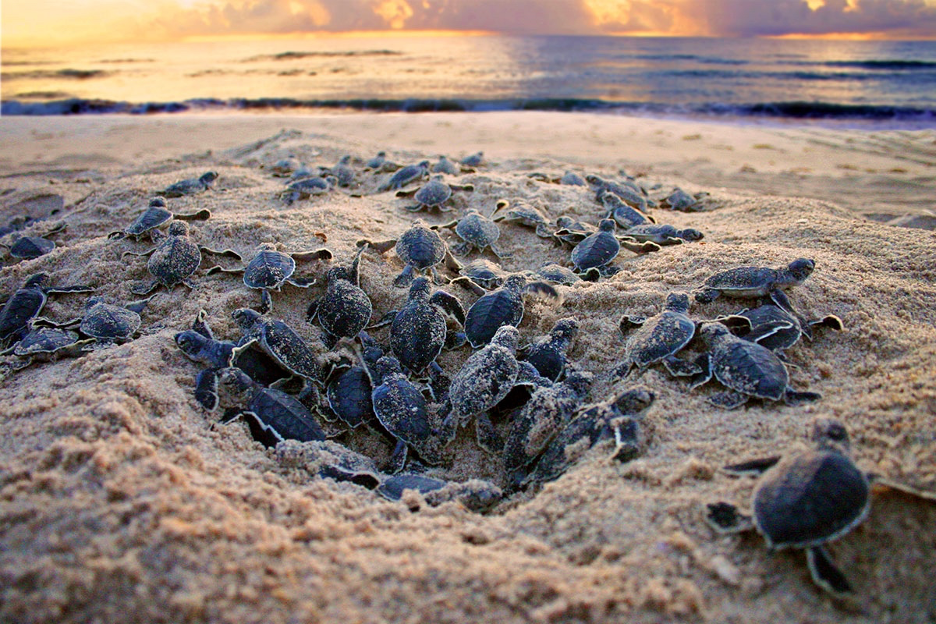
Along the Southeastern Atlantic coast, sea turtle season shapes the cadence of summer as reliably as tides and afternoon storms. From the barrier islands of the Carolinas to the subtropical shores of Florida, loggerhead, green, and leatherback sea turtles return to the same beaches where they once hatched. They haul themselves ashore at night to dig nests in the sand above the high-tide line. Roughly two months later, the beach changes again. Hatchlings emerge in coordinated bursts, scrambling toward the ocean under the cover of darkness. The phenomenon is both biologically sophisticated and visually arresting. Their synchronized movement improves their odds of survival against predators such as gulls, raccoons, ghost crabs, and foxes. However, artificial lighting remains one of the greatest threats to hatchlings along developed coastlines. This is why many communities enforce “lights out” ordinances during nesting season.
The Journey Begins — From Egg to Hatchling
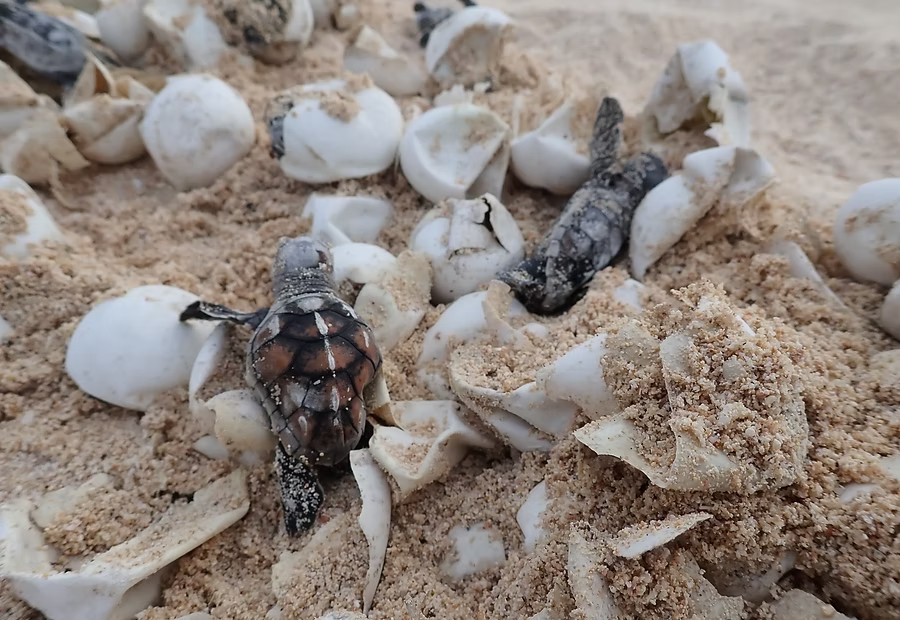
For coastal travelers, witnessing a hatchling event offers a different kind of beach experience—less centered on crowds and more connected to ecology, timing, and stewardship. Many Southeastern beaches now combine tourism with active conservation programs, guided turtle walks, and protected nesting habitats. The most active hatching period generally runs from late July through October, depending on latitude and water temperature. These six beaches stand out not only for their turtle activity. Additionally, they are distinguished by their landscapes, preservation efforts, and distinctly regional coastal character.
Juno Beach, FL
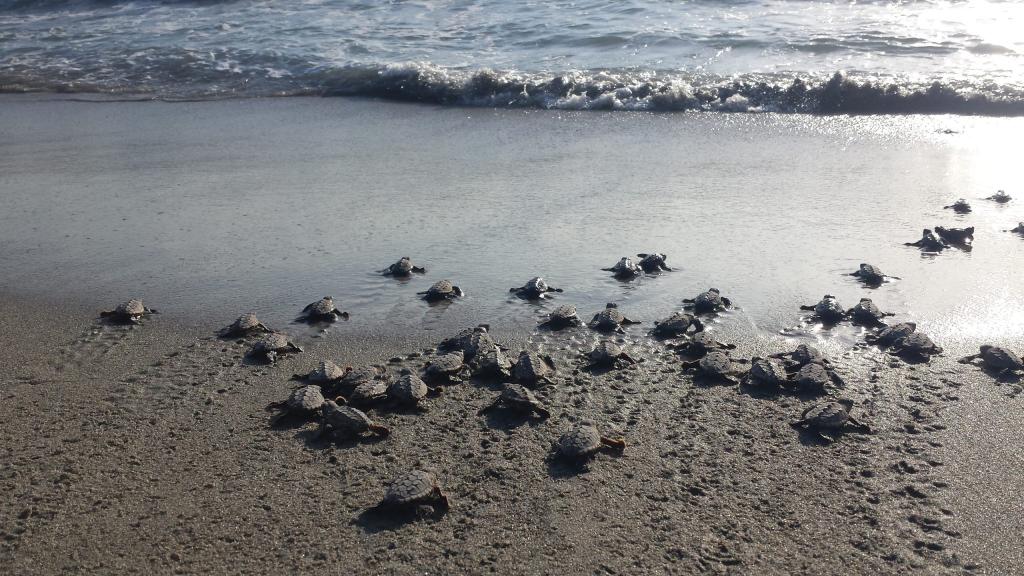
Located in the town of Juno Beach along Florida’s Palm Beach County coastline, Juno Beach is widely recognized as one of the world’s densest nesting grounds for loggerhead sea turtles. The beach sits adjacent to the protected dunes and marine habitats surrounding the Loggerhead Marinelife Center. The center conducts research, rehabilitation, and nighttime turtle walks during nesting season. The shoreline itself is broad and relatively undeveloped compared to neighboring South Florida beaches. Sea oats, dune vegetation, and clear Atlantic water define the landscape. Moreover, peak hatchling activity typically occurs from August through September. Dogs are not permitted on most sections of the beach, helping minimize disturbance to nesting areas. What makes Juno particularly compelling is the combination of scientific monitoring and easy public access. As a result, it is one of the most educational turtle-viewing destinations in the Southeast.
Canaveral National Seashore, FL
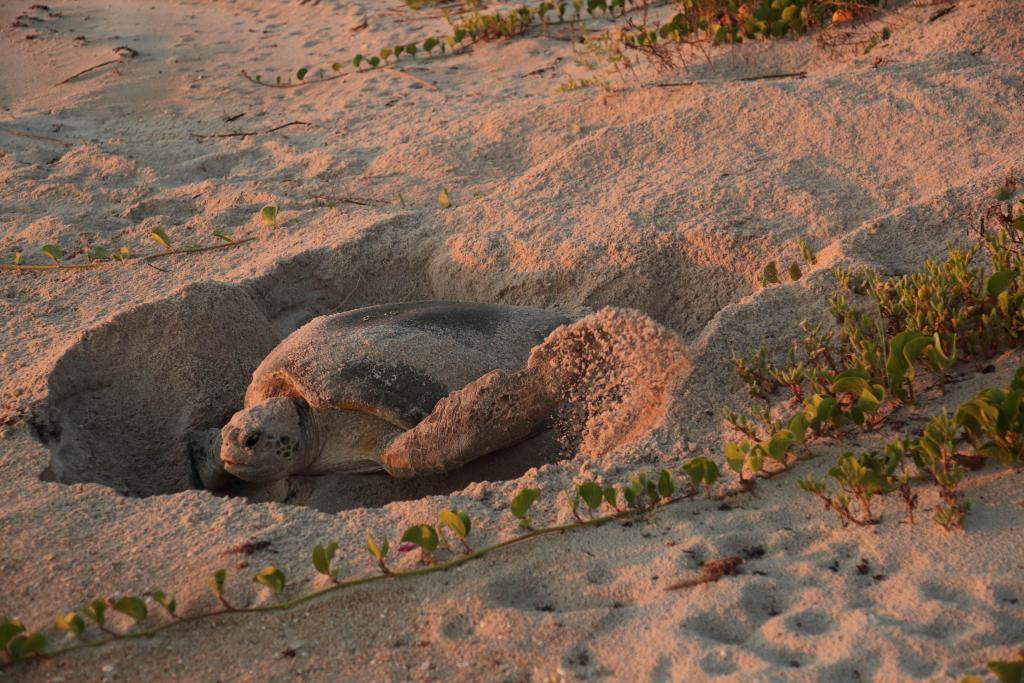
Stretching between New Smyrna Beach and Titusville, this federally protected national seashore contains one of the most significant undeveloped nesting habitats on the Atlantic coast. The landscape is unusually intact for Central Florida: rolling dunes, salt marshes, lagoons, and long expanses of dark beach largely free from high-rise development. Loggerhead, green, and occasional leatherback turtles all nest here. Because artificial light is limited, hatchlings have a clearer path to the surf than they do on more urban beaches. Peak hatching season usually spans late July through early October. Dogs are generally prohibited on the ocean beaches within the protected seashore. The setting’s isolation is part of its appeal. At night, the beach feels notably quieter and darker than much of Florida’s coastline. Therefore, visitors can observe natural coastal systems with minimal interruption.
Hunting Island State Park, SC
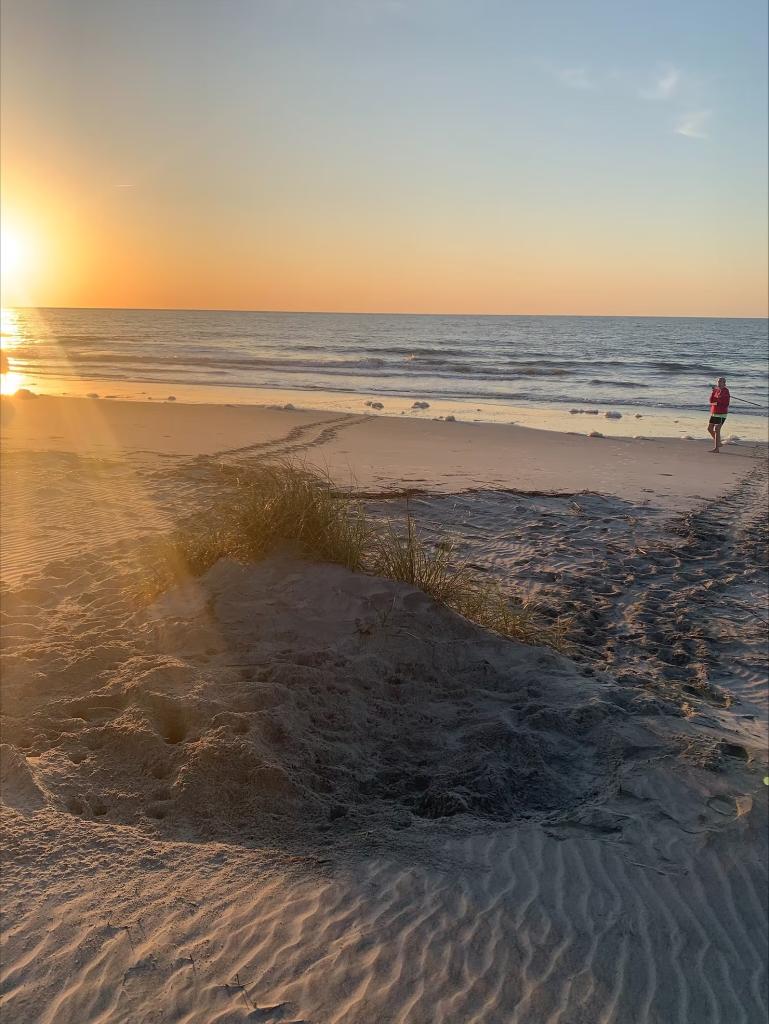
Near the coastal town of Beaufort, Hunting Island offers one of South Carolina’s most visually distinctive barrier-island environments. Managed as a state park, the island combines maritime forest, salt marsh, palmetto groves, and a dynamic beachfront shaped by erosion and shifting tides. Driftwood-lined sections of shore create a dramatic landscape that feels markedly less commercial than nearby resort areas. Loggerhead turtles are the primary nesting species here, and hatchlings are commonly seen from August through early October. Dogs are allowed in many sections of the park and beach if leashed, though restrictions may apply near sensitive nesting zones. Hunting Island’s appeal lies in its balance between accessibility and wildness. As a result, visitors can combine turtle walks with hiking trails, marsh overlooks, and one of the Southeast’s best-preserved lighthouse settings.
Bald Head Island, NC
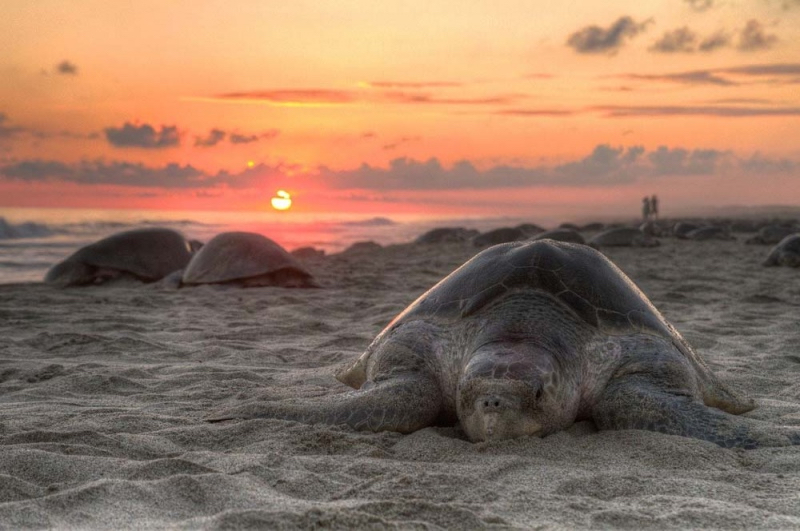
Accessible only by ferry from Southport, Bald Head Island has become one of North Carolina’s most important sea turtle conservation sites. Cars are largely absent here, replaced by bicycles and golf carts. This significantly reduces nighttime light pollution and traffic near nesting areas. The island’s landscape includes wide sandy beaches, maritime forest preserves, tidal creeks, and dune systems protected through ongoing conservation programs. Loggerhead turtles dominate nesting activity, with hatchlings typically emerging between August and September. Dogs are permitted on certain beach sections when leashed, though seasonal rules vary. What distinguishes Bald Head Island is the sense of environmental restraint. Development exists, but it is intentionally low-impact. As a result, nesting turtles can coexist with residential and visitor activity more successfully than on heavily urbanized shorelines.
Sea Island, GA
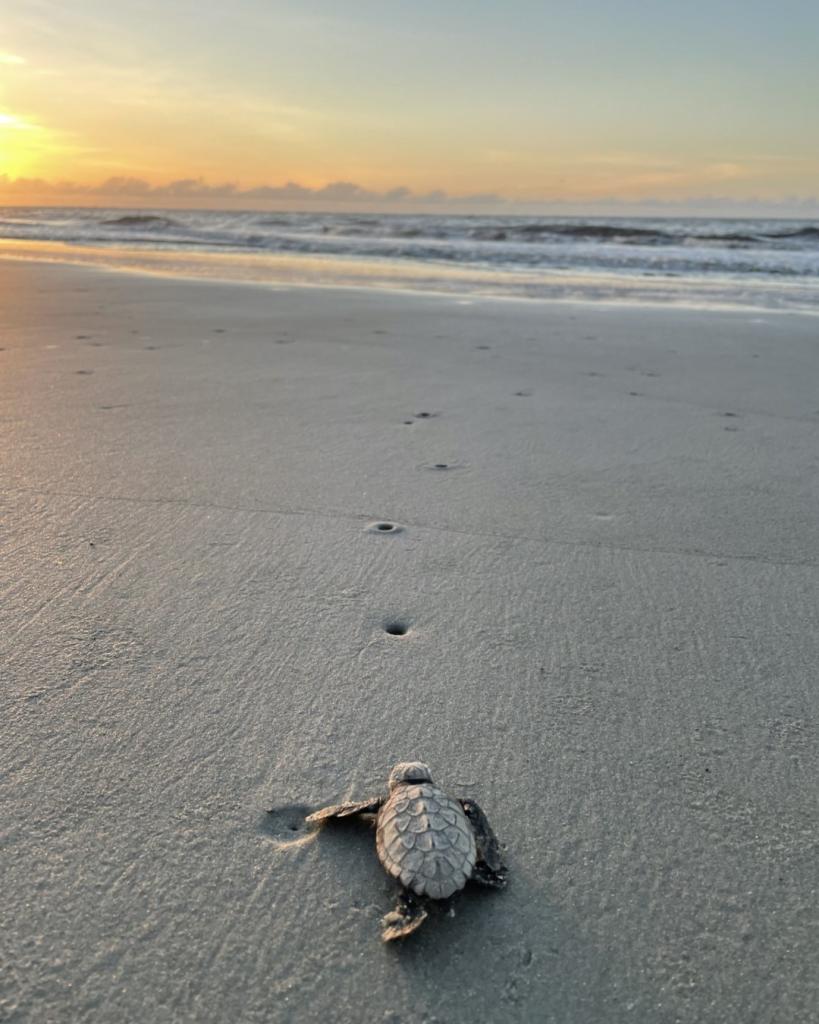
Part of Georgia’s chain of barrier islands near St. Simons Island, Sea Island combines luxury coastal accommodations with extensive wildlife management efforts. The beach system here is defined by broad tidal flats, dunes, and maritime forest edges that support loggerhead nesting throughout the summer. Conservation teams monitor nests daily during nesting season, and educational programs often accompany evening beach patrols. Hatchlings are most active from late July through September. Dog access is limited and regulated in many nesting areas to protect vulnerable hatchlings and dune habitats. The beach itself feels quieter and more controlled than many Southeastern resort destinations. This setting emphasizes habitat preservation alongside tourism. The tidal shifts across the Georgia coast also create unusually expansive beachfronts at low tide. Consequently, this adds to the area’s ecological richness.
Archie Carr National Wildlife Refuge, FL
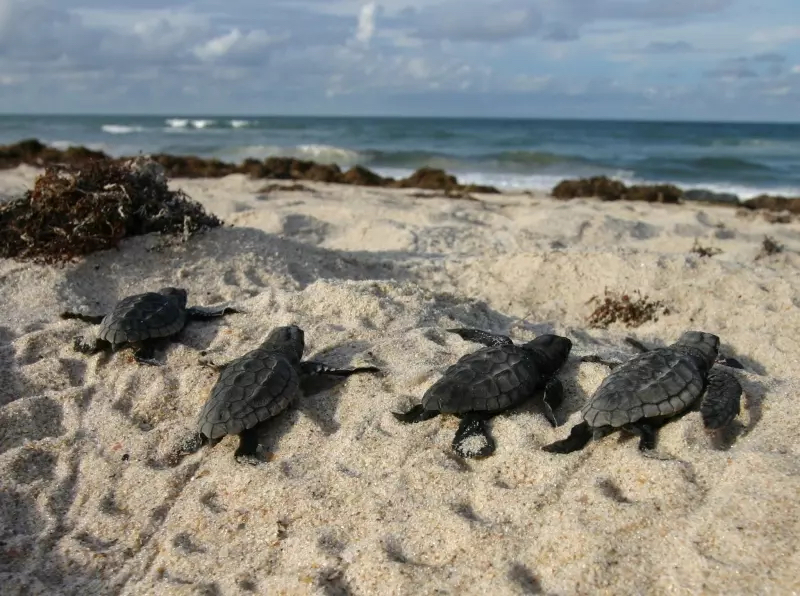
South of Melbourne Beach on Florida’s Space Coast, Archie Carr National Wildlife Refuge protects one of the most globally important loggerhead nesting corridors. The refuge spans approximately 20 miles of shoreline backed by dunes and low coastal vegetation, with far less commercial development than many neighboring beaches. Leatherback and green turtles also nest here in substantial numbers. The refuge’s darker beaches contribute to higher hatchling survival rates, especially during peak emergence months from August through October. Dogs are generally prohibited on much of the protected beachfront. Unlike heavily trafficked tourist beaches farther south, Archie Carr feels deliberately conservation-oriented. Thus, it attracts visitors interested in wildlife observation, marine science, and quieter stretches of coastline rather than boardwalk entertainment or nightlife.
Watching hatchlings emerge and navigate toward the Atlantic offers a reminder that even heavily visited coastlines remain active ecological systems shaped by migration, timing, and survival. The Southeastern Atlantic region contains some of the country’s most important nesting habitats, but it also reflects the ongoing tension between coastal development and conservation. Communities that reduce beachfront lighting, protect dunes, regulate pets, and support monitoring programs directly influence hatchling success rates.
For travelers, these beaches offer more than a seasonal spectacle. They provide access to intact barrier islands, protected shorelines, and a slower form of coastal tourism grounded in observation rather than consumption. Arriving at the beach after sunset and seeing hundreds of hatchlings instinctively orient toward the surf changes the scale at which people experience the shoreline. The event lasts only minutes, but it reframes the beach as habitat first and destination second. For more about living your best beach life, visit Beach Homes Lifestyles.