

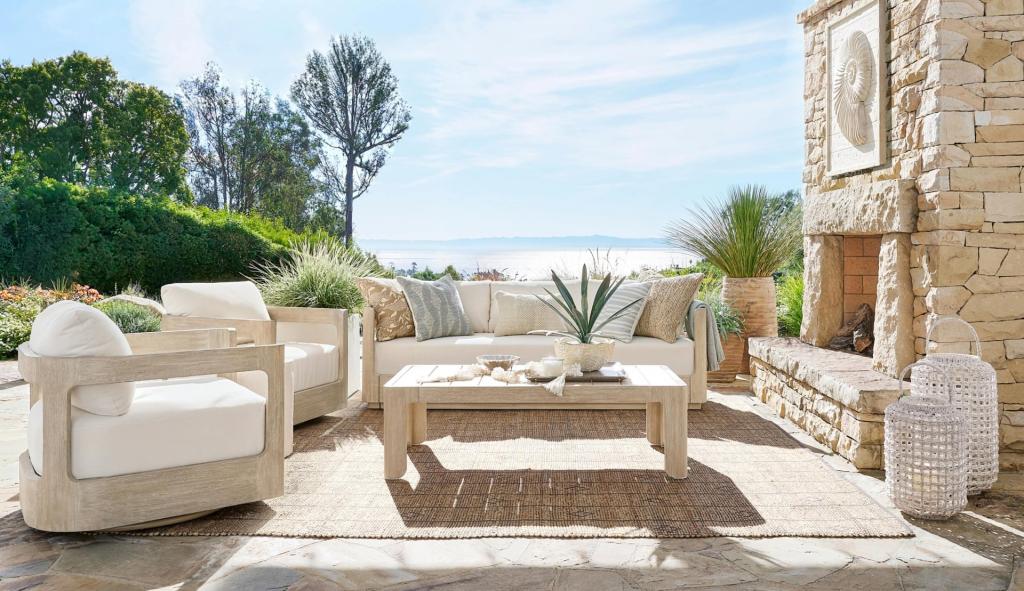
Outdoor living has shifted from a functional necessity to an elevated design discipline. This is especially true for coastal homeowners who demand pieces that can withstand salt air, shifting moisture, intense UV exposure, and frequent entertaining. In 2026, coastal outdoor furnishings are not simply decorative — they serve as resilient extensions of interior spaces. These furnishings accommodate living, dining, lounging, and socializing with equal comfort and composure.
Across the Upper East, Mid-Atlantic, Southeast, Texas Gulf, Pacific Northwest, and California coasts, outdoor design is embracing a balance of comfort, craftsmanship, and sustainability. Homeowners are moving past generic patio sets. Instead, they are curating spaces that feel intentional and composed. They are integrating architectural seating, durable dining installations, woven textures, layered lighting, performance textiles, and smart accessories. These features reflect personal lifestyle without sacrificing long-term performance.
This year’s trends reflect broader shifts in design: a move toward refined neutrality with bursts of natural color; multifunctional storage as design elements; outdoor rugs and lighting that define distinct zones; and pieces that celebrate both sustainability and artisanal making. For coastal homeowners, these trends illustrate outdoor spaces that are both contemporary and enduring. The following trends forecast where outdoor coastal style is headed in 2026, and ways to integrate it in your own beach home.
Deep-Seated Lounging with Architectural Frames
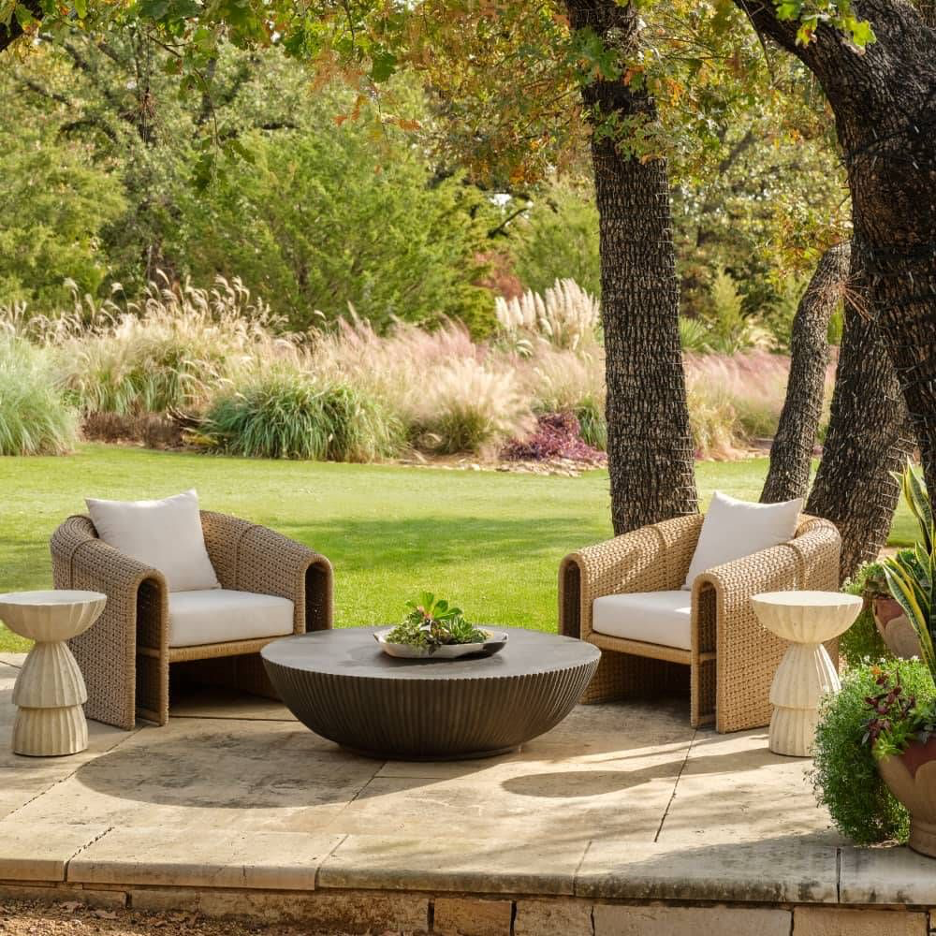
In 2026, outdoor seating prioritizes deep cushions, low profiles, and architectural silhouettes. The Julien Open Arm Outdoor Lounge Chair from Arteriors showcases a fluid silhouette handwoven with a continuous-loop technique. Its artisanal weave contrasts beautifully with the clean geometry of its open arm design.
Layered Detail, Refined Proportion
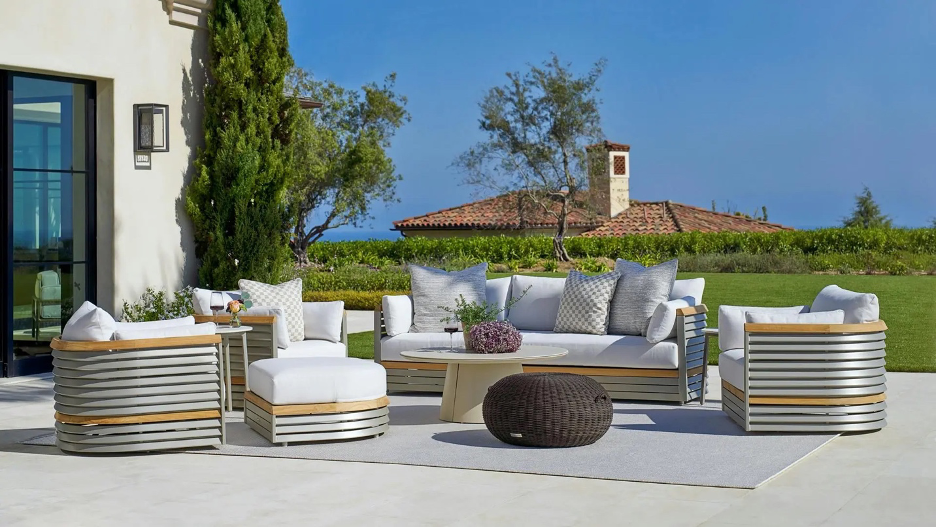
This elegant seating group from Brown Jordan’s Solenne collection balances layered detail with refined proportion. Designed by Ann Marie Vering, its beauty lies in its thoughtful mix of materials. Powder-coated aluminum slats provide structure and airflow, while sculpted teak accents add warmth and contrast. The concept centers on flexibility and visual weight. Thick, performance-upholstered cushions in neutral tones—oatmeal, stone, weathered flax—contrast with streamlined frames. This modern approach reflects broader interior trends favoring relaxed luxury without excess ornamentation.
In the Upper East and Mid-Atlantic, where freeze-thaw cycles matter, opt for quick-dry foam and covers that can be stored seasonally. For the Southeast and Texas Gulf regions, ensure fabrics are solution-dyed acrylic or similar marine-grade textiles that withstand humidity and UV exposure. In California and the Pacific Northwest, modular configurations allow you to reorient seating for sun exposure or wind protection.
Elegant Outdoor Dining with Material Presence
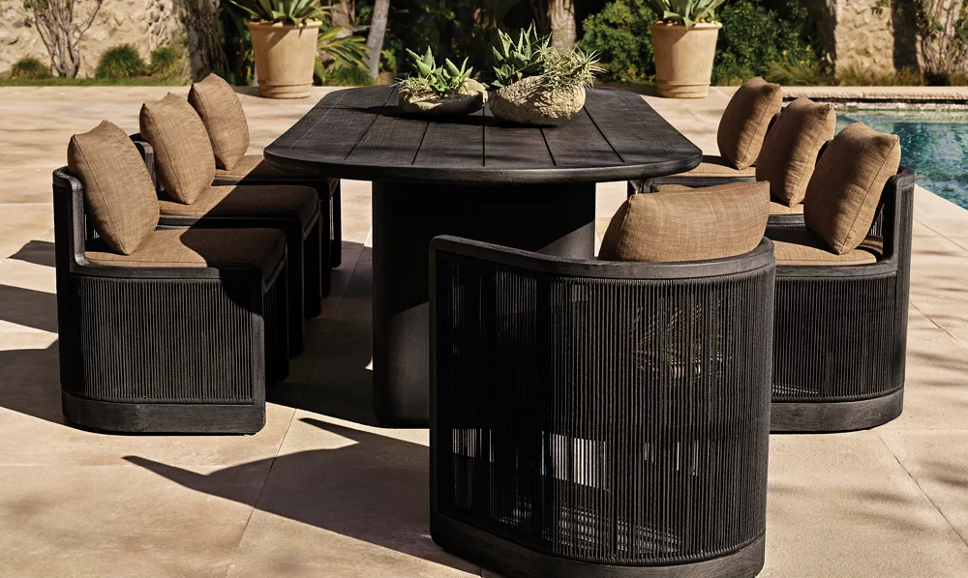
Outdoor dining pieces in 2026 are moving toward designs that feel as anchored as indoor tables. Materials such as weather-treated teak, sintered stone, and marine-grade metals give dining installations visual weight and long-term viability by the water. The Brera Collection from RH illustrates this trend with all-weather rope-wrapped details and solid teak frames that are both technically durable and aesthetically refined. In California and Upper East regions, elongated porcelain or teak tables pair beautifully with minimal dining chairs for coastal views without visual distraction. In the Southeast and Texas Gulf, powder-coated metal resists corrosion while delivering crisp, clean lines. Dining becomes a focal point for entertaining — anchoring patio meals, family dinners, and sunset celebrations with resilience and style.
Performance Rugs as Spatial Architecture
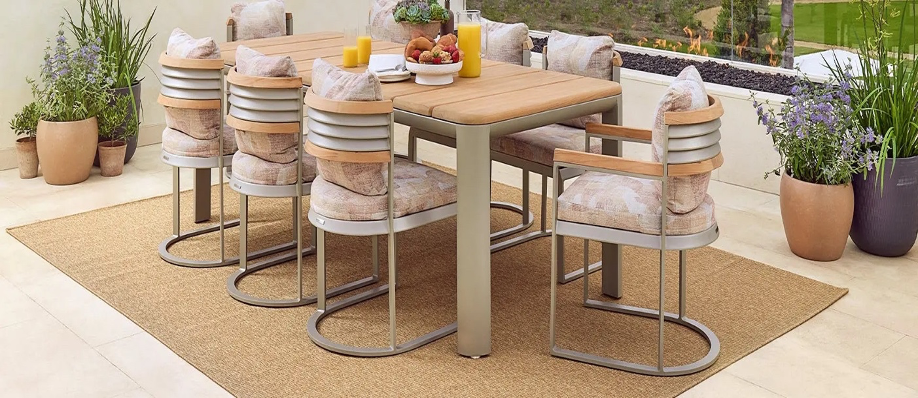
Outdoor rugs are now foundational design elements rather than decorative accents. Flat-weave PET and polypropylene rugs in mineral tones—driftwood, sand, fog, muted indigo—define seating and dining zones across expansive decks and covered porches. This approach mirrors interior planning. Furthermore, it brings visual cohesion to large open-air layouts. In the Mid-Atlantic and Upper East, mold-resistant weaves are critical during humid summers. The Pacific Northwest region requires quick-drying construction to prevent mildew buildup. In the Southeast and Texas Gulf, lighter tones reflect heat while still concealing sand. By layering rugs strategically beneath lounge seating and dining tables, coastal homeowners create structured outdoor rooms without adding walls or visual heaviness.
Above, Brown Jordan’s new Knots rug features a flat-weave made from 100% UV-stabilized Royaltron™ polypropylene available in four sizes and colors.
Layered, Marine-Grade Lighting
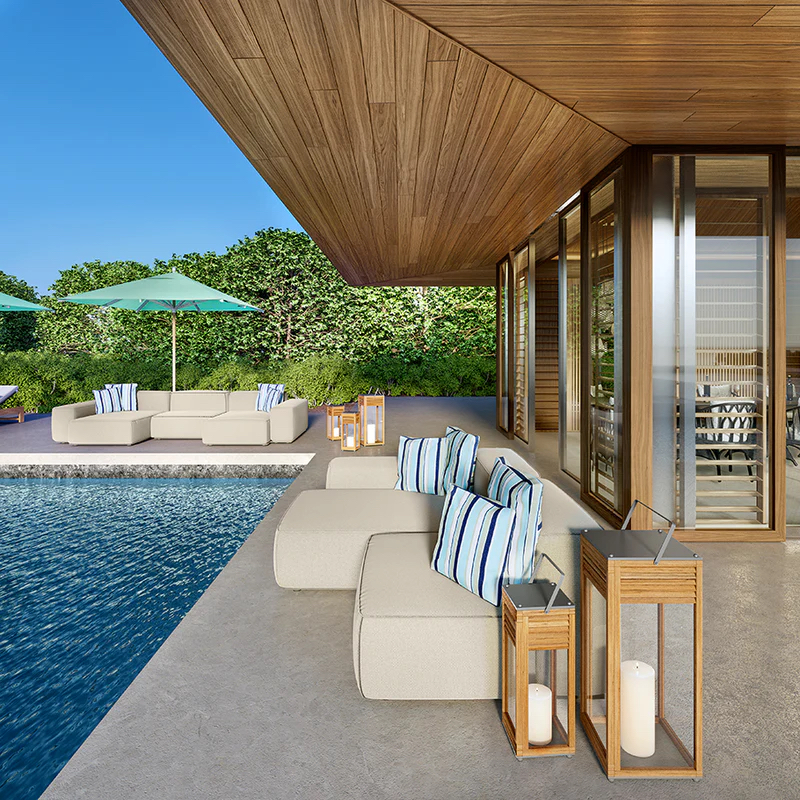
Outdoor lighting in 2026 takes shape as an architectural layer rather than a finishing touch. Sculptural lanterns, marine-grade sconces, and integrated LED table lamps extend the usability of coastal terraces well into the evening. Finishes such as aged brass, solid teak, matte black aluminum, and woven rattan shades introduce warmth while meeting wet-location standards. In the Pacific Northwest, warm LEDs offset gray skies and early dusk. In hurricane-prone areas of the Southeast and Texas Gulf Coast, anchored fixtures rated for heavy exposure are essential. California and Upper East homeowners increasingly use rechargeable cordless lamps to add flexibility to dining and lounge areas. The result is a layered lighting plan that balances ambiance, safety, and coastal durability.
The Lyndonville Lantern above from JANUS et Cie merges Japanese minimalism with Cape Cod architecture. Made from natural teak and powder-coated aluminum, these lanterns feature a clean-lined aesthetic with clear glass panels.
Sustainable Luxury & Visible Craftsmanship
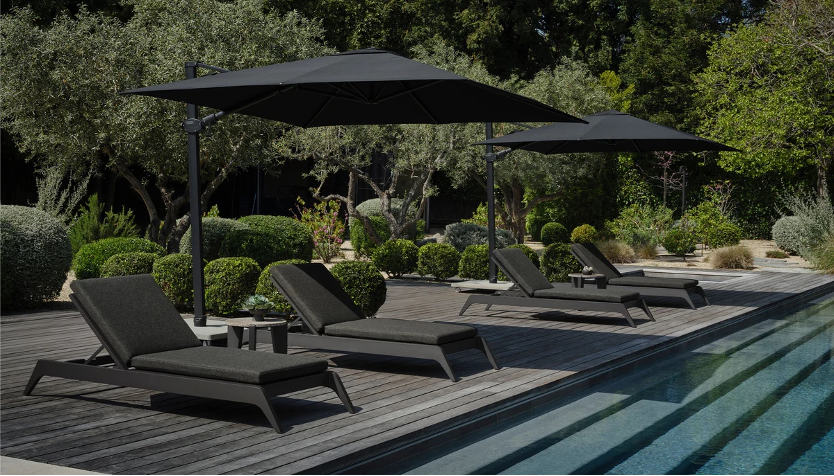
High-end outdoor design in 2026 emphasizes traceable materials and visible craftsmanship. FSC-certified teak, handwoven all-weather wicker, and responsibly sourced metals reflect a shift toward conscious investment. Coastal homeowners are increasingly drawn to pieces that feel collected rather than mass-produced, aligning with broader sustainability priorities—particularly in California and the Pacific Northwest. In salt-heavy regions such as the Southeast and Texas Gulf, kiln-dried hardwoods and marine-grade hardware ensure longevity. Along the Upper East and Mid-Atlantic, stackable artisan chairs allow seasonal flexibility without sacrificing integrity. Sustainable luxury is defined not by excess, but by durability and craftsmanship designed to endure.
Here, Martyn Lawrence Bullard’s MLB Aluminum Collection for Harbour creates a modern update on a mid-century French aesthetic, crafted from high-quality extruded aluminum and a range of fabrics milled in Indonesia using 100% recyclable materials. He also incorporates other luxe elements—including travertine, chipped marble, and Grade-A teak—into his pieces, composing a striking juxtaposition of outdoor materials.
The defining characteristic of coastal outdoor furniture in 2026 is disciplined permanence. Across the varied shorelines of the United States, homeowners are investing in architectural seating, substantial dining installations, performance textiles, layered lighting, artisan craftsmanship, and integrated storage. These elements collectively elevate outdoor living into a year-round extension of the home. These trends reflect a broader movement toward sustainability, durability, and intentional design—qualities particularly relevant in environments shaped by salt, wind, humidity, and shifting seasons. For the modern coastal homeowner, the goal is not trend-driven novelty but thoughtful curation. Instead, it is about selecting furnishings that withstand climate realities while reinforcing the refined, composed character of life by the water. For more design inspiration, visit Beach Homes Lifestyles.