

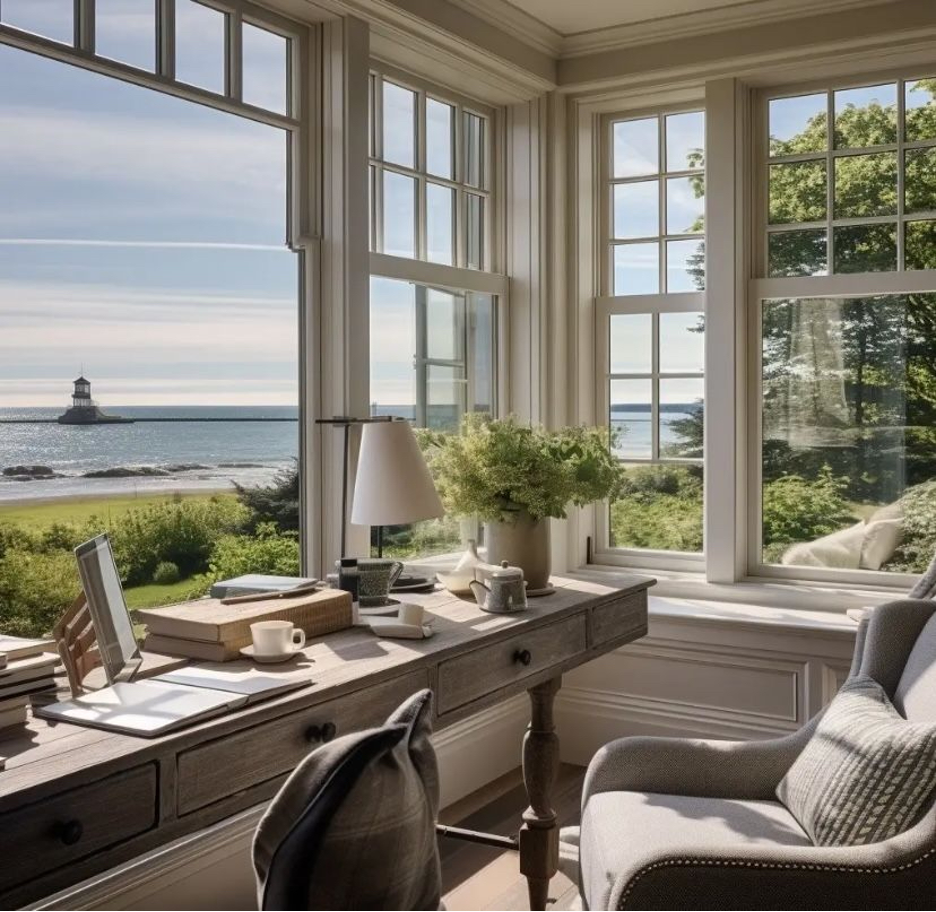
There is something inherently appealing about working from a beach house: a desk near a window, a breeze moving through the room, sunlight on the floor and, ideally, a view that is considerably more interesting than the average office wall. However, even the most enviable coastal setting cannot compensate for a workspace buried beneath paperwork, tangled charging cords, and the collection of pens, notebooks and miscellaneous necessities that seems to accumulate wherever you work. The trick is to create an office that feels as relaxed and considered as the rest of the house. At the same time, it must function efficiently enough for real work.
That does not mean banishing everything from your desk or turning a casual coastal room into a minimalist workstation. Instead, think about organization as part of the design. Built-in cabinetry can conceal printers and files. Floating shelves can take advantage of vertical space. Additionally, a well-placed tray can keep daily essentials from spreading across the desk. Even lighting deserves attention: warm, layered illumination feels considerably more appropriate in a beach house than a single glaring overhead fixture. Whether your coastal style leans toward classic New England, Lowcountry traditional, Gulf Coast contemporary, California casual or Pacific Northwest modern, the right organizational strategy can make the office both more useful and more at home in its surroundings. These six smart desk-organization ideas show how to bring order to the workday without losing the relaxed, personal character that makes a coastal home office worth working from in the first place.
Start With a Clean Desk—Not an Empty One
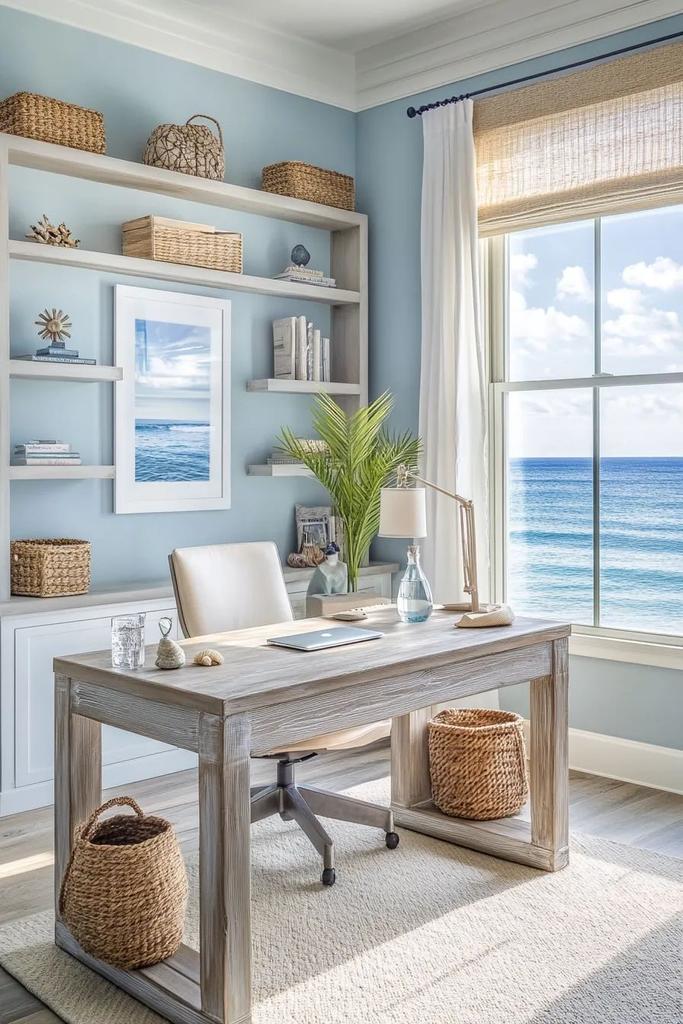
The concept: The most productive desk is not necessarily minimalist; it is edited. Keep the things you reach for daily within easy reach, and relocate everything else.
What defines it: A laptop, monitor, notebook, favorite pen, and perhaps one or two personal objects constitute the working layer. Decorative trays, shallow boxes, and drawer dividers keep smaller necessities contained without making them invisible.
Why it is versatile: This approach works equally well with a traditional mahogany desk in a Maine shingle-style house. It also works with a painted desk in a Mid-Atlantic cottage, or a sleek oak workstation in a modern California beach house.
How to implement it: Empty the desk completely, then sort everything into daily, occasional, and unnecessary categories. Give occasional supplies a permanent home elsewhere. In a small office, a single attractive tray can replace several scattered containers. Meanwhile, a drawer organizer can keep pens, chargers, and other small essentials from becoming a jumble.
Make the Cables Disappear
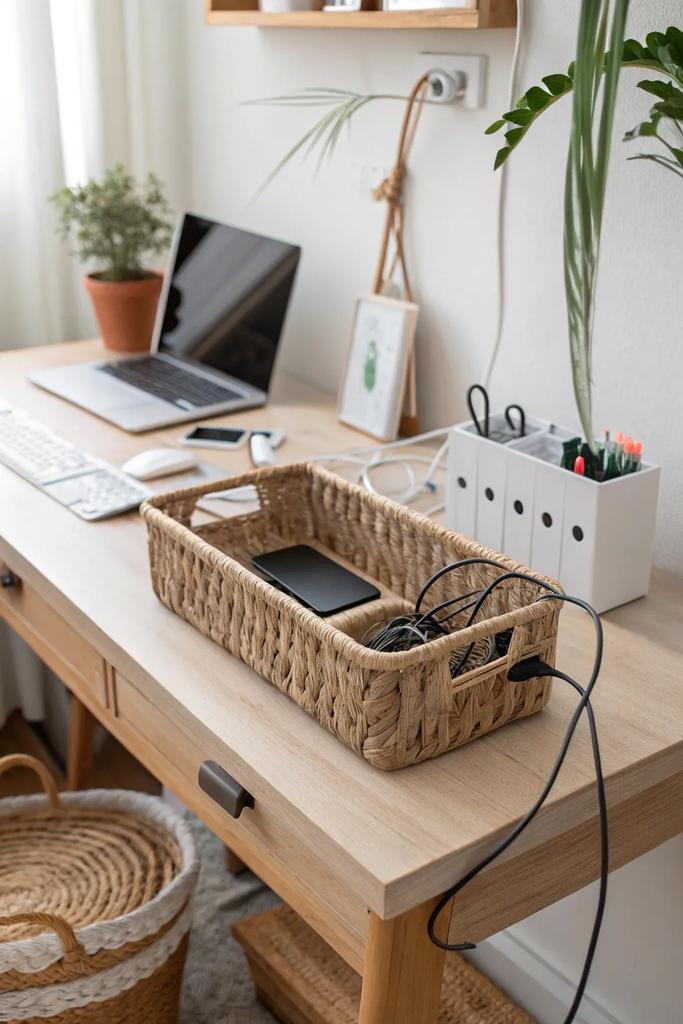
The concept: If your office has a visual problem, there is a good chance it is actually a cable-management problem.
What defines it: Under-desk cable trays, adhesive clips, cable sleeves, cord boxes, and desk grommets turn a tangle of technology into one controlled system.
Why it is versatile: Concealed wiring works with virtually every style. For instance, a woven cable basket can suit a relaxed Florida or Texas beach house. A wood box works beautifully in a Pacific Northwest retreat, and discreet black hardware can disappear beneath a contemporary California desk.
How to implement it: Mount a power strip beneath the desk rather than leaving it on the floor. Moreover, label each cord at the plug, bundle related cables, and leave enough slack to move the monitor or laptop. If you are renovating, add outlets directly behind or beneath the desk. Also, specify cable pass-throughs before the millwork is fabricated.
Think Vertically
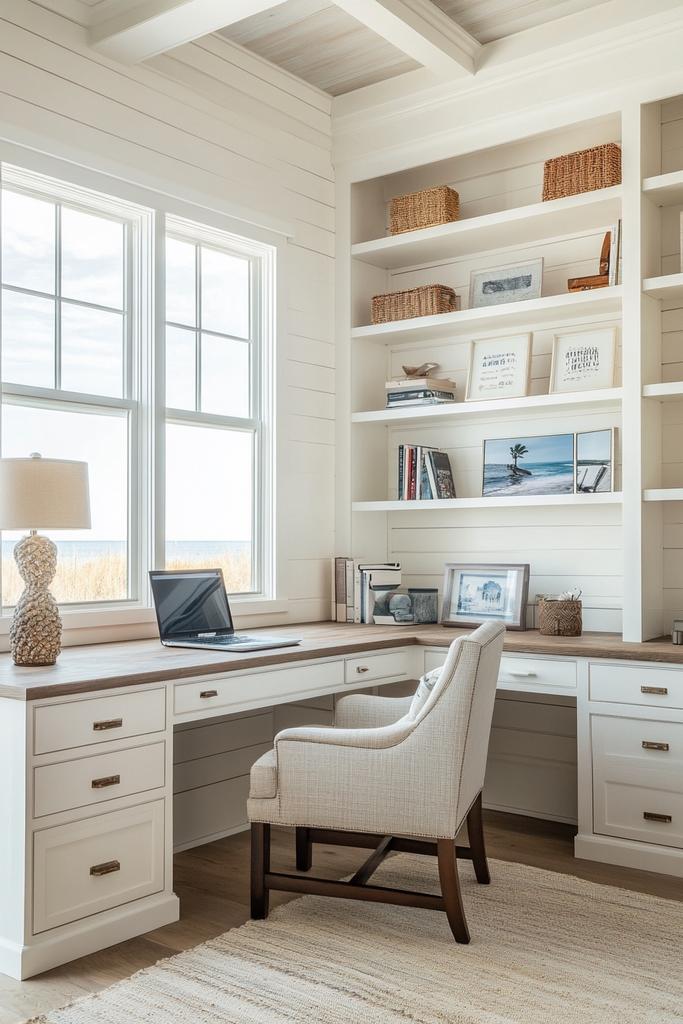
The concept: When floor space is precious, the walls become your filing cabinet.
What defines it: Floating shelves, narrow cabinets, pegboards, and wall-mounted organizers move supplies upward while keeping the desk itself open.
Why it is versatile: Vertical storage can be almost invisible in a white-paneled Cape Cod office. On the other hand, it can be deliberately decorative in a colorful Southeast or California workspace.
How to implement it: Install two or three shallow shelves above the desk for books, attractive storage boxes, and a few personal objects. Use a pegboard for scissors, headphones, chargers, and frequently used tools. In a Houston or Texas Gulf Coast home, cabinetry can conceal less attractive equipment. Meanwhile, in a Pacific Northwest cabin, open wood shelving can make the organization part of the architecture.
Give Paper a Single Destination
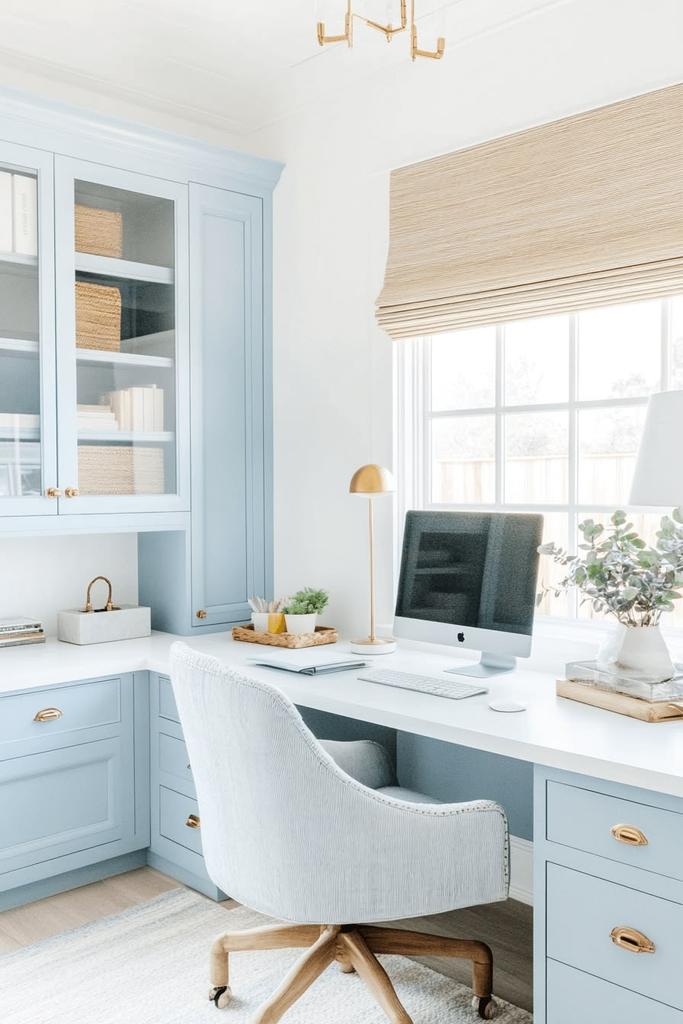
The concept: Paper clutter becomes manageable when it has a designated stopping point.
What defines it: A vertical file, inbox tray, drawer for active projects, and scanner are enough for most home offices.
Why it is versatile: The system can be concealed behind cabinetry in a sophisticated Mid-Atlantic home. Alternatively, it can be displayed in handsome leather, rattan, or wood organizers in a casual beach cottage.
How to implement it: Create three categories: action, file, and recycle. Scan documents you do not need physically, and establish a weekly filing routine. Important records should be digitized and backed up. Meanwhile, documents such as titles and legal records deserve secure physical storage. In a vacation home, this is particularly useful because you can avoid allowing mail, receipts, and household paperwork to accumulate between visits.
Choose Furniture That Does Double Duty
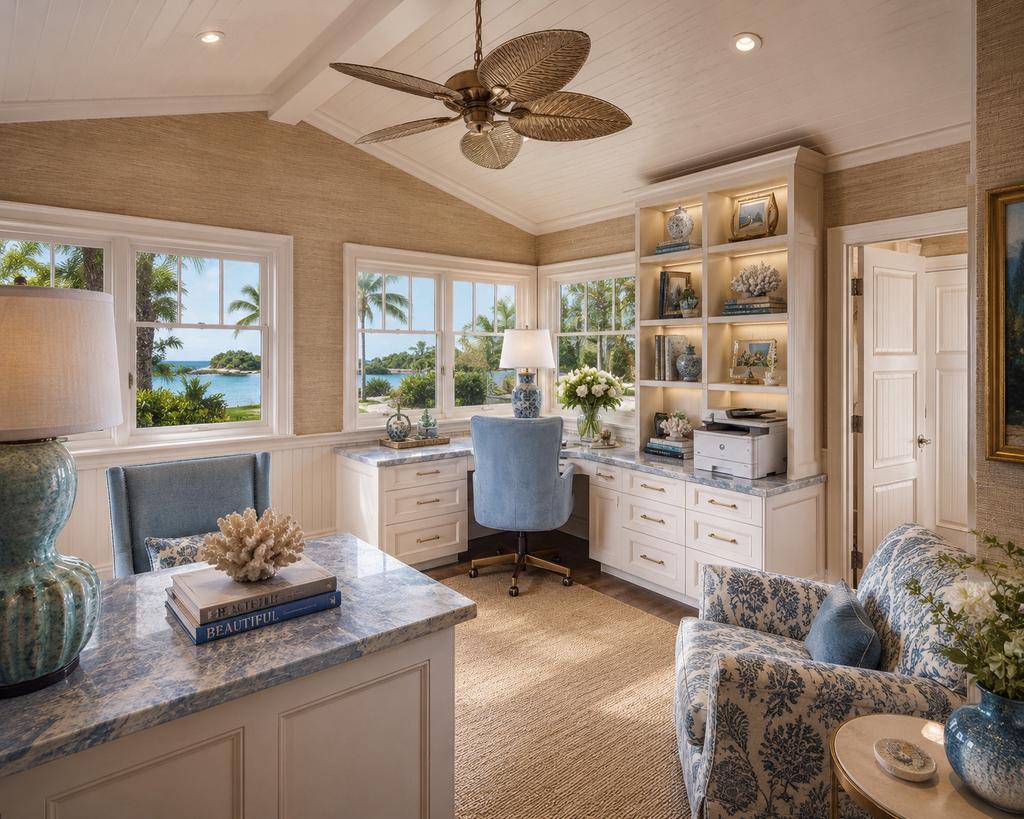
The concept: At a beach house, the smartest office furniture can have a second life—or conceal its first.
What defines it: Secretary desks, built-in cabinetry, window-seat drawers, armoires, and desks with integrated storage eliminate the need for additional filing furniture.
Why it is versatile: This is particularly useful in vacation homes where an office may need to double as a guest room, homework station, or occasional craft space.
How to implement it: A built-in desk tucked into an alcove works beautifully in a compact Upper East or Mid-Atlantic beach cottage. In a larger Southeast or Gulf Coast home, consider floor-to-ceiling cabinetry with closed doors for printers, files, and supplies. In California, a streamlined floating desk can preserve sightlines and make a small room feel larger. For a particularly polished solution, specify outlets and cable passages inside the cabinetry so technology disappears when the doors close.
Organize the Lighting, Too
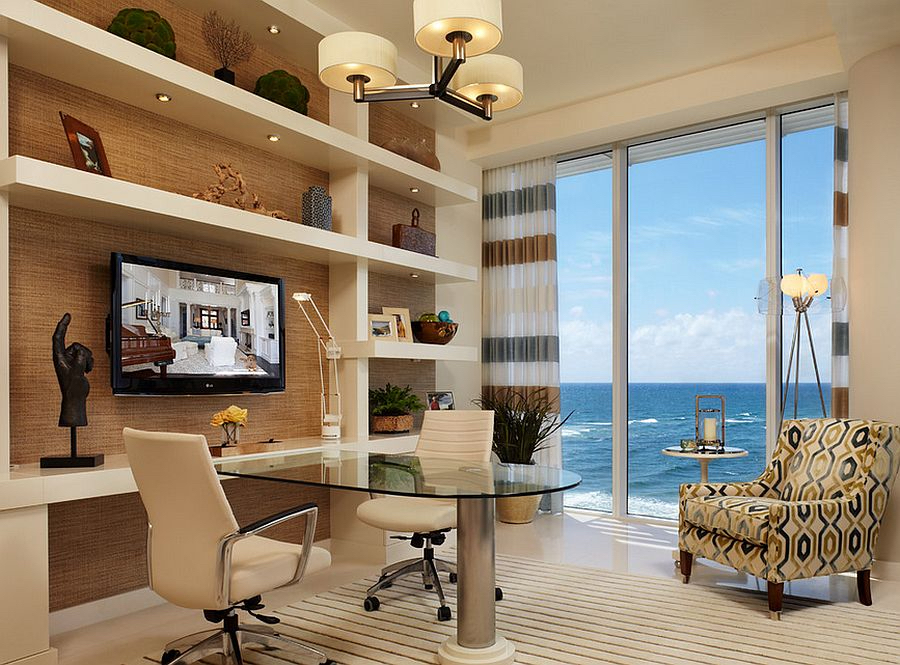
The concept: Lighting is part of the workspace infrastructure—not an afterthought.
What defines it: One good task lamp, ambient illumination, and natural light create a more comfortable environment than relying on a single overhead fixture.
Why it is versatile: The same principle works everywhere from a dark, wood-paneled Pacific Northwest office to a sun-filled California room. In the Southeast, Gulf Coast, and Texas regions, adjustable shades can control glare during bright afternoons; in the Upper East and Mid-Atlantic, layered lamps become especially useful during shorter winter days.
How to implement it: Position the desk perpendicular to a window when possible to minimize screen glare. Add a warm-toned desk lamp for focused work, and a shaded floor or table lamp for ambient light. In a beach house, consider the lighting fixtures part of the room’s personality, too: a ceramic lamp, woven shade, or sculptural fixture can provide the decorative interest that might otherwise come from artwork or accessories.
The best coastal home office does not need to announce itself as an office from across the room. In fact, the more successfully storage, technology and lighting are integrated, the more naturally the workspace can reflect the character of the house. A Nantucket-inspired office might rely on painted cabinetry and woven accents; a Charleston or Lowcountry workspace can take advantage of millwork and color; a Texas Gulf Coast office might favor substantial built-ins that withstand a busy household; and a California or Pacific Northwest retreat can keep the architecture spare and let the view do some of the visual work. The point is not to eliminate everything from sight. It is to make deliberate decisions about what earns space—and give everything else a place to go. For more about living your best beach life, visit Beach Homes Lifestyles.