

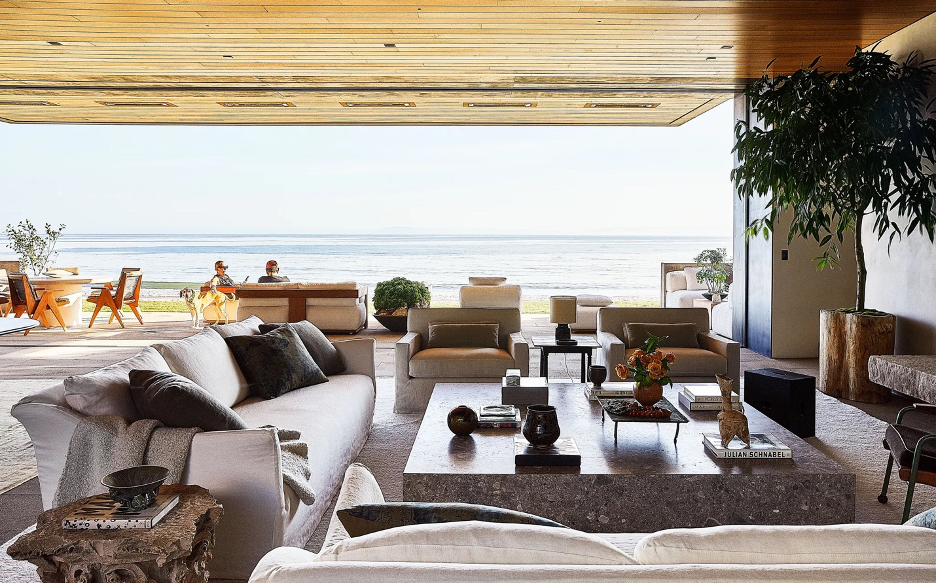
For coastal homeowners, the smartest renovations are rarely the most elaborate ones. Projects that hold their value tend to solve environmental problems while making the property easier, safer, and more enjoyable to live in. That distinction matters because salt air, wind, humidity, intense sun, flooding, and seasonal storms can punish finishes and systems that might perform perfectly well inland. Coastal buyers know this, too: they are often shopping not just for a view, but for a house that is prepared for the conditions that come with it.
The latest Cost vs. Value Report, published in 2025 by Remodeling and Zonda, offers useful national and regional context for that strategy. The report compares the average cost of 28 remodeling projects with the value those improvements retain at resale across 119 U.S. markets. Its findings underscore an important point for coastal homeowners: projects that improve curb appeal, durability, and everyday functionality can be more financially compelling than highly personalized luxury renovations.
For coastal properties, however, national averages are only part of the equation. The greatest improvements combine conventional resale appeal with resilience specific to the local climate. A hurricane-rated window package makes particular sense along the Gulf and Southeast coasts, while drought-tolerant landscaping may be a smarter investment in Southern California. Here are seven upgrades worth considering, with the right approach varying from Maine to Malibu. The goal is not to make every coastal house look alike, but to invest where durability, comfort, appearance, and buyer demand intersect. Below, we highlight seven of the most strategic high-ROI home improvements for coastal properties across the country—projects that can enhance everyday enjoyment while strengthening a home’s appeal and resale potential.
Make Outdoor Living a True Extension of the House
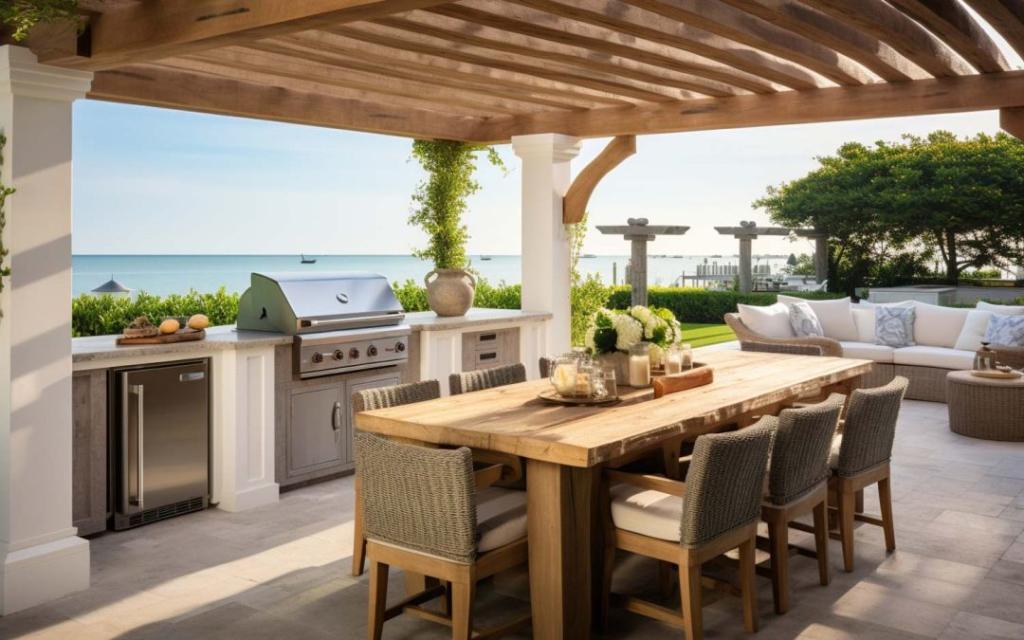
A deck is more valuable when it functions like an outdoor room rather than simply a platform with furniture. Covered dining areas, built-in grills, outdoor showers, fire features, and weather-resistant cabinetry can turn a marginal yard into usable living space.
Why consider it: Coastal buyers are buying a lifestyle as much as square footage.
Easy solution: Start with a durable composite or properly specified hardwood deck, then add one functional feature at a time.
In the Northeast and Mid-Atlantic, consider screened or covered spaces for shoulder-season use; in the Southeast and Gulf Coast, prioritize shade, fans, and corrosion-resistant hardware; in Southern California, a kitchen, fire pit, and retractable shade can make outdoor living nearly year-round. Suitable markets include the Hamptons, Cape Cod, Jersey Shore, Outer Banks, Hilton Head, Charleston, Port Aransas, Malibu, Santa Barbara, and San Diego.
Upgrade to Impact-Rated, High-Performance Windows
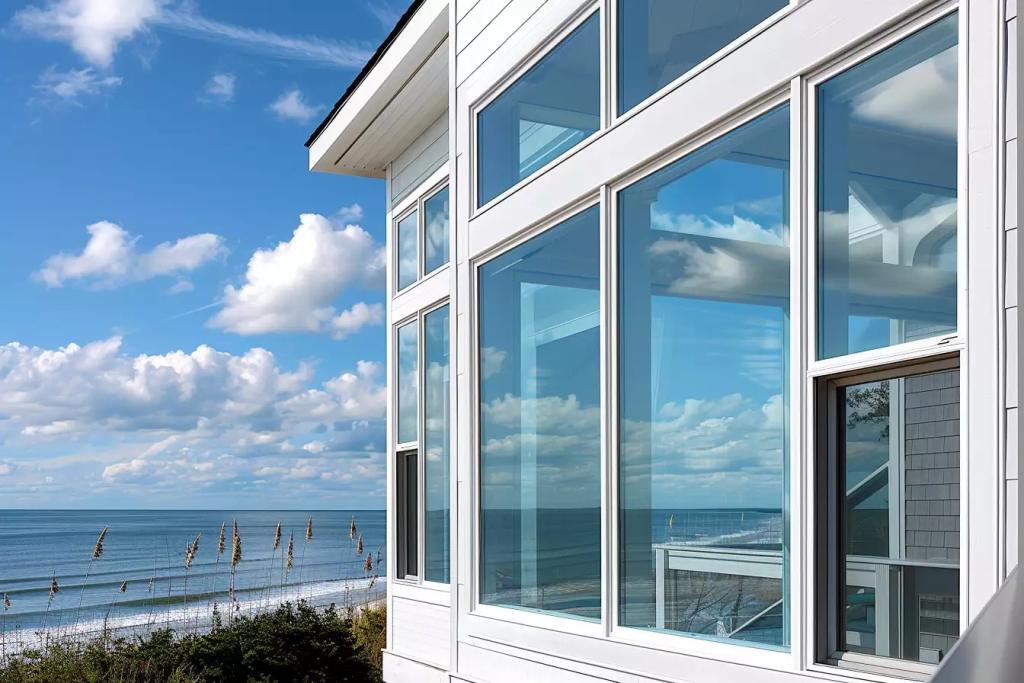
Windows are one of the rare improvements that can simultaneously address resilience, energy efficiency, comfort, and aesthetics. In hurricane-prone markets, impact-rated glazing can provide a meaningful layer of protection while reducing heat gain and improving the home’s envelope.
Why consider it: Buyers in the Southeast, Gulf Coast, and Mid-Atlantic increasingly notice whether a coastal home has been prepared for storms.
Easy solution: Replace the most exposed windows first, specify low-E glass appropriate to the climate, and choose corrosion-resistant frames and hardware.
In the Pacific Northwest, where storm resilience is less about hurricanes and more about rain, wind, and moisture, prioritize high-performance glazing and water management. In Northern California, large windows can also improve views while enhancing the envelope. Suitable regions include the Outer Banks, Charleston, Hilton Head, Florida’s Atlantic and Gulf coasts, Galveston, Port Aransas, Newport, Oregon, and coastal Washington.
Replace High-Maintenance Landscaping With a Coastal Native Garden
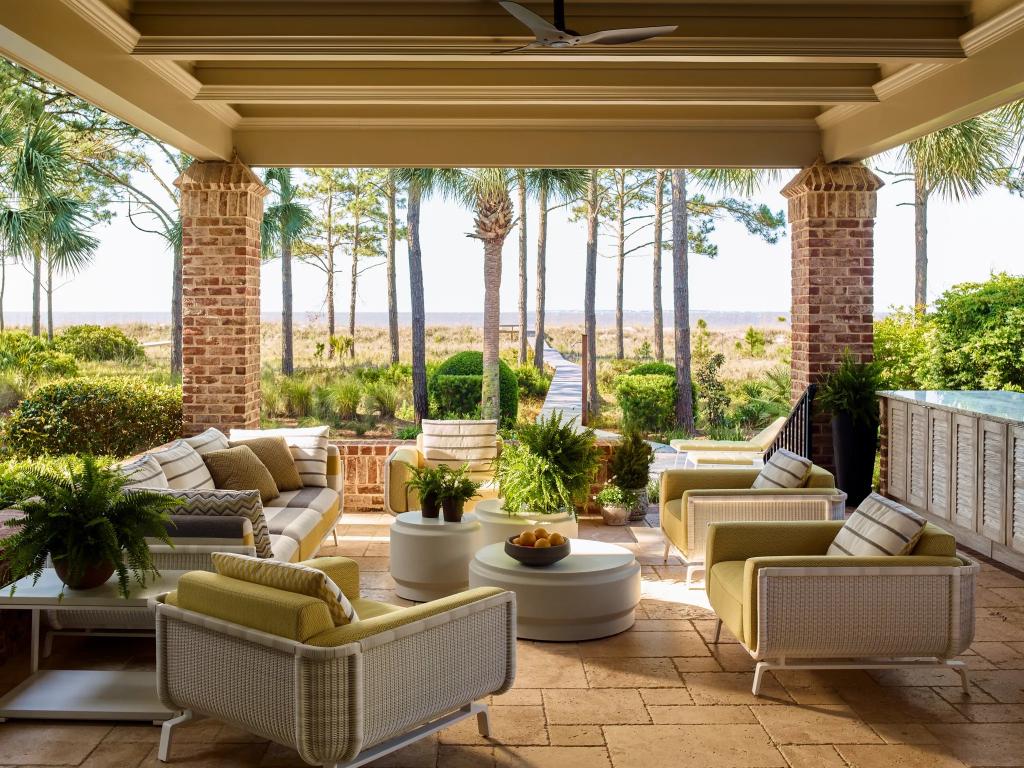
Native landscaping is a deceptively powerful resale improvement because it can make a property look established while reducing irrigation, maintenance, and replacement costs. Coastal landscape designers increasingly use plants adapted to sandy soils, salt exposure, and local weather rather than forcing conventional lawns and ornamentals into difficult conditions.
Why consider it: A landscape that survives the local environment looks better and costs less to maintain.
Easy solution: Replace portions of lawn with native grasses, ground covers, shrubs and shade trees, and use permeable paths rather than expansive hardscape.
In the Upper East and Mid-Atlantic, think beach grass, bayberry, inkberry and native sedges; in the Southeast and Gulf, use palmetto, muhly grass and other heat- and salt-tolerant species; in Northern and Southern California, consider drought-tolerant natives and Mediterranean plants. For the Pacific Northwest, coastal grasses, salal, and hardy native perennials work beautifully.
Invest in Energy Efficiency—and Backup Power
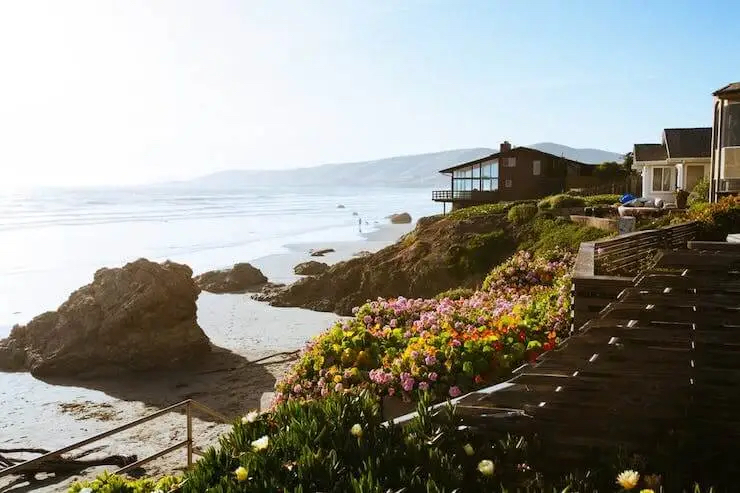
Energy upgrades become more compelling when they address the realities of a coastal climate. High-efficiency HVAC, heat pumps, insulation, low-E windows, solar panels, and battery storage can reduce operating costs. At the same time, backup power can become an especially attractive selling point in storm-prone areas. Recent remodeling data place backup generators among the stronger-performing improvements nationally.
Why consider it: Lower utility costs are appealing everywhere, but resilience adds another layer of value in hurricane territory.
Easy solution: Begin with the least glamorous upgrades—air sealing, insulation, efficient HVAC and smart energy controls—then evaluate solar and battery storage.
Solar is particularly logical in Florida, the Gulf Coast and Southern California; in the Pacific Northwest, efficiency improvements may make more financial sense than maximizing solar production. Suitable regions include Florida’s Gulf and Atlantic coasts, Port Aransas, Galveston, Charleston, Hilton Head, San Diego, Orange County, and Santa Barbara.
Do a Strategic Kitchen—and Bath—Refresh
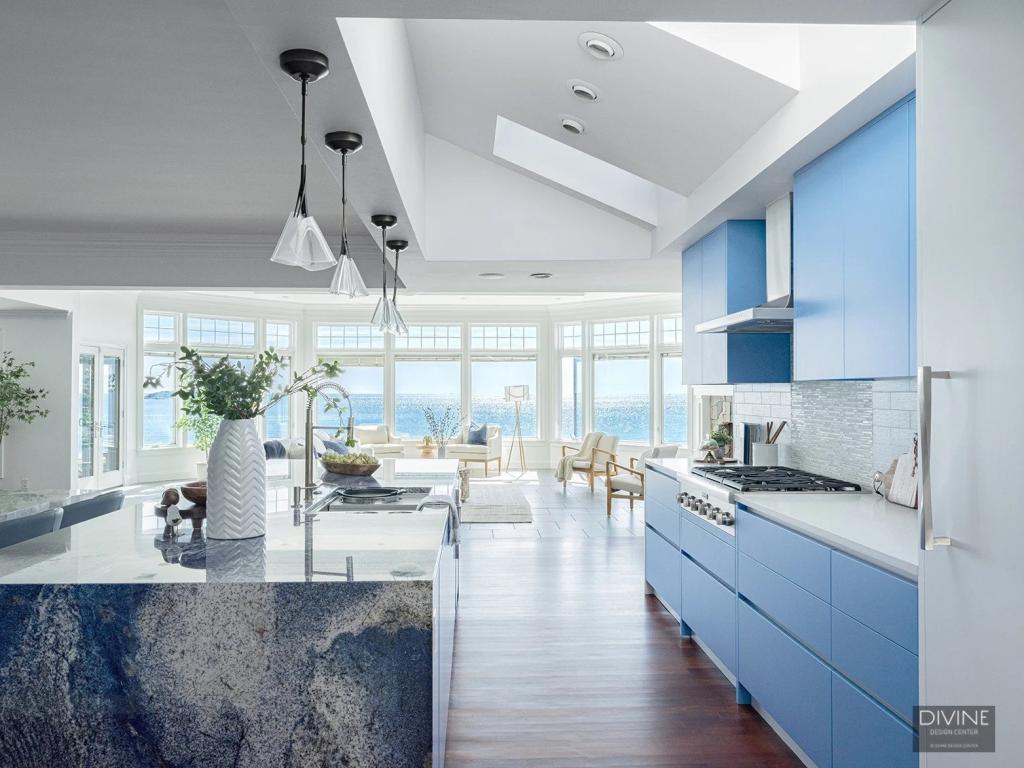
The high-ROI move is not necessarily a luxury kitchen. It is a kitchen that looks current, functions efficiently, and fits the home’s price point. Remodeling data consistently show that moderate updates outperform extravagant gut renovations in cost recoupment.
Why consider it: Buyers notice dated kitchens immediately, particularly in vacation markets where they expect turnkey convenience.
Easy solution: Reface rather than replace cabinets, upgrade hardware, install durable counters, improve lighting, and replace aging appliances.
In the Upper East and Mid-Atlantic, classic cabinetry and durable stone suit traditional beach houses; in the Southeast and Gulf, prioritize easy-clean surfaces and generous islands; in California, emphasize indoor-outdoor flow and efficient appliances. The same philosophy works in bathrooms: upgrade fixtures, lighting, ventilation, and shower surfaces rather than overbuilding.
Add Smart Technology That Solves Coastal Problems
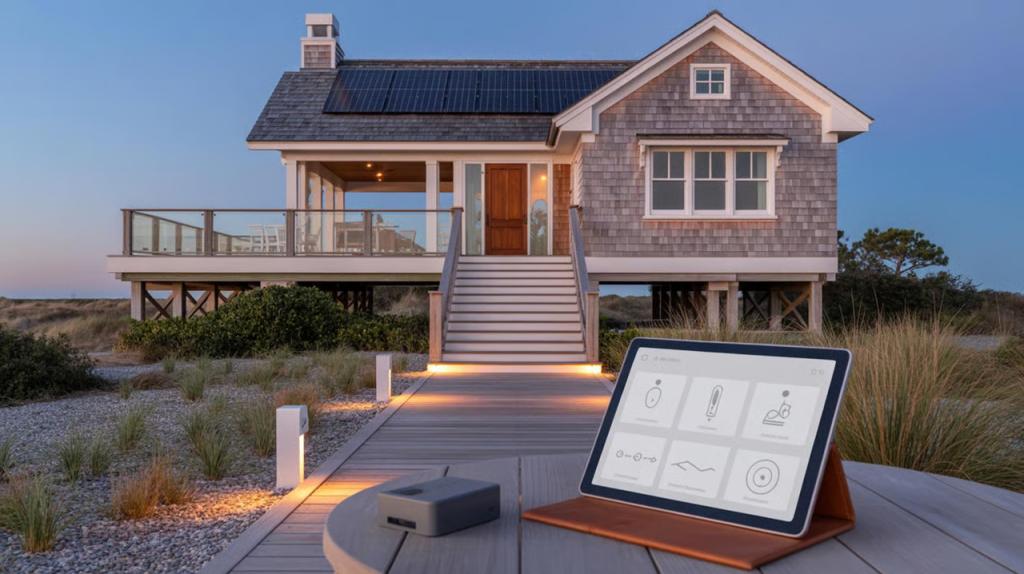
Forget technology for technology’s sake. The smartest coastal systems protect the house or make it easier to manage remotely. Smart thermostats, leak detectors, security cameras, smart locks, lighting controls, and whole-home monitoring can be particularly useful for second homes that sit empty between visits. Today’s smart-home designs increasingly integrate security technology discreetly into the architecture.
Why consider it: A remotely monitored coastal property gives owners another layer of protection against leaks, storms, temperature swings, and unauthorized access.
Easy solution: Start with a smart thermostat, water-leak sensors, a doorbell camera, and remotely controlled locks.
This is especially useful for Cape Cod and the Hamptons, where seasonal homes may sit vacant, as well as Florida, the Gulf Coast, the Carolinas, California, and the Pacific Northwest.
Improve the Exterior Envelope, Not Just the Décor
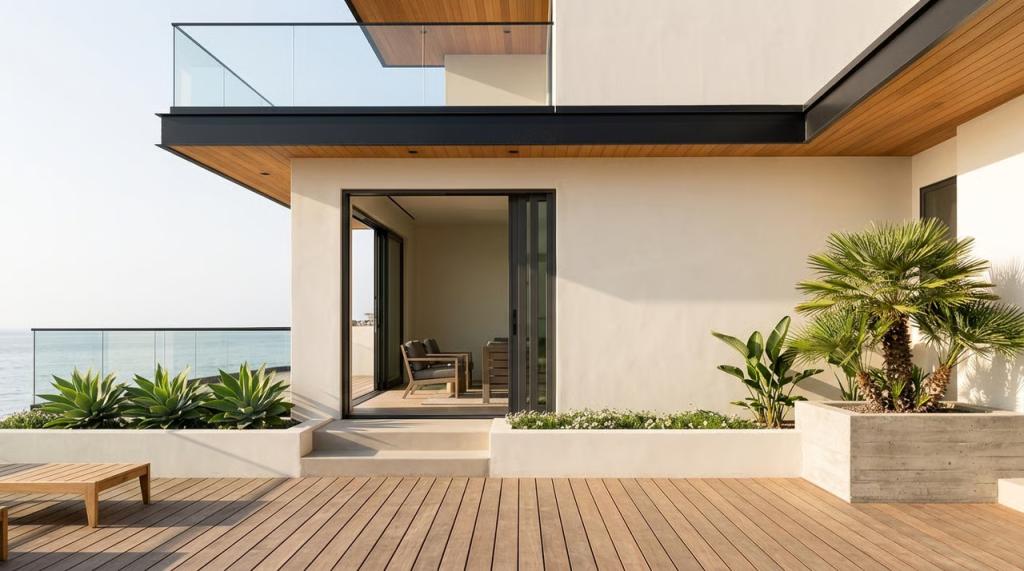
A fresh coat of paint is good; a more durable exterior is better. Coastal properties take a beating from ultraviolet light, salt, and moisture, making siding, roofing, doors, and exterior finishes important resale considerations. Fiber-cement siding, corrosion-resistant hardware, high-quality exterior paint, and well-designed drainage can improve curb appeal while reducing future maintenance. Exterior projects also consistently rank among the strongest ROI categories.
Why consider it: Buyers can see deferred exterior maintenance immediately—and coastal buyers know what salt and weather can do.
Easy solution: Repaint with a high-quality exterior coating, replace failing siding or trim, upgrade exterior lighting, and refresh the entry.
In the Northeast, shingle and clapboard homes benefit from crisp, durable finishes; in the Southeast and Gulf, lighter colors and moisture-resistant materials work well; in California, stucco, fiber cement, and drought-tolerant landscaping create a cohesive envelope.
The most valuable coastal renovation is ultimately the one that makes the property feel easier to own. A resilient window package, a shade-covered terrace, a landscape that thrives without constant irrigation, or a remotely monitored water system may not have the immediate visual drama of a completely new kitchen. Still, each solves a problem a future buyer will understand. And that is the real advantage of renovating for resale in a coastal market: when durability and design work together, the investment does double duty—improving the years you spend enjoying the house while making the property more compelling when it eventually changes hands. For more about living your best beach life, visit Beach Homes Lifestyles.