

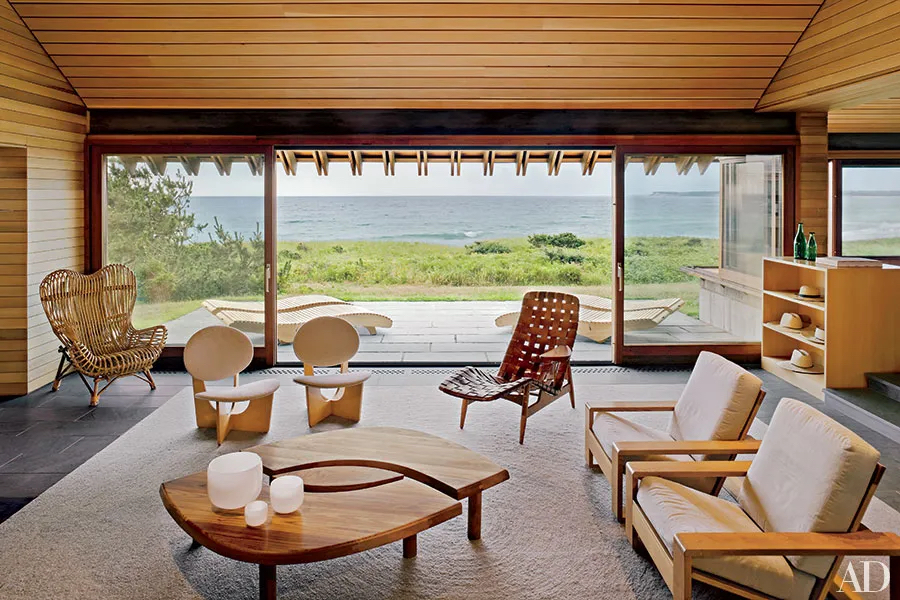
Decorating a coastal home is rarely about following the latest trend. The most memorable beach houses, whether perched along the rocky shores of New England, overlooking a Texas bay, or tucked beside the Pacific in Southern California, succeed because they reflect the personalities of the people who live there. Understanding the defining characteristics of today’s most enduring interior styles gives homeowners a vocabulary for making better design decisions instead of relying on impulse purchases or fleeting fads.
The beauty of coastal design today is its flexibility. Gone are the days when every beach house required white slipcovered sofas, weathered driftwood, and seashell motifs. Today’s coastal homes borrow thoughtfully from a range of aesthetics—traditional, Scandinavian, midcentury, farmhouse, and even eclectic interiors—while adapting them to their surroundings. Climate, architecture, natural light, and regional influences all play a role. A cedar-clad retreat in the Pacific Northwest naturally feels different from a breezy Gulf Coast cottage or a sophisticated waterfront residence in the Hamptons.
Whether you’re furnishing an entire home or refreshing a single room, understanding these seven popular interior design styles will help clarify your preferences and create spaces that feel cohesive, livable, and distinctly your own.
The Traditional Aesthetic
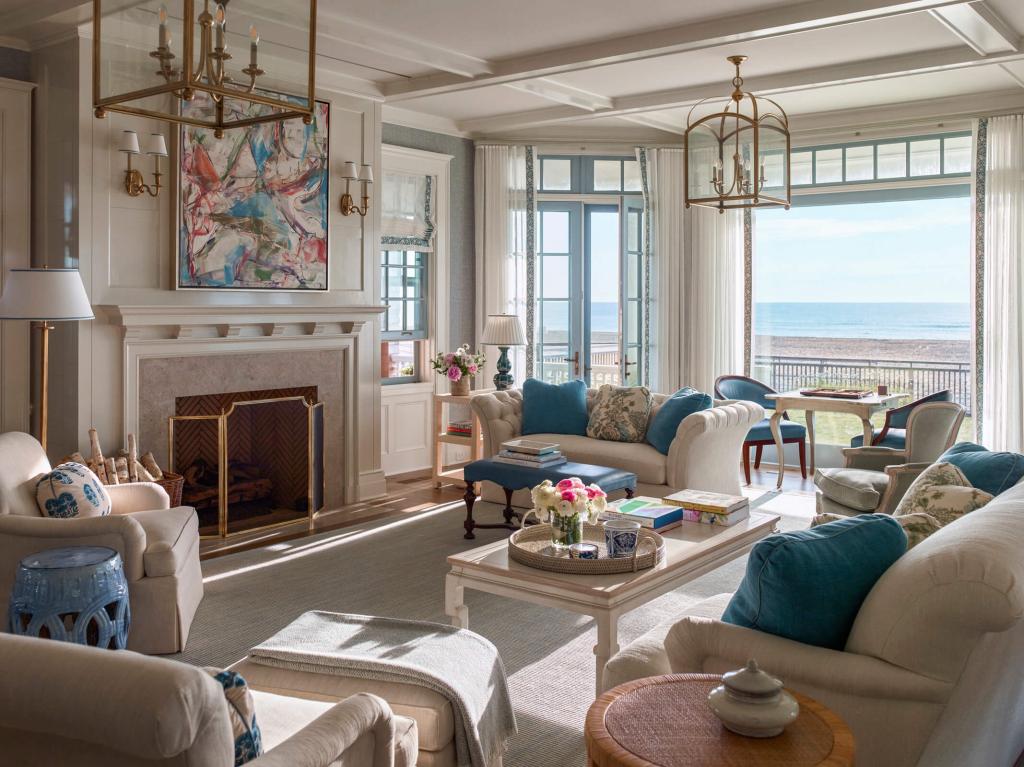
Traditional interior styles emphasize timeless proportions, quality craftsmanship, layered textiles, and classic architectural details. Think tailored upholstery, antique-inspired furnishings, paneled walls, brass accents, and rich wood finishes balanced with lighter coastal palettes. Rather than feeling formal, today’s traditional coastal homes use relaxed fabrics like linen, cotton, and performance textiles while maintaining elegant silhouettes.
Why it works in coastal homes
Traditional design ages gracefully and pairs beautifully with historic homes throughout the Upper East Coast, Mid-Atlantic shoreline, and Southern California’s classic beach communities.
How to incorporate it
- Furnish living rooms with English-arm sofas, woven grasscloth wallpaper, and substantial coffee tables.
- Install inset cabinetry with unlacquered brass hardware in kitchens.
- Use marble mosaics and polished nickel fixtures in bathrooms.
- Layer upholstered headboards with crisp white bedding in bedrooms.
- Choose teak dining furniture and lantern lighting for covered porches.
The Boho/Eclectic Look
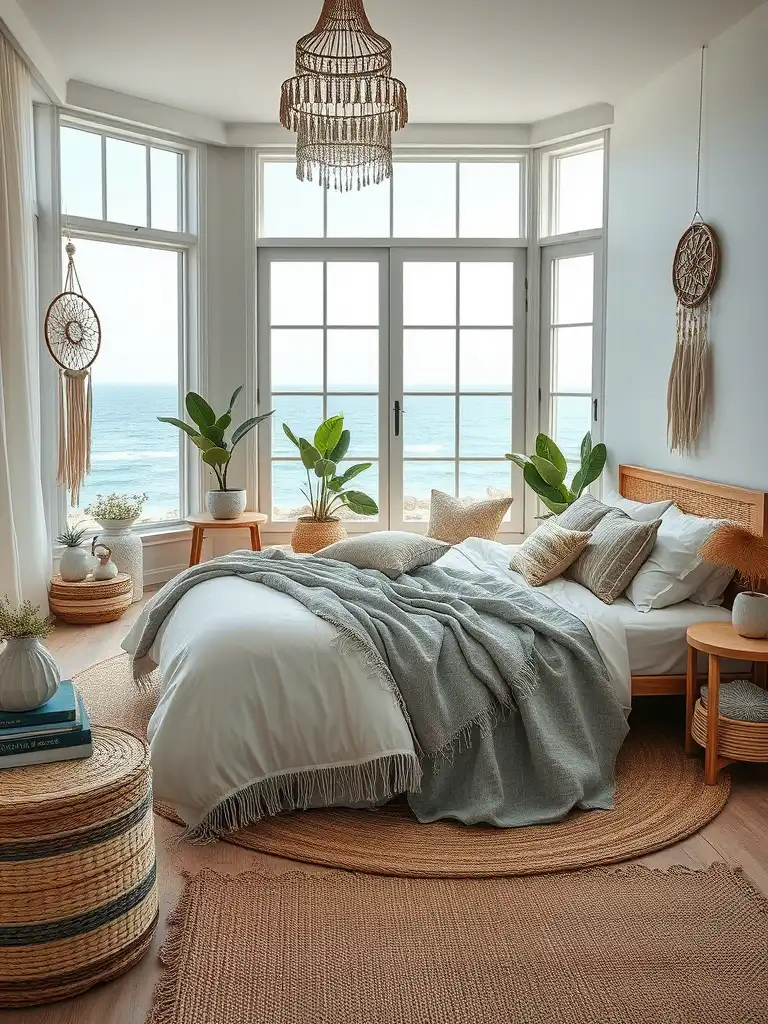
Eclectic and Bohemian interior styles celebrate collected pieces, global influences, handcrafted objects, and abundant texture. Rather than matching everything, successful eclectic spaces rely on thoughtful editing and a restrained color palette.
Why it works
Beach homes naturally invite collected memories—vintage finds, artisan ceramics, woven baskets, and travel souvenirs all feel at home here.
How to incorporate it
- Mix vintage furniture with contemporary lighting.
- Add patterned rugs beneath clean-lined seating.
- Use handmade tile backsplashes in kitchens.
- Introduce cane furniture and oversized plants in sunrooms.
- Layer outdoor lounges with colorful pillows and woven lanterns.
This style works especially well in relaxed Gulf Coast homes, Texas waterfront properties, and Northern California cottages where casual entertaining is part of daily life.
Clean-Lined Contemporary
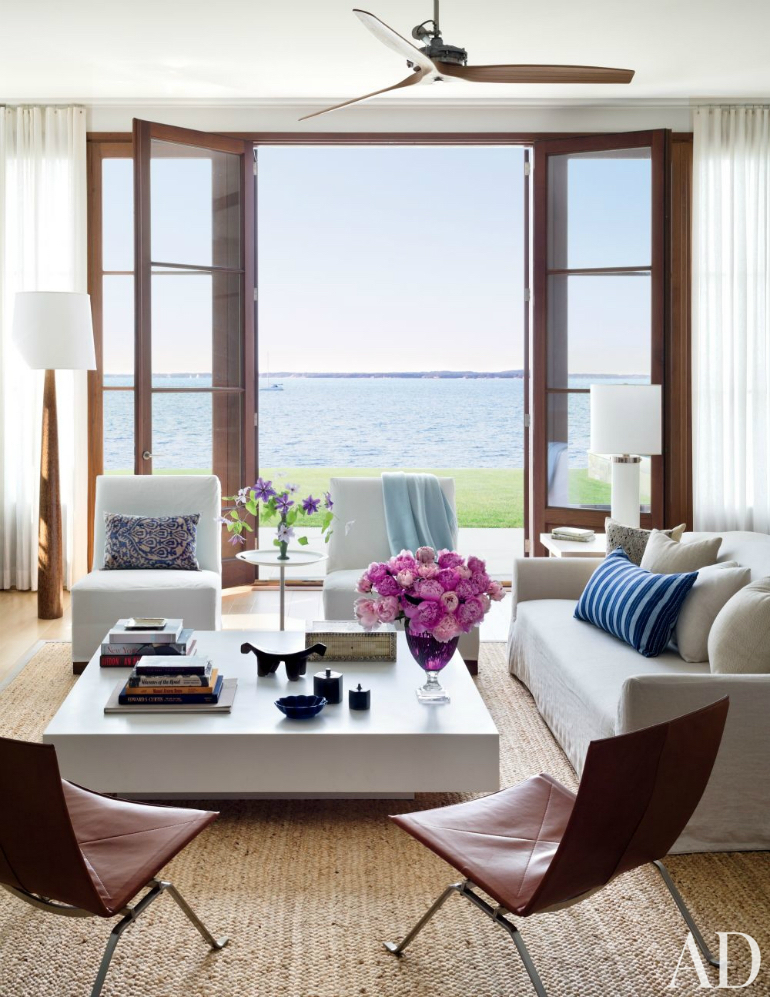
Contemporary interior styles reflect current architecture, emphasizing clean lines, open plans, restrained ornamentation, and sophisticated materials. Large expanses of glass, integrated storage, and sculptural lighting define many contemporary coastal homes.
Why it works
It highlights ocean and coastal landscape views rather than competing with them.
How to incorporate it
- Install waterfall-edge kitchen islands.
- Select floating bathroom vanities.
- Furnish living rooms with low-profile seating.
- Use oversized sliding glass doors.
- Choose linear fireplaces and minimal window treatments.
- Extend porcelain flooring onto covered terraces for seamless indoor-outdoor living.
This style feels especially appropriate in Southern California, Pacific Northwest waterfront homes, and newer coastal communities throughout the Southeast.
The Transitional Look
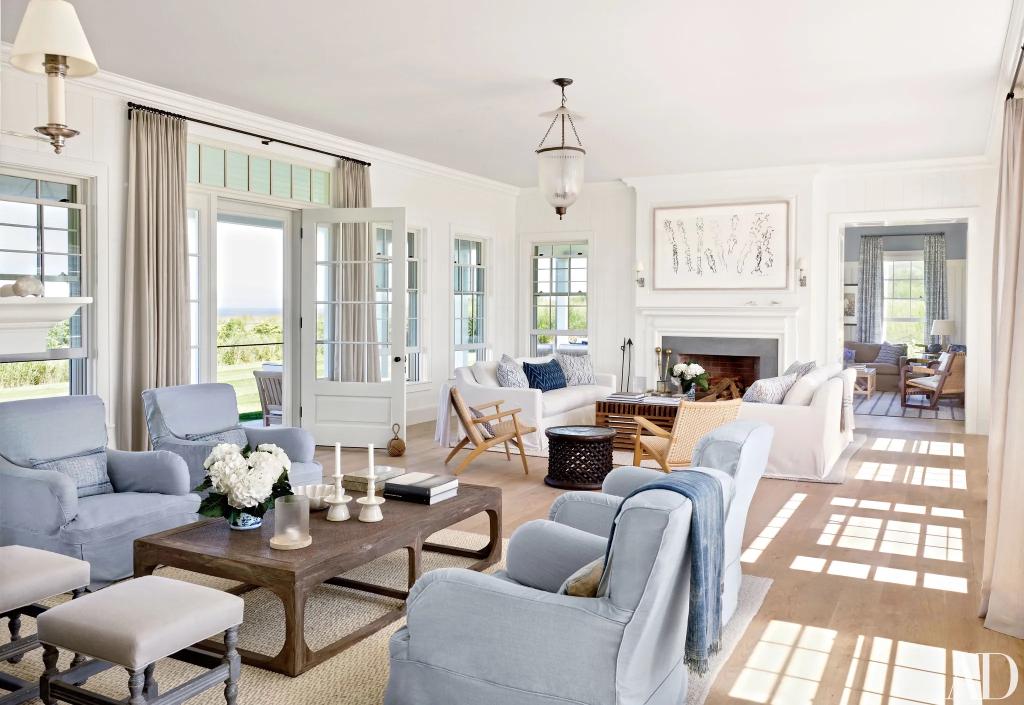
Transitional interior styles blend traditional comfort with contemporary simplicity, making it one of today’s most versatile aesthetics. Furniture remains classic but streamlined, while neutral palettes create calm, adaptable spaces.
Why it works
It appeals to homeowners who appreciate timeless design without excessive ornamentation.
How to incorporate it
- Pair shaker cabinetry with quartz countertops.
- Mix upholstered dining chairs with modern lighting.
- Combine natural oak flooring with contemporary artwork.
- Choose simple Roman shades over elaborate drapery.
- Keep bathrooms restrained using limestone, porcelain, and brushed brass.
Transitional interiors adapt beautifully across the Mid-Atlantic, Southeast, and Upper East coastal regions.
Farmhouse Warmth
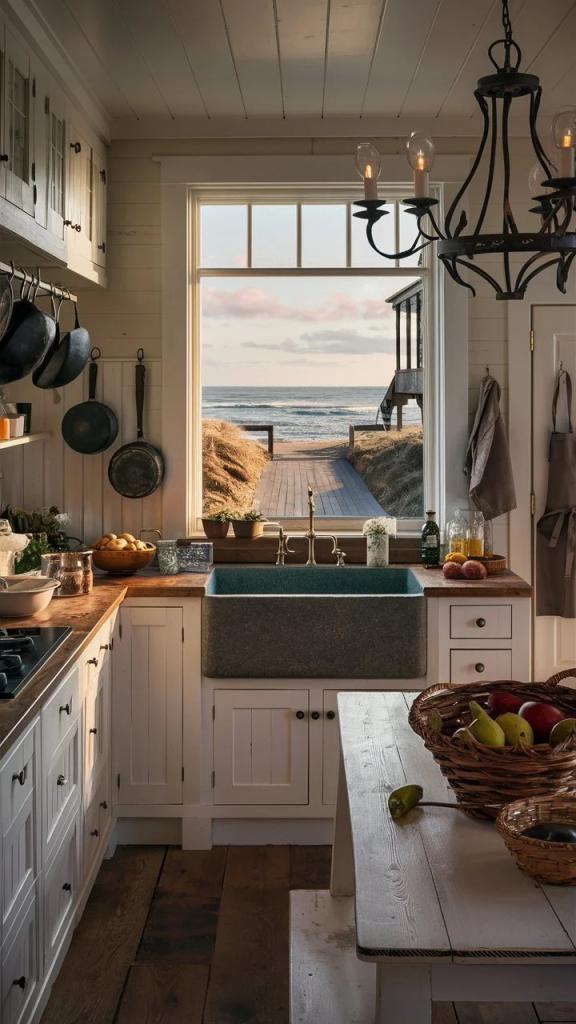
Today’s farmhouse interior styles have evolved considerably. Instead of overly rustic décor, modern farmhouse emphasizes authenticity, warm woods, painted cabinetry, and practical comfort.
Why it works
The relaxed character translates naturally into family-oriented beach houses.
How to incorporate it
- Add tongue-and-groove ceilings.
- Install apron-front sinks.
- Incorporate reclaimed wood shelving.
- Furnish bedrooms with upholstered beds and vintage-inspired nightstands.
- Use black steel lighting to add contrast.
- Create outdoor dining spaces with large farmhouse tables.
This approach complements waterfront homes throughout Texas, the Southeast, and many Mid-Atlantic communities.
Midcentury Modern Appeal
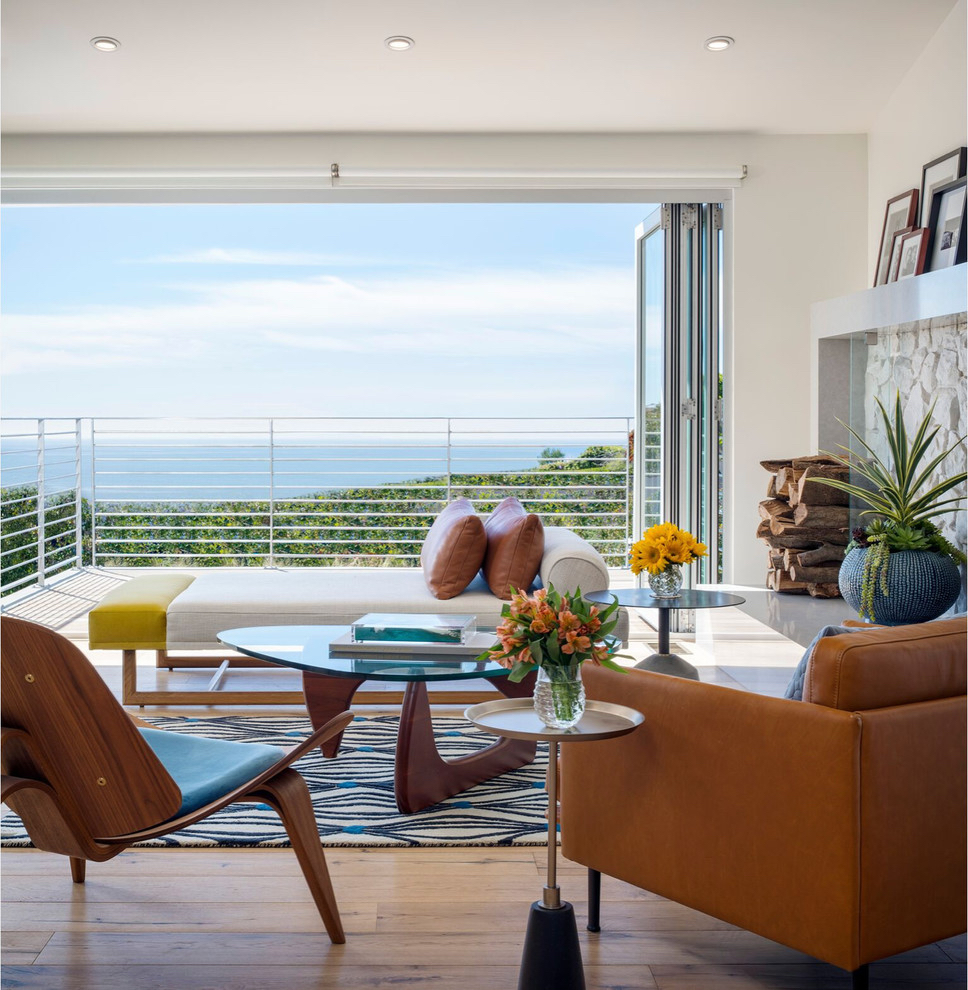
Midcentury modern interior styles celebrate organic forms, honest materials, and functional furniture. Walnut, teak, leather, terrazzo, and sculptural lighting define the style.
Why it works
Its indoor-outdoor philosophy aligns naturally with coastal living.
How to incorporate it
- Introduce iconic lounge chairs into living rooms.
- Choose walnut vanities for bathrooms.
- Add globe pendants over kitchen islands.
- Use slatted wood headboards.
- Furnish patios with low-profile teak seating and geometric planters.
Midcentury modern design remains especially popular throughout Northern and Southern California, and complements contemporary homes in the Pacific Northwest.
Minimalism / Scandinavian Sleek
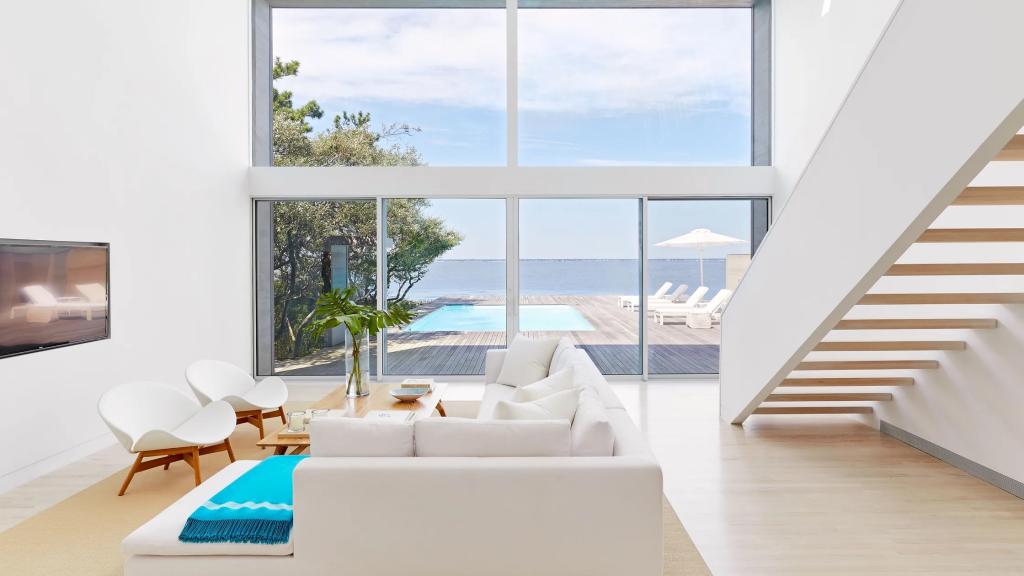
Minimalist and Scandinavian interiors prioritize functionality, natural materials, abundant daylight, and restrained color palettes. Rather than feeling sparse, successful spaces feel warm through layered textures and thoughtful craftsmanship.
Why it works
Beach homes already benefit from natural scenery. Reducing visual clutter allows water views, changing light, and architecture to become the focal point.
How to incorporate it
- Limit decorative accessories.
- Use pale oak flooring throughout.
- Choose integrated kitchen appliances.
- Install floating vanities with concealed storage.
- Layer wool throws, linen bedding, and textured ceramics.
- Furnish decks with simple teak furniture and understated planters.
This aesthetic performs especially well in the Pacific Northwest, Northern California, and contemporary homes throughout New England.
The most successful coastal interior styles rarely adhere rigidly to a single design philosophy. Instead, they borrow thoughtfully from several styles while remaining grounded in the home’s architecture, setting, and the way its owners live. A traditional living room may coexist comfortably with a contemporary kitchen, or Scandinavian restraint may balance the warmth of vintage furnishings collected over decades. Whether your waterfront retreat overlooks the Atlantic, the Gulf, the Pacific, or an inland shoreline, understanding these foundational design styles provides the confidence to make intentional choices. The result is a home that feels authentic, functions beautifully across every room, and remains relevant long after individual trends have faded. For more about living your best life on the coast, visit Beach Homes Lifestyles.