

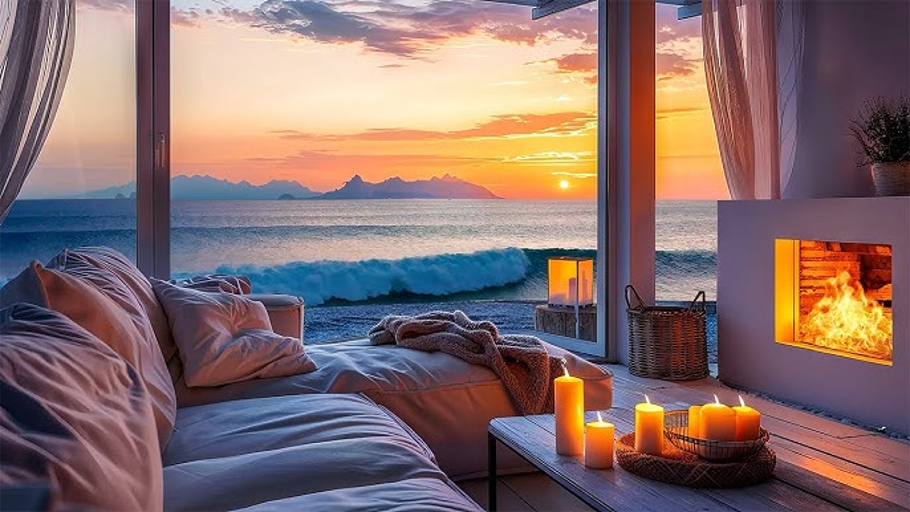
When coastal temperatures drop and beach towns grow quiet, a well-designed winter sanctuary can make your seaside home feel just as inviting as it does in summer. For many coastal homeowners, colder months bring an opportunity to rethink how interiors function. They focus on layering warmth, comfort, and light while still honoring the surrounding landscape. Winterizing a beach home doesn’t mean abandoning its breezy character. Instead, it’s about balancing coastal textures and palettes with seasonal depth. This involves introducing tactile comfort, moodier lighting, and subtle nods to the elements outside.
Whether your property sits on the windswept shores of Maine, the serene sands of the Carolinas, or the sun-washed stretches of the Gulf or Pacific coasts, every region has its own approach to creating seasonal comfort. With thoughtful design choices and functional updates, a beach home can shift seamlessly from summer retreat to winter refuge. Thus, it allows homeowners to enjoy ocean views and coastal calm year-round in their winter sanctuary. Below are some simple tips you can easily apply for a total transformation or a quick winter makeover.
Layer in Textural Warmth
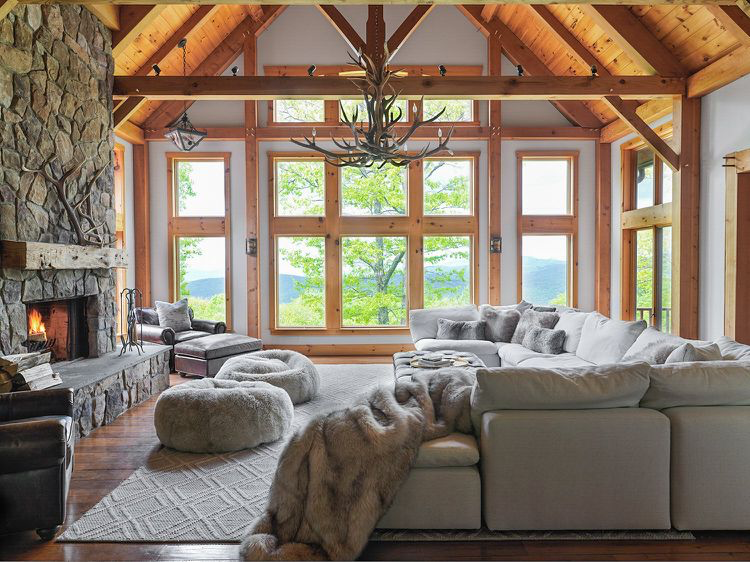
Winter is the season to add texture and depth to a home’s airy coastal palette. In cooler climates like the Upper East and Mid-Atlantic, replace light summer linens with heavier woven throws, cable-knit blankets, and wool or alpaca blends. Upholstery in soft chenille or performance velvet complements the natural light without feeling heavy. Coastal neutrals—sand, driftwood, fog—become warmer when layered with tactile materials such as boucle or brushed cotton. Even in milder Southern or California coastal regions, introducing a few plush elements—like a jute-and-wool area rug or slipcovered armchair—helps maintain warmth. It balances the sea’s reflective brightness through winter, turning your space into a cozy winter sanctuary.
Warm Ambient Lighting
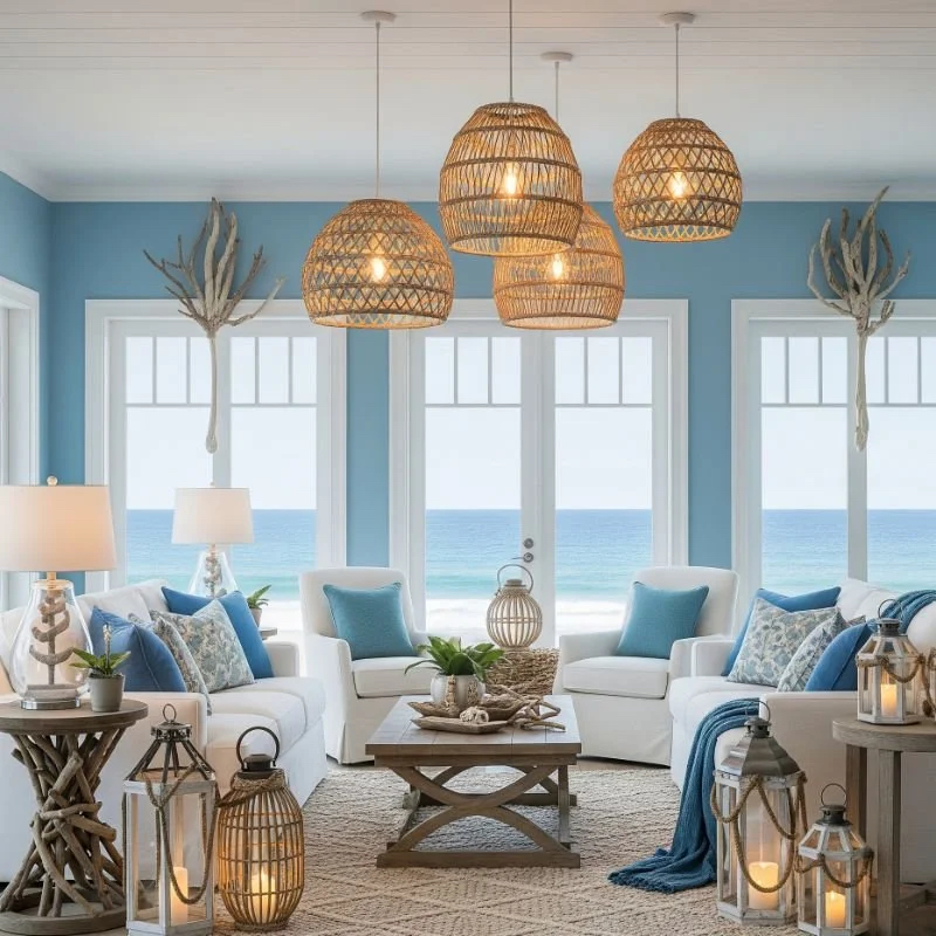
Lighting defines the mood of a winter space. Along the Pacific Northwest and Northern Atlantic coasts, where daylight fades early, layered lighting creates an inviting atmosphere. Use a mix of table lamps, sconces, and floor lighting with soft, diffused shades. Swap bright white bulbs for warm LEDs to mimic candlelight and offset cooler outdoor tones. In Gulf Coast and Southeast homes, where natural light remains strong, dimmable fixtures allow flexibility. They help transition between bright afternoons and cozy evenings in your winter sanctuary. Coastal-style woven pendants, rattan lamps, and alabaster sconces can reinforce a natural, relaxed feel while adding visual warmth.
Embrace a Coastal Winter Palette
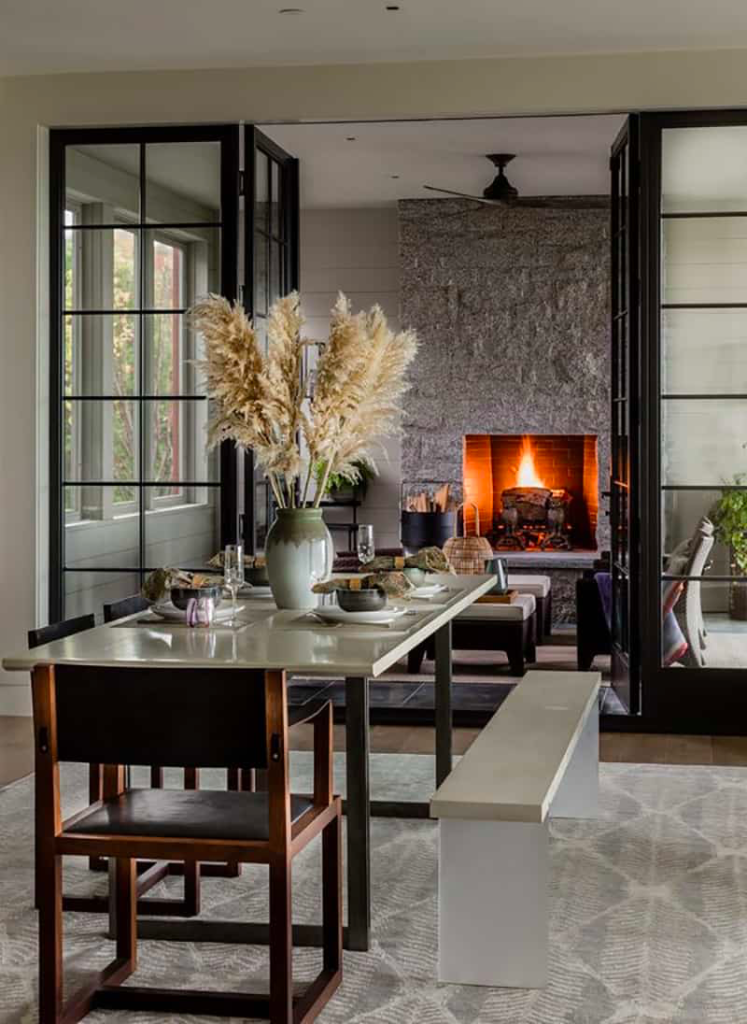
Seasonal color doesn’t have to mean deep reds and forest greens. For beach homes, winter hues draw from the subtler side of the coast—dune grass, sea mist, oyster shell, and twilight blue. In New England and Mid-Atlantic properties, these cooler neutrals pair beautifully with matte black or aged brass accents. In the Gulf and Southeast regions, pale coral, soft gold, and sun-bleached taupe evoke gentle warmth without feeling heavy. On the Pacific Coast, consider layering misty grays and ocean blues to reflect the season’s dramatic skies and surf. A restrained palette with contrasting undertones feels sophisticated and timeless. It keeps the beach home’s coastal DNA intact year-round, turning it into a true winter sanctuary.
Add Natural and Sustainable Elements
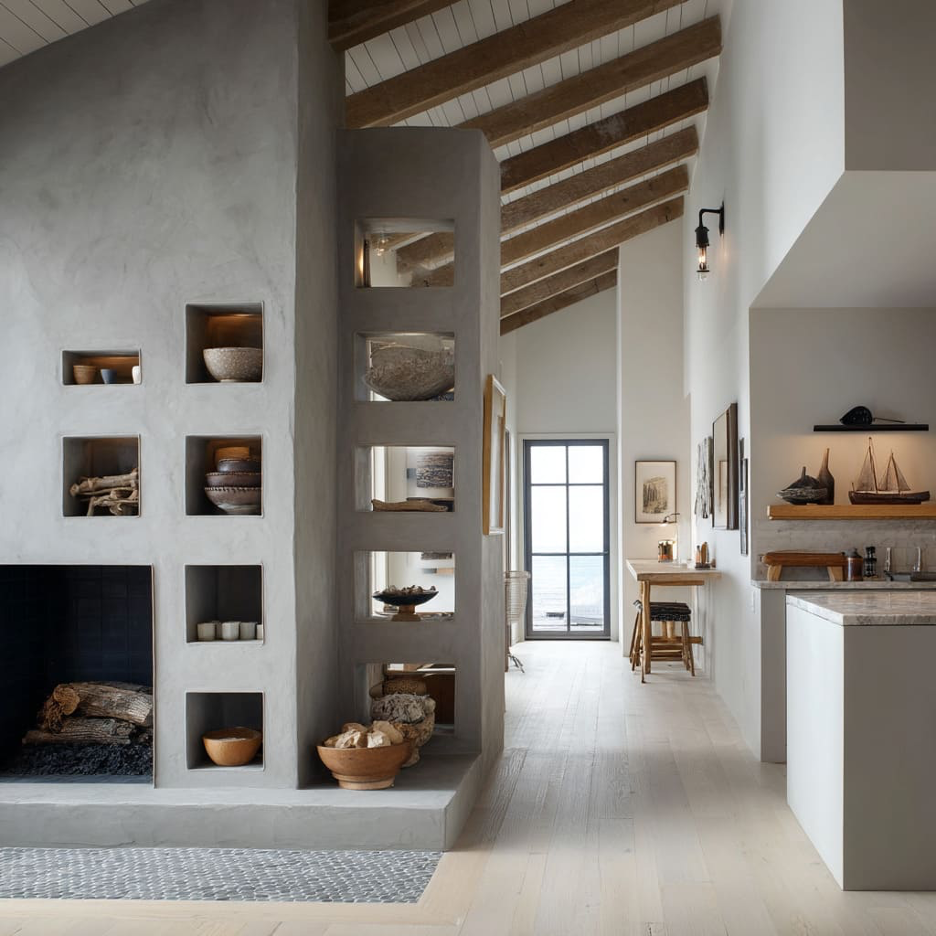
Bringing nature indoors enhances the connection between the home and its environment—a hallmark of coastal design. Driftwood sculptures, dried grasses, and hand-thrown ceramics bring organic warmth to minimalist winter interiors. In Northern and Pacific Northwest regions, evergreen boughs, eucalyptus, or winter berries can add color and fragrance. In Gulf and California homes, incorporate potted olive trees, succulents, or preserved palms that thrive indoors through cooler months. Opting for sustainable materials—like reclaimed wood, natural wool, or eco-friendly paints—also reinforces a connection to the environment. It supports the low-impact lifestyle many coastal homeowners value, turning your home into a sustainable winter sanctuary.
Create a Fireplace Focal Point
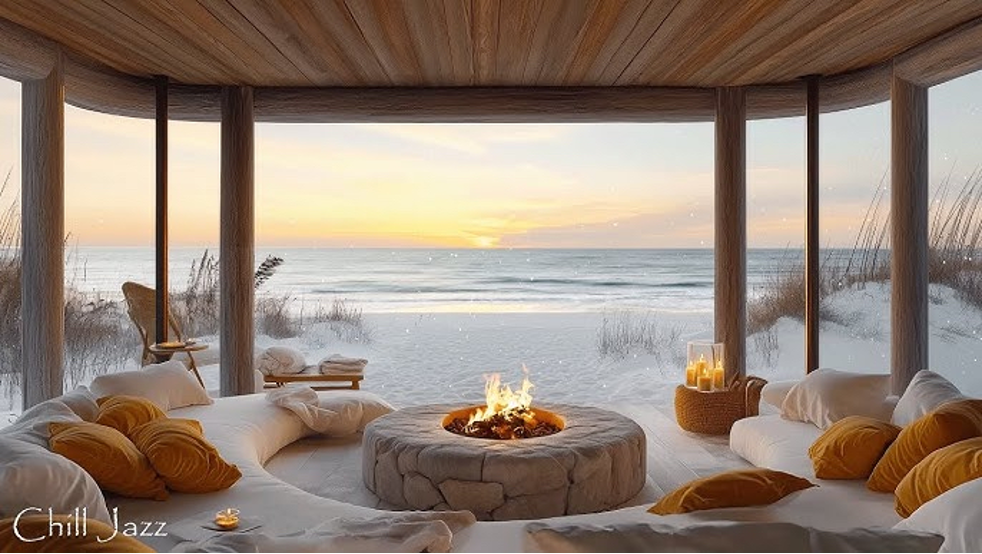
A fireplace instantly transforms a beach home into a winter retreat. In colder Upper East and Mid-Atlantic regions, wood-burning or gas fireplaces with stone or shiplap surrounds can anchor a living space. For Gulf and West Coast homes, where temperatures are milder, an electric fireplace or outdoor fire table can provide ambiance without overheating the space. Coastal-style mantels in reclaimed wood, white oak, or limestone add character without feeling rustic. Even a simple candle arrangement or lantern grouping on a mantel can evoke the same comfort and glow, enhancing the home’s seasonal atmosphere.
Reimagine Outdoor Living for the Cold Season
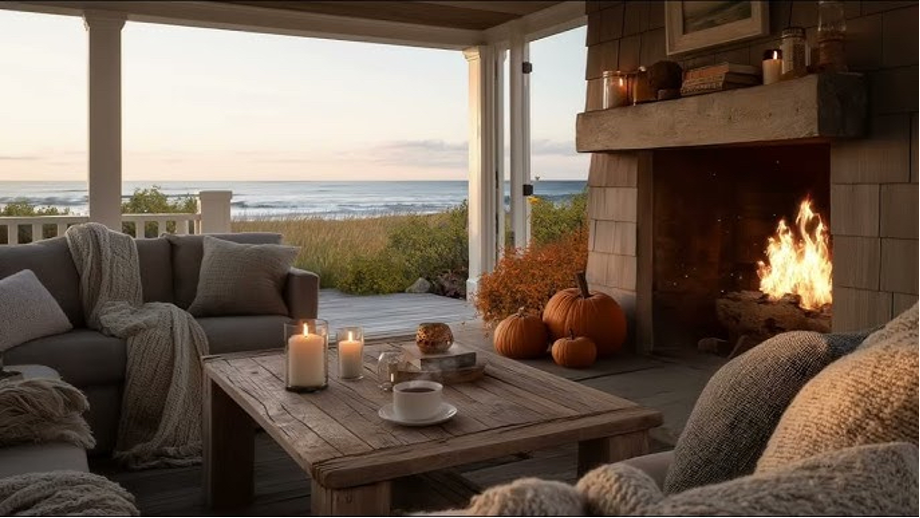
Even in winter, the beach’s beauty lies in its year-round accessibility. With a few upgrades, decks, porches, and patios can remain functional sanctuaries. In the Southeast and Gulf Coast, invest in weather-resistant furniture with plush cushions and add outdoor heaters or fire pits for cool evenings. In colder coastal regions like New England and the Pacific Northwest, enclose porches with clear vinyl panels or wind screens to enjoy the view while staying sheltered. Layer rugs, throw blankets, and lanterns for texture and warmth. Soft lighting and durable textiles extend outdoor living into the cooler months while preserving that sense of being near the sea.
Curate a Cozy Coastal Bedroom Retreat
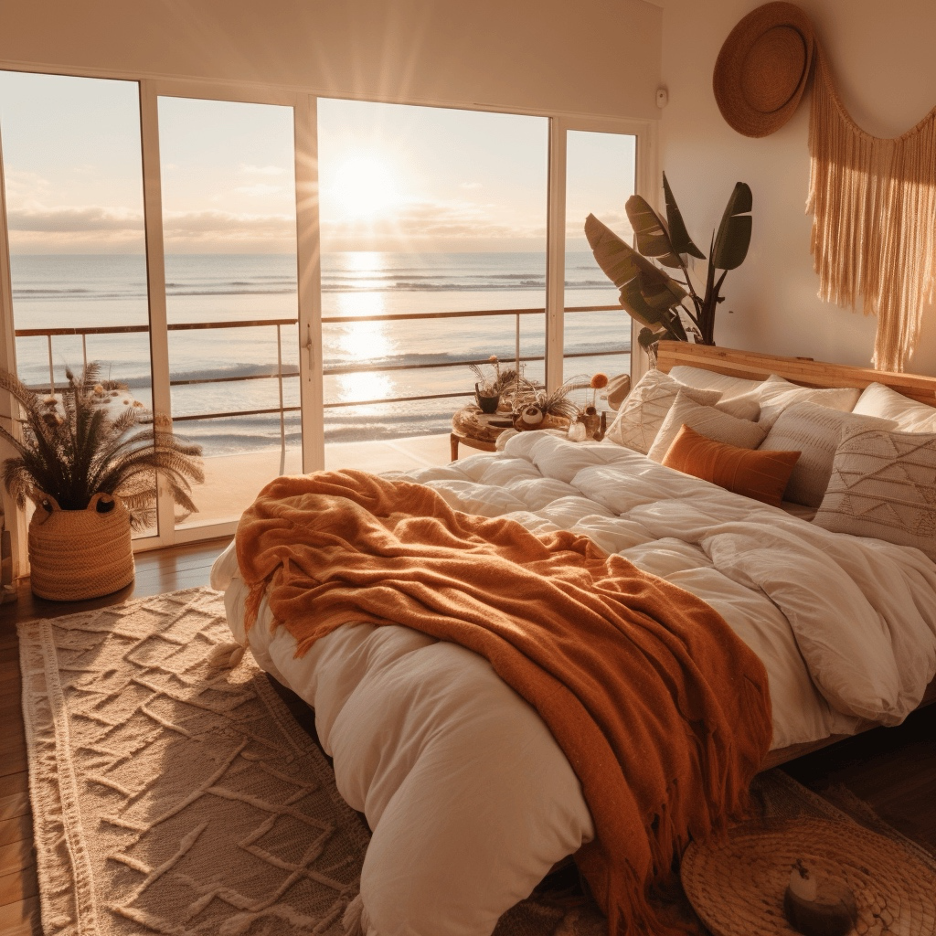
Bedrooms are natural spaces to emphasize seasonal comfort. In Upper East and Mid-Atlantic homes, consider flannel or linen-blend sheets topped with down duvets in sand, oyster, or fog-gray hues. In the Gulf and California coastal regions, lighter layers—like cotton quilts or cashmere throws—offer comfort without bulk. Replace summer décor with winter accents, such as woven baskets, coastal landscape art in muted tones, or an upholstered headboard to soften the space. Blackout curtains or Roman shades can also help regulate light and temperature, ensuring restful sleep even during long winter nights.
Transforming a beach home for winter is less about reinvention and more about rebalancing comfort and connection to place. Whether you’re overlooking the rocky shores of Maine, the dunes of the Carolinas, or the coastal bluffs of California, winter at the beach offers a distinct kind of serenity—one that rewards warmth, simplicity, and an appreciation of the season’s subtler charms. For more inspired ideas to live your best beach life, visit Beach Homes Lifestyles.