

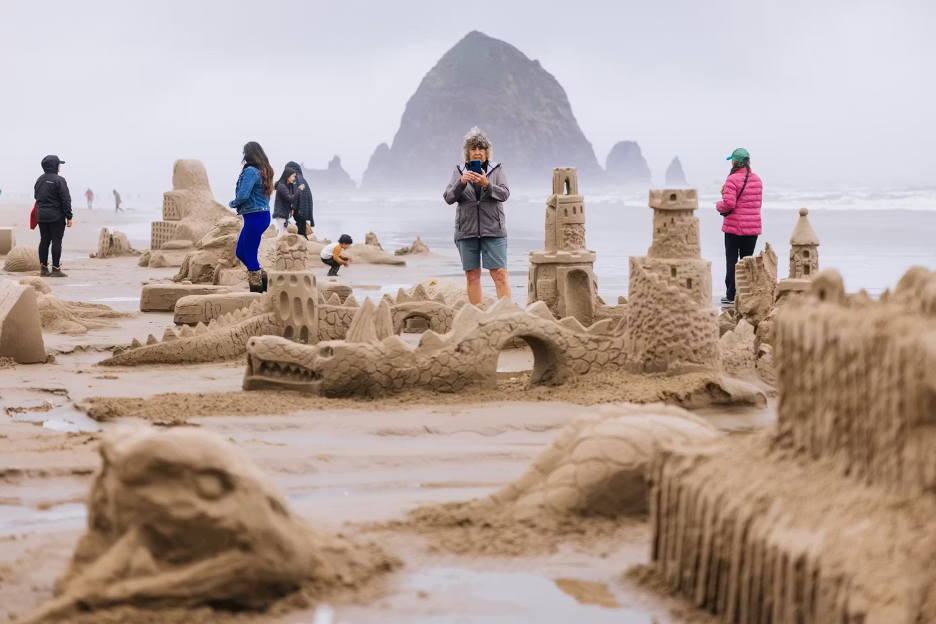
Every June, the shoreline at Cannon Beach becomes a temporary gallery shaped by tide, timing, and a surprising level of technical skill. In 2026, the annual sandcastle building competition is scheduled for Saturday, June 20. It draws participants and spectators to one of the most visually striking stretches of the Pacific Northwest coast. The event is less a casual beach pastime and more a disciplined exercise in coastal creativity. For those who understand the rhythms of the ocean, it offers something deeper than spectacle: a way to engage directly with the landscape. With Haystack Rock rising offshore and a wide, compact shoreline exposed at low tide, the setting is unusually well-suited to sculptural work. The sand itself—fine-grained and cohesive—supports intricate carving. Therefore, participants can build structures that feel improbably durable, at least for a few hours.
What distinguishes this event is its balance of accessibility and ambition. Anyone can register, but the level of execution often rivals professional sand sculpting competitions. Spectators move easily between teams, observing techniques and watching ideas take shape in real time. By late afternoon, the work is complete—and then, inevitably, erased. For a coastal audience, that impermanence isn’t a drawback; it’s part of the appeal. The contest reflects a fundamental truth about shoreline living. Everything here is shaped by forces larger than us, and that’s precisely what makes it worth experiencing.
A Beach Built for Sculpture
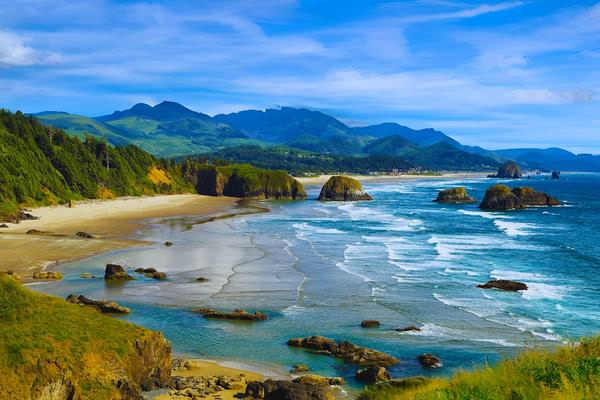
Set along the northern Oregon coastline, Cannon Beach is a small coastal city known for its dramatic shoreline and distinctive natural features. As a result, it is one of the most photographed destinations on the U.S. West Coast. The beach stretches for miles with a wide, gently sloping expanse that reveals itself fully at low tide—an essential condition for sand sculpting. The sand here is notably fine and compactable, with just enough moisture retention to support detailed carving without constant collapse.
A series of visual anchors defines the landscape. Haystack Rock—a 235-foot monolith—dominates the southern end of the beach, while smaller formations like the Needles add texture to the horizon. These formations are more than scenic—they create wind breaks and subtle microclimates that can influence building conditions throughout the day. At low tide, the area around Haystack Rock reveals a network of tide pools rich with marine life, including sea stars, anemones, and small crabs. While protected and carefully managed, these pools add another layer of interest for visitors who arrive early or stay after the competition.
The coastline also offers multiple elevated viewpoints, including nearby bluffs and coastal trails, where spectators can take in panoramic views of the entire event—rows of sculptors working against a backdrop of surf and sky. Cannon Beach’s consistent visual drama—shifting light, moving fog, and expansive ocean views—makes it a natural stage for an event that depends as much on the environment as on human creativity.
History: From Tsunami to Tradition

The origins of the contest are grounded in a specific and dramatic moment in coastal history. In March 1964, an Alaska earthquake and tsunami struck the Oregon coast, washing out infrastructure and isolating the Cannon Beach community.
In response, residents organized a sandcastle contest that summer to lift spirits and encourage visitors to return. What began as a modest gathering quickly grew into a defining annual event. Today, it is recognized as one of the oldest sandcastle competitions on the West Coast and an official Oregon Heritage Tradition. It draws thousands each year.
What to Expect on Competition Day
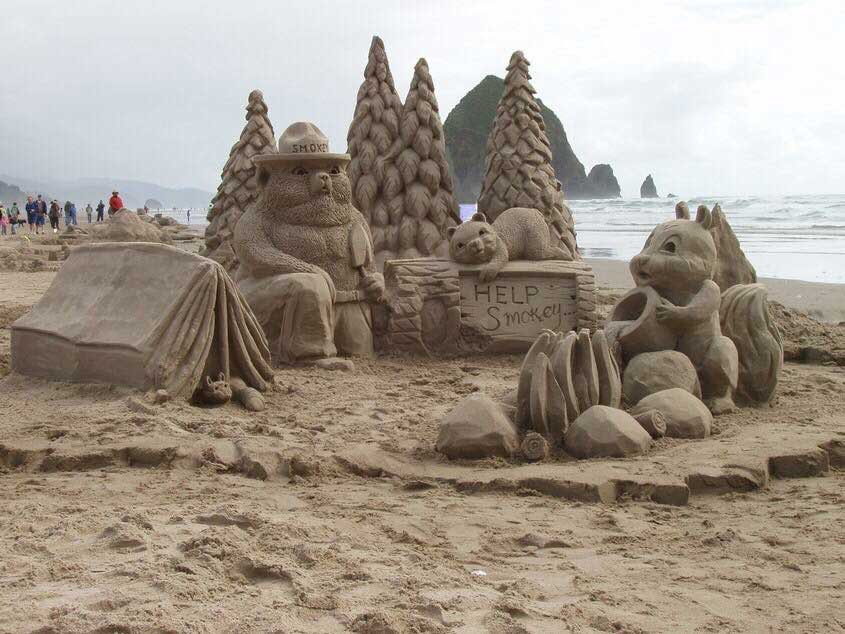
The contest typically unfolds over a full Saturday in June, with a broader weekend of related events. Building begins around 9:00 a.m., with final judging at approximately 2:00 p.m. and awards shortly after.
Participants compete across multiple divisions—from young children to master-level teams. Spectators can expect an interactive environment where builders often welcome questions, and standout structures naturally draw small crowds. By evening, the incoming tide begins to reclaim the sculptures, making same-day viewing essential.
Highlights and Creative Standouts
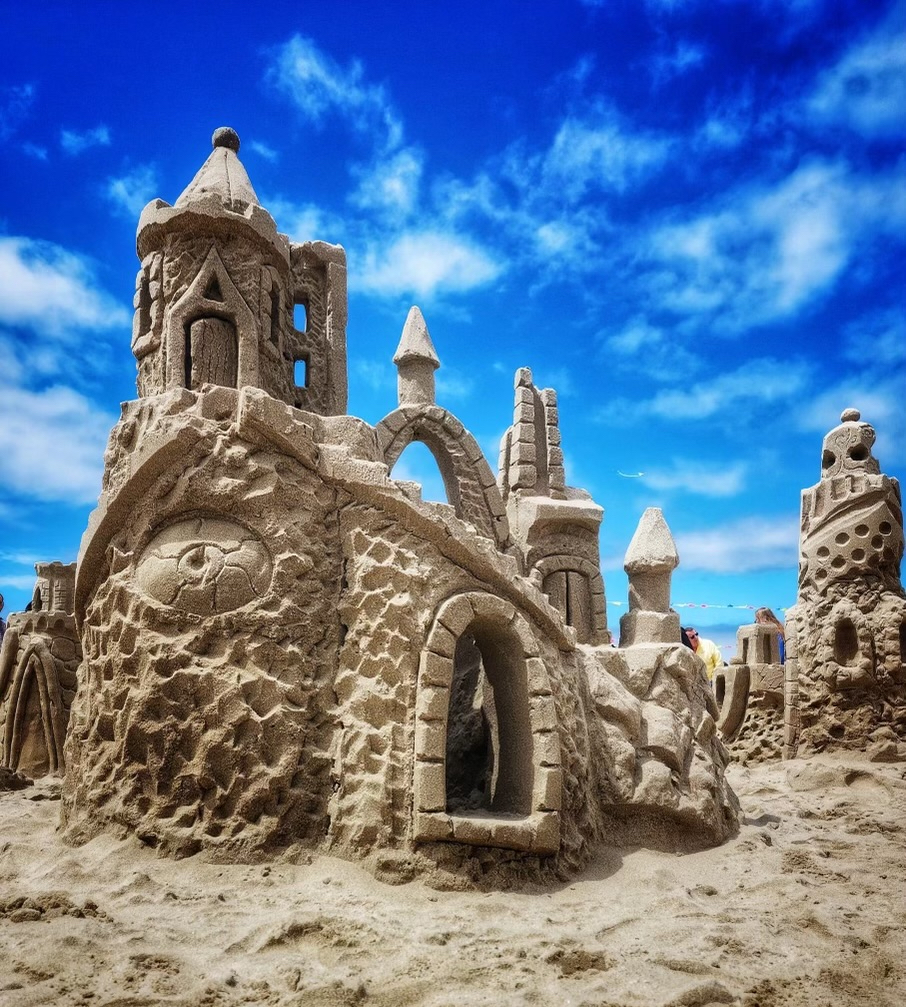
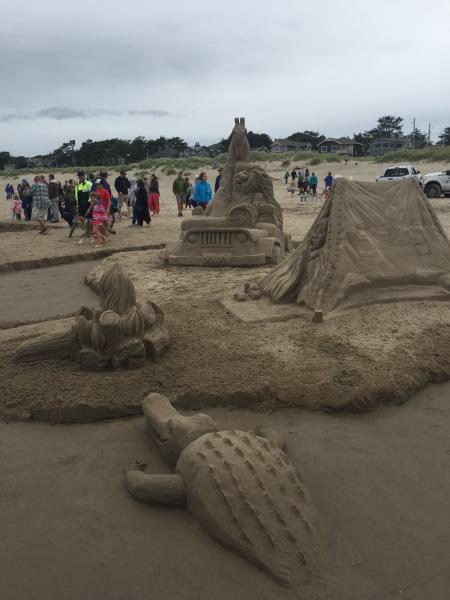
The most compelling aspect of the event is the range of creative approaches. Recent winning entries have included everything from narrative-driven scenes to intricate architectural forms and environmental themes. Judges evaluate sculptures based on originality, technical difficulty, detail, and overall impact.
In recent years, top teams have demonstrated increasingly sophisticated techniques, including precision carving, structural layering, and large-scale compositions that push the limits of what sand can achieve.
Registration, Rules, and Planning Ahead
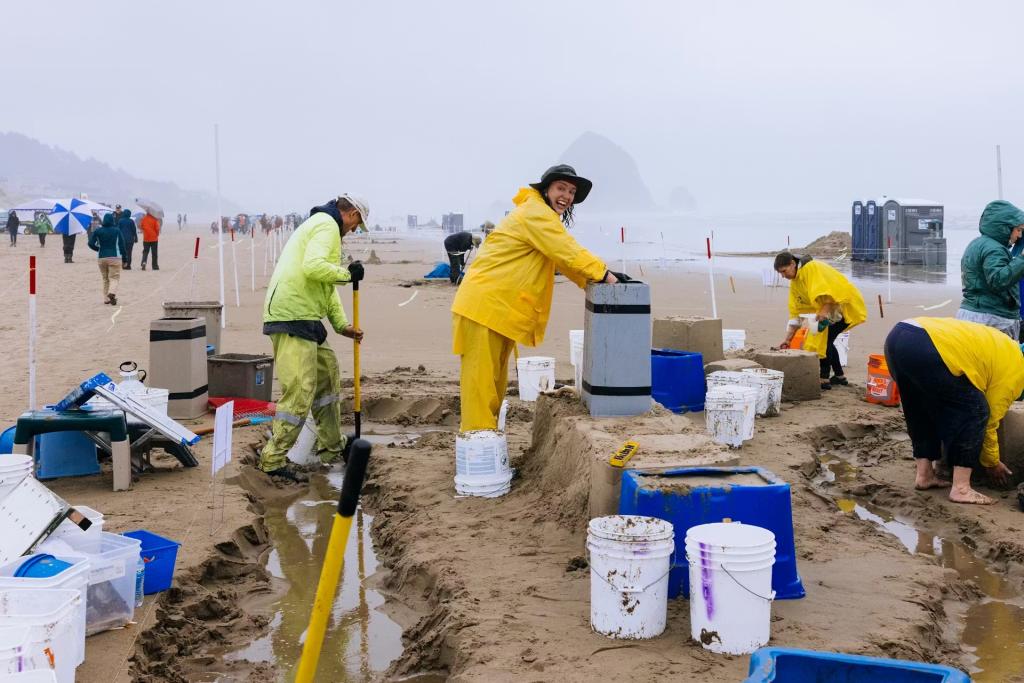
The Cannon Beach Chamber of Commerce handles registration, with options to sign up in advance or during the event weekend. Fees are modest, and early registration is recommended for competitive divisions.
Key Rules and Tips:
- Only sand, water, and hand tools are permitted
- No artificial supports or pre-formed molds
- Bring layers, sunscreen, and hydration
- Participants should pack carving tools, buckets, and spray bottles
Weather Variables and Coastal Realities:
June weather on the Oregon coast is variable. Morning fog is common, often clearing by midday, but wind and cool temperatures persist. The contest runs rain or shine, and weather conditions directly affect both sculpting techniques and structural stability.
Tides remain the most critical factor. Even well-built sculptures are ultimately temporary—by evening, most are erased by incoming water. This reinforces the importance of timing your visit. For full details, schedules, and sign-up information, visit Cannon Beach
Where to Stay and How to Plan
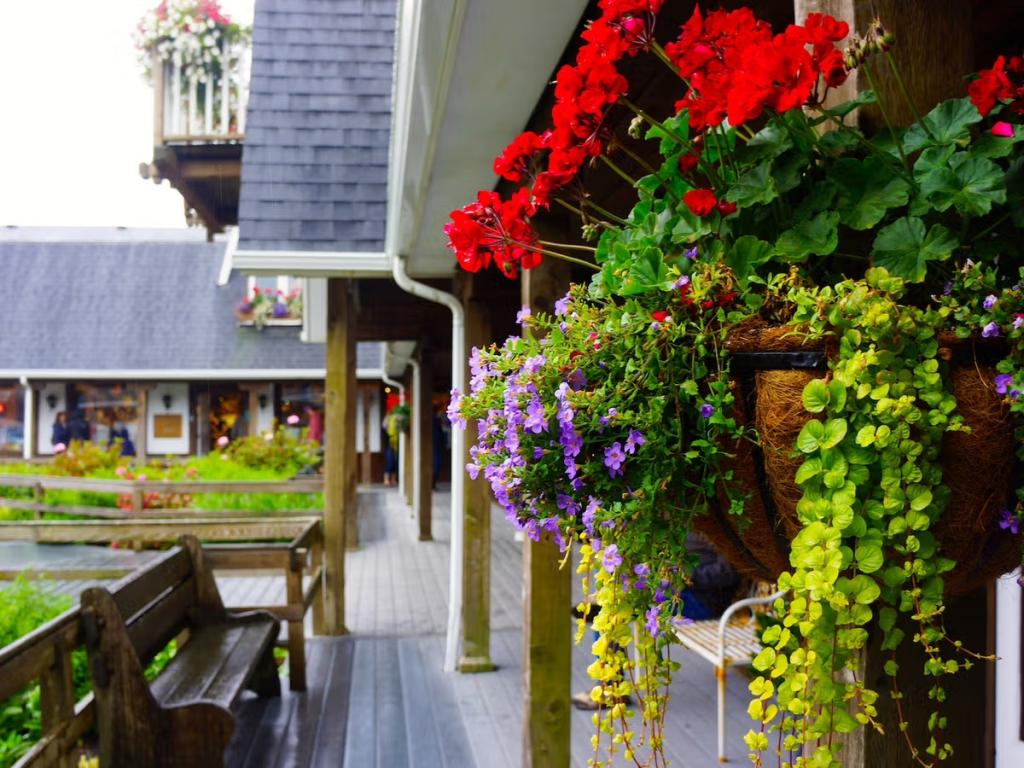
Accommodations in Cannon Beach range from boutique inns to vacation rentals, many of which are within walking distance of the event. Nearby towns like Seaside and Arch Cape provide additional options if availability is limited. Booking early is essential, as the contest draws significant regional interest.
Dogs on the Beach: Dogs are allowed on Cannon Beach, typically under voice control or leash regulations. During the contest, keeping pets clear of active building zones is both courteous and practical.
The Cannon Beach Sandcastle Contest works because it doesn’t try to outshine its setting—it collaborates with it. The event sits at the intersection of community memory, environmental awareness, and creative expression. You see how people interpret the same stretch of coastline differently, how they adapt to shifting conditions, and how they accept the inevitable disappearance of their work. For a coastal audience, that’s the real takeaway: not just what gets built, but how—and why—it matters, even when it doesn’t last. For more about living your best beach life, visit Beach Homes Lifestyles.